

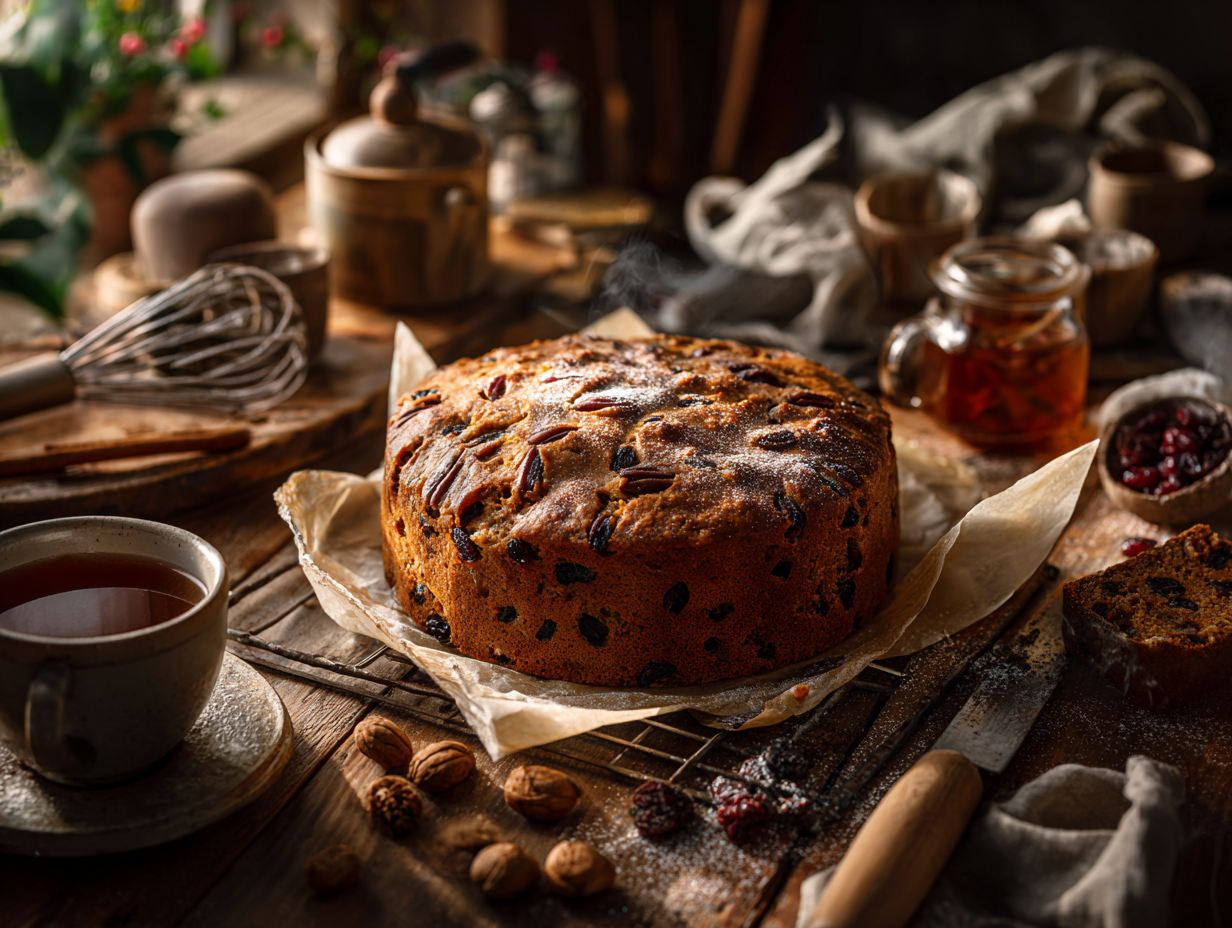
This is a dense, fruit-packed cake built around dried raisins, currants, cranberries, and chopped nuts, held together with a spiced butter batter and a good pour of brandy. It bakes low and slow for two hours, then gets better the longer you leave it. The honest reason to make it: it’s one of the few cakes you can bake a week before you need it and serve something that tastes more finished, not stale.
What makes this version work
Two things matter most here. First, creaming the butter and brown sugar until genuinely light and fluffy — not just combined — gives the batter enough lift to carry four cups of heavy fruit and nuts without turning into a brick. This takes a full three to four minutes with a hand mixer, or five to six minutes if you’re doing it by hand with a wooden spoon. Second, the low oven temperature of 300°F is non-negotiable. Fruit cakes have a high sugar content from the dried fruit, and a hotter oven will burn the outside before the dense center has time to set. Two hours at 300°F gives you an evenly cooked crumb and a crust that caramelizes rather than chars.
Ingredient notes
- Brandy: Used both in the batter and for soaking after baking. A mid-range brandy works fine — you don’t need anything expensive, but avoid cooking brandy, which is heavily salted. Dark rum is a reliable substitute if that’s what you have.
- Golden raisins vs. regular: Golden raisins are softer and less intensely sweet than dark raisins, which keeps the flavor balanced against the brown sugar. Regular raisins work, but the cake will taste slightly richer and darker.
- Chopped nuts: Walnuts add a slight bitterness that cuts through the sweetness well. Pecans are milder and sweeter — skip the garnish of whole nuts pressed into the top before baking, not worth the extra step when they just slide off the sliced cake anyway.
- Brown sugar: Packed, as the recipe states. Light or dark both work; dark brown sugar will deepen the molasses note in the finished cake.
Mistakes to avoid
- Not lining the pan fully: Parchment on the bottom only isn’t enough here. The long bake time and high fruit sugar content will cause the sides to stick and tear when you unmold. Line the sides too, with a strip that comes at least an inch above the rim.
- Adding all the eggs at once: The batter will curdle and look broken, and a curdled base doesn’t recover well once you add the flour. One egg at a time, beating until each is fully incorporated, keeps the emulsion stable.
- Skipping the skewer test and going by time alone: Ovens vary. Start checking at 1 hour 45 minutes. The skewer should come out with no wet batter — a few moist crumbs are fine, but if it’s still liquid at the center, give it another 10 to 15 minutes and check again.
- Soaking a warm cake: If you pour brandy over a cake that hasn’t fully cooled, it steams off rather than absorbing. Wait until the cake is completely cool to the touch before piercing and soaking.
- Wrapping too loosely: Air is the enemy during the maturation period. Wrap tightly in a double layer of foil and store at room temperature. A loosely wrapped cake dries out at the edges within a day or two.
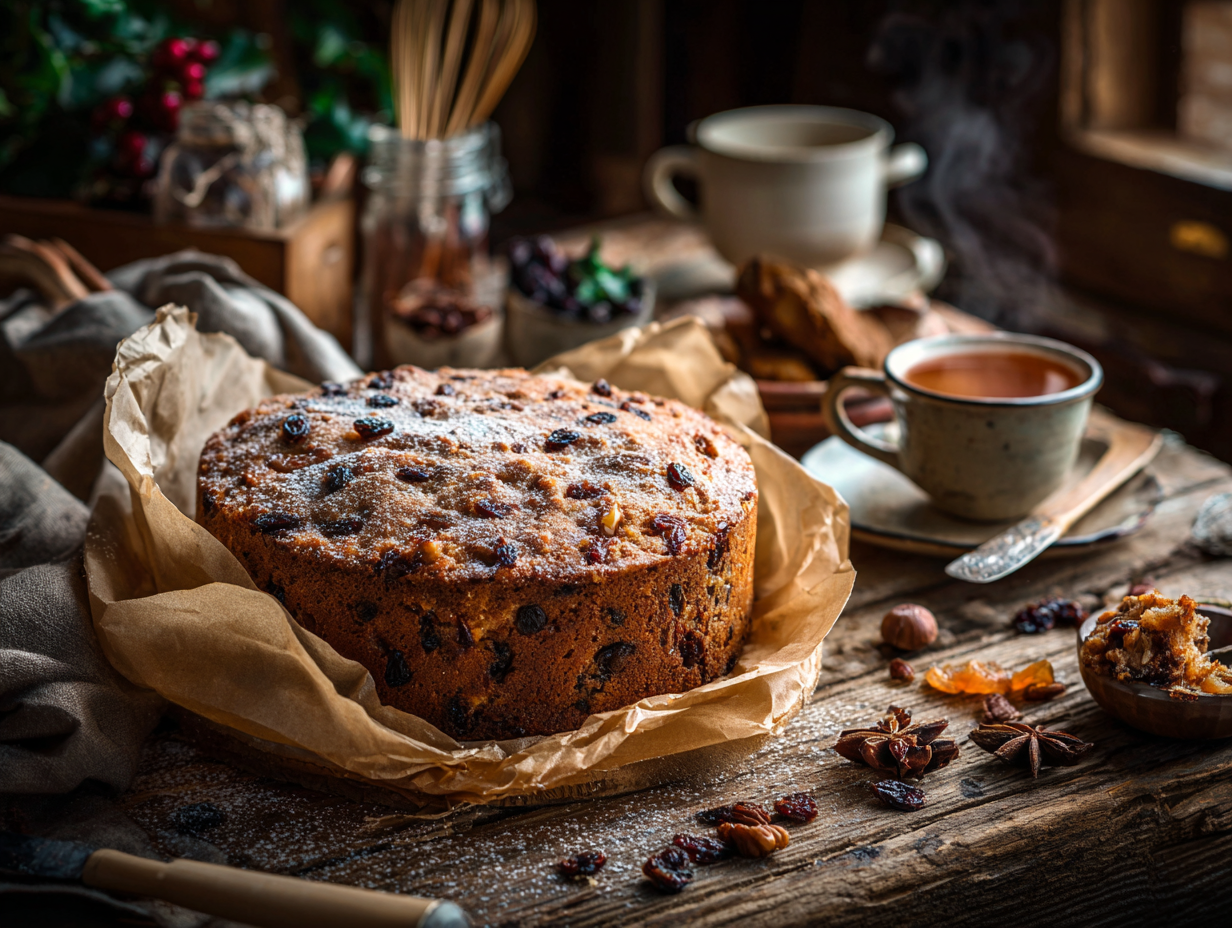
Traditional Fruit Cake

Equipment
- Mixing Bowl
- Electric Mixer
- 9-inch cake pan
- Parchment Paper
- Whisk
- Oven
- Cooling Rack
Ingredients
For the Dry Components:
- 2 cups all-purpose flour sifted
- 1 teaspoon baking powder
For the Wet Components:
- 1 cup unsalted butter softened
- 1 cup brown sugar packed
- 4 large eggs room temperature
- ½ cup brandy plus more for soaking
For the Fruits and Nuts:
- 1 cup raisins preferably golden
- 1 cup currants
- 1 cup dried cranberries
- 1 cup chopped nuts walnuts or pecans
For the Spices:
- 1 teaspoon ground cinnamon
- 1 teaspoon ground nutmeg
- ½ teaspoon ground cloves
Instructions
- Preheat and Prepare: Preheat your oven to 300°F (150°C). Line the bottom and sides of a 9-inch cake pan with parchment paper.
- Prepare Dry Ingredients: In a bowl, whisk together the flour, baking powder, cinnamon, nutmeg, and cloves. Set aside.
- Cream Butter and Sugar: In a large mixing bowl, use an electric mixer to cream together the softened butter and brown sugar until light and fluffy.
- Add Eggs: Add eggs to the butter mixture one at a time, beating well after each addition.
- Combine Ingredients: Gradually fold the flour mixture into the wet ingredients. Stir in brandy, followed by raisins, currants, cranberries, and nuts.
- Bake: Pour batter into the prepared cake pan. Bake for about 2 hours or until a skewer inserted into the center comes out clean. Allow the cake to cool on a wire rack.
- Soak with Brandy: Once cooled, pierce the top with a skewer and pour over a little extra brandy. Wrap in foil and let it mature for a few days for optimal flavor.
Notes
- For optimal results, let the fruit cake mature for several days.
- You can also adjust the types of fruits and nuts to your preference, keeping the total quantity the same.
Nutrition
Frequently asked questions
Can I make this cake without alcohol?
Yes — replace the brandy in the batter with cold black tea or apple juice in equal measure. For the soaking step, brush the cooled cake with a couple of tablespoons of orange juice instead; it won’t preserve the cake as long, so plan to eat it within three to four days rather than a week or more.
How far in advance can I bake this?
Up to two weeks ahead is practical for a brandy-soaked version stored at room temperature. Wrap it tightly in foil, and give it a small additional pour of brandy every three to four days — about a tablespoon each time — to keep the interior moist and the flavor developing.
My fruit keeps sinking to the bottom. What am I doing wrong?
The batter is probably too thin when the fruit goes in, which means the butter and sugar weren’t creamed long enough or the eggs weren’t fully incorporated. A thicker, well-aerated batter holds the fruit in suspension during baking. Tossing the dried fruit in a tablespoon of the measured flour before stirring it in also helps.
Can I freeze this cake?
Yes, it freezes well for up to three months. Wrap the fully cooled, soaked cake in a layer of plastic wrap and then a layer of foil before freezing. Thaw overnight at room temperature still wrapped, so condensation forms on the outside of the foil rather than on the cake itself.
What to bake next
- Spiced Pear and Almond Cake
- Southern Maple Bourbon Bread Pudding
- Espresso Walnut Biscotti
- Luxurious Almond Croissant Bread Pudding