

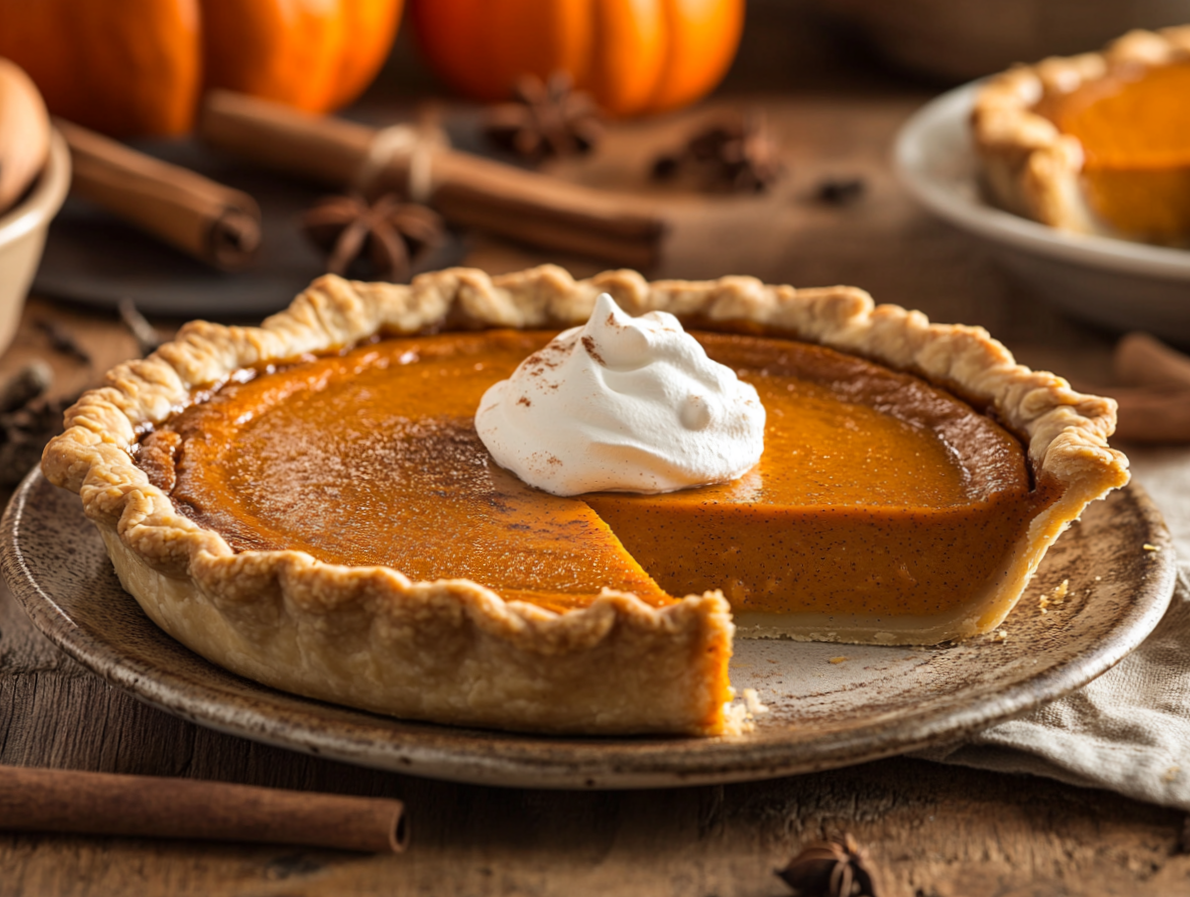
This is a classic pumpkin custard pie baked in a homemade shortcrust shell — spiced with cinnamon, ginger, and cloves, and set with evaporated milk and eggs. It takes about 90 minutes start to finish, and the filling comes together from ingredients most people already have on hand in autumn. If you want a reliable, no-fuss pie that slices cleanly and tastes better than anything from a box, this is it.
Substitutions that actually work
- Evaporated milk: If you don’t have a can, use heavy cream or half-and-half in the same 12-ounce quantity. Full-fat coconut milk also works and adds a faint coconut note. Avoid regular milk — the custard will be too loose.
- Pumpkin puree: Canned pumpkin and homemade puree from sugar pumpkins or butternut squash are interchangeable here. Just make sure homemade puree is well-drained — excess moisture causes a soggy, under-set filling.
- Granulated sugar: Brown sugar works as a straight swap and gives the filling a slightly deeper, more caramel-like flavor. No other adjustments needed.
- Individual spices: If you have a jar of pumpkin pie spice, use 1¾ teaspoons in place of the cinnamon, ginger, and cloves combined.
- Store-bought crust: A refrigerated pie crust from the supermarket is a perfectly reasonable choice if you’re short on time or butter — skip the garnish on the crimped edge too, not worth the extra dish.
The technique that matters
The two-temperature bake is the most important thing to get right. Starting at 425°F sets the crust quickly so it doesn’t go soggy, then dropping to 350°F lets the custard finish cooking gently without cracking or puffing. The other thing worth paying attention to is how you know it’s done: the edges should look set and matte, but the center two inches should still have a slight wobble when you nudge the pan. It will firm up completely as it cools. If you wait until the center looks fully solid in the oven, it will be overbaked by the time it reaches the table.
Mistakes to avoid
- Skipping the chill on the dough: If you roll and bake the crust without refrigerating it for at least 30 minutes, the butter melts before the structure sets and you get a dense, greasy base instead of a flaky one.
- Pouring cold filling into a warm crust: If your filling has been sitting in the fridge, let it come closer to room temperature before pouring. A big temperature difference can cause the crust edges to shrink or crack during baking.
- Overmixing the filling: Whisking too aggressively once the eggs are in incorporates air, which leads to a puffed, cracked surface. Mix until just combined and smooth.
- Not protecting the crust edges: The crimped edge will overbrown well before the filling is set. Cover it loosely with foil or a pie shield after the first 15 minutes at high heat.
- Cutting the pie while it’s still warm: The custard needs time to fully set. Slicing too early gives you a runny wedge. Let it cool at room temperature for at least two hours before cutting.
Make-ahead notes
The pie dough can be made up to three days ahead and kept wrapped in the fridge, or frozen for up to a month — thaw overnight in the fridge before rolling. The baked pie keeps well covered in the refrigerator for up to four days. You can also freeze the fully baked and cooled pie for up to one month; wrap it tightly in plastic and then foil, and thaw in the fridge overnight before serving. If you want to serve it warm, a 10-minute reheat at 300°F works well without drying out the filling.
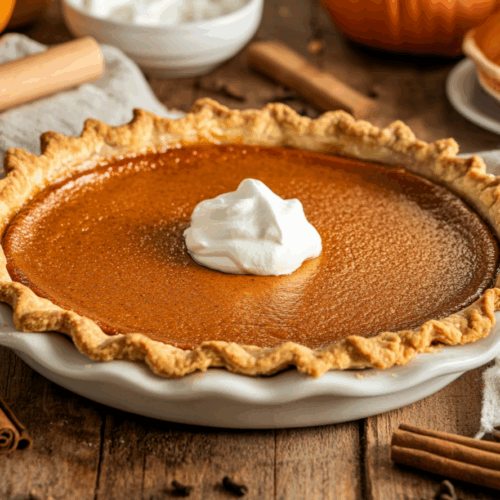
Classic Pumpkin Pie

Equipment
- 9-inch pie pan
- Mixing Bowls
- Whisk
- Measuring cups and spoons
- Rolling pin
- Oven
Ingredients
For the Crust:
- 1 ¼ cups all-purpose flour plus extra for rolling
- ½ teaspoon salt
- ½ cup unsalted butter cold and diced
- 3 tablespoons ice water
For the Filling:
- 2 cups pumpkin puree
- 1 cup granulated sugar
- 1 teaspoon ground cinnamon
- ½ teaspoon ground ginger
- ¼ teaspoon ground cloves
- ½ teaspoon salt
- 3 large eggs
- 1 can evaporated milk (12 ounces)
- 1 teaspoon vanilla extract
Instructions
- Crust Preparation: In a mixing bowl, whisk together the flour and salt. Add the cold, diced butter and use a fork or pastry cutter to blend until the mixture resembles coarse crumbs. Add ice water, one tablespoon at a time, stirring with a fork until the dough holds together. Wrap in plastic and refrigerate for at least 30 minutes.
- Filling Preparation: In a large bowl, combine pumpkin puree, sugar, cinnamon, ginger, cloves, and salt. Whisk in the eggs, then gradually stir in evaporated milk and vanilla extract until fully combined.
- Assembly: Preheat your oven to 425°F (220°C). Roll out the dough on a lightly floured surface to fit your 9-inch pie pan. Gently lay the dough into the pan, trimming excess, and crimping the edges. Pour the prepared pumpkin filling into the crust.
- Baking: Bake in the preheated oven for 15 minutes. Reduce the temperature to 350°F (175°C) and continue baking for 40 to 50 minutes or until a knife inserted near the center comes out clean. Cool on a wire rack before serving.
Notes
- If you're short on time, a store-bought crust can be used to save preparation time.
- For a twist, consider adding a sprinkle of nutmeg or using brown sugar for a deeper molasses flavor.
Nutrition
Common questions
Can I use fresh pumpkin instead of canned?
Yes, but drain it thoroughly first. Fresh pumpkin puree holds more water than canned, and if you skip draining — through a fine mesh strainer or cheesecloth for 30 minutes — the filling may not set properly and the crust will get soggy on the bottom.
Why did my filling crack across the top?
Cracking usually means the pie was overbaked or the oven temperature ran too high. Pull the pie when the center still has a gentle wobble, and make sure your oven temperature is accurate — many home ovens run 10 to 25 degrees hotter than the dial reads, so an inexpensive oven thermometer is worth having.
Do I need to blind bake the crust before adding the filling?
No — this recipe doesn’t require blind baking. The high initial oven temperature at 425°F does enough work to set the bottom crust before the filling soaks in. If you find the bottom consistently underdone in your oven, place the pie pan on a preheated baking sheet to give it extra heat from below.
If you liked this one
- Toasted Coconut Custard Pie
- Southern Classic Pecan Pie
- Autumn Spiced Pear and Almond Cake
- Zesty Key Lime Pie