

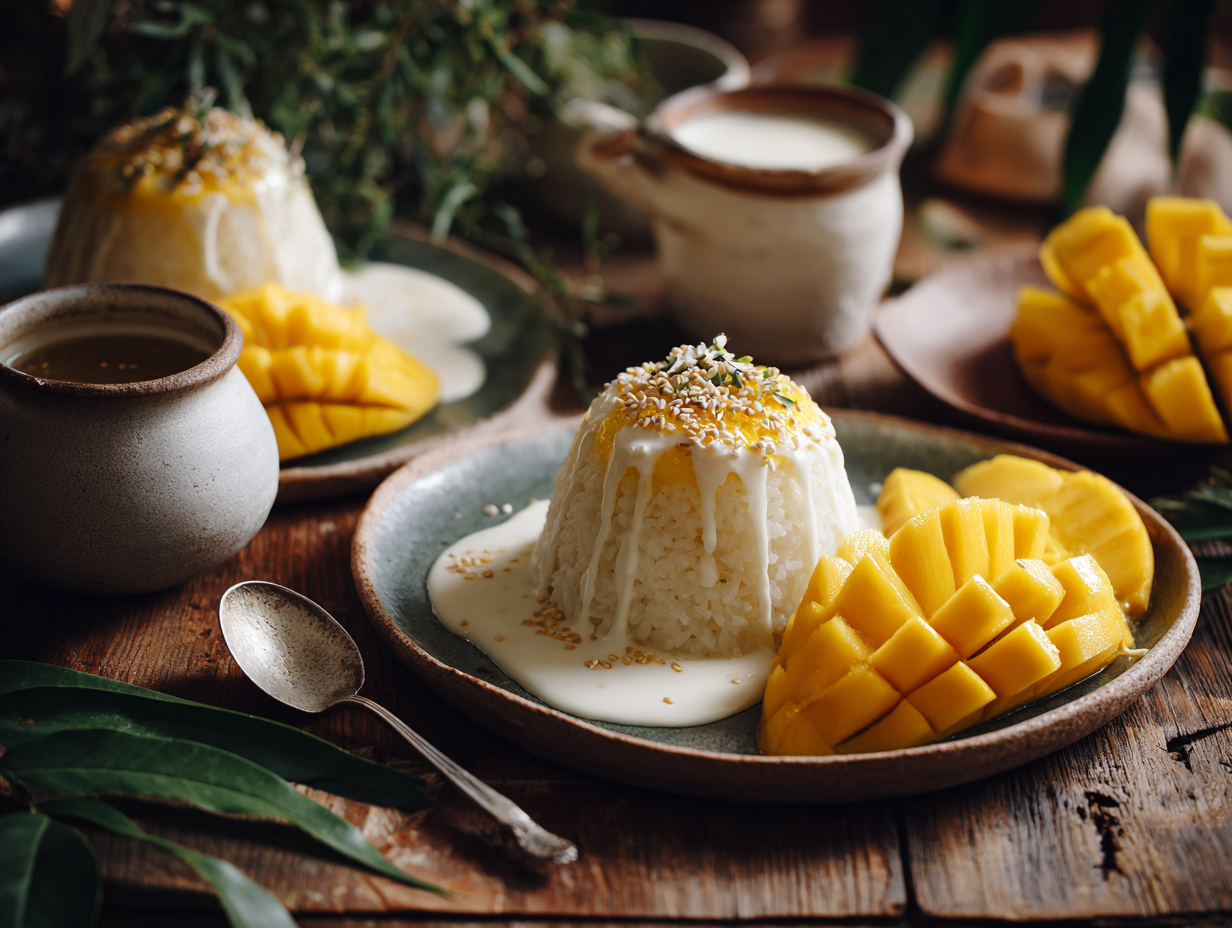
Mango sticky rice (Khao Niew Mamuang) is a Thai dessert made from glutinous rice soaked in sweetened coconut milk and served with fresh mango. It comes together from just five ingredients, and the result is rich, creamy, and genuinely crowd-pleasing. If you need a no-oven dessert that looks impressive on a platter and scales easily for a group, this is the one to reach for.
Before you start
Two things determine whether this works: the soak and the coconut milk temperature. Glutinous rice needs time in cold water — at least 30 minutes, but overnight is better — so the grains hydrate evenly before steaming. Skipping or shortening the soak leads to a gummy outside and chalky center, and no amount of extra steaming fully fixes it. The coconut milk mixture is the other critical step: keep the heat low and pull it off the burner the moment the sugar dissolves. Boiling breaks the emulsion and leaves you with a greasy, separated sauce instead of a smooth, pourable one. Both steps are easy; they just require a little patience.
Shopping notes
- Glutinous rice: Sold as “sweet rice” or “sticky rice” at Asian grocery stores. Standard long-grain, jasmine, or basmati rice will not work — the starch structure is completely different. Sushi rice is a closer substitute in a pinch, but the texture will be softer and less chewy.
- Coconut milk: Use full-fat canned coconut milk, not the refrigerated carton kind. Light coconut milk produces a thin sauce that doesn’t absorb into the rice properly.
- Mangoes: Ataulfo (also called Champagne or honey mango) is the best widely available option in the US — small, yellow, non-fibrous, and very sweet. Regular Tommy Atkins mangoes work but are stringier. Avoid any mango that isn’t fully ripe; underripe fruit is sour and firm and throws off the whole balance of the dish.
- Garnish: Skip the mung beans unless you already have them — toasted sesame seeds do the same job and are easier to find.
What can go wrong
- Rice clumps into a hard mass: This happens when the coconut milk mixture has cooled too much before you add it to the rice. Pour it over while it’s still warm so it absorbs evenly instead of sitting on the surface.
- Rice is wet and mushy after resting: You used too much coconut milk or didn’t let the rice rest uncovered for a few minutes before covering it. Reserve the full quarter of the sauce for drizzling — don’t be tempted to pour it all in at once.
- Sauce separates and looks oily: The coconut milk boiled. There’s no fix once it separates; make a fresh batch. It only takes a few minutes and the ingredients are inexpensive.
- Mango turns slippery and watery on the plate: Sliced mango releases juice quickly, especially at room temperature. If you’re plating for a crowd, slice the mangoes no more than 30 minutes before serving and keep them refrigerated until you’re ready to plate.
- Rice hardens after sitting out: Glutinous rice firms up as it cools. For a party, keep the portioned rice loosely covered at room temperature and serve within two hours of making it. Don’t refrigerate it before serving — cold rice goes stiff.
Storage and make-ahead
The rice and coconut sauce can be made up to 24 hours ahead and stored separately in the refrigerator. Keep the rice in an airtight container and the reserved sauce in a small jar. Before serving, let the rice come to room temperature for 20–30 minutes, then microwave it briefly (30 seconds, covered with a damp paper towel) if it has stiffened. Warm the sauce gently in a small saucepan before drizzling. Leftover assembled portions keep in the fridge for one day but the rice will firm up noticeably — it’s edible, just not at its best. Freezing is not recommended; the rice texture becomes grainy and the mango turns mushy on thawing.
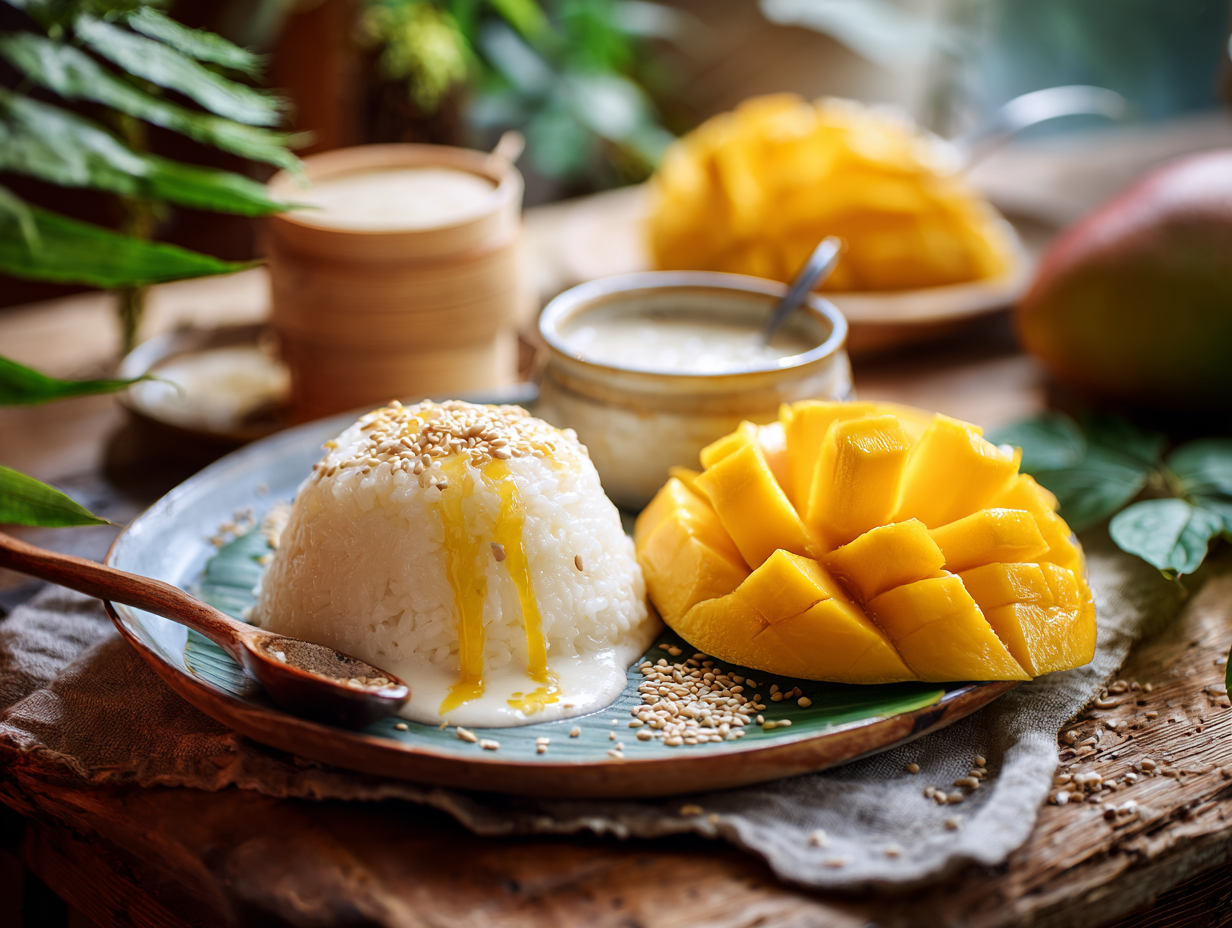
Traditional Thai Sticky Rice with Mango

Equipment
- Steamer or rice cooker
- Small saucepan
- Bowl for soaking
Ingredients
- 1 cup Thai sticky rice glutinous or sweet rice
- 1 ½ cups coconut milk full fat
- ⅓ cup sugar preferably fine-grain
- ¼ teaspoon salt
- 2 medium ripe mangoes peeled and sliced
- 1 tablespoon toasted sesame seeds or mung beans for garnish
Instructions
- Rinse and soak the sticky rice in cold water for at least 30 minutes, or ideally overnight. This will ensure the rice cooks evenly and absorbs flavors well.
- Drain the rice and steam using a traditional rice steamer or a rice cooker, following the equipment's instructions, until the rice is soft and translucent (approximately 20 minutes).
- While the rice is cooking, combine coconut milk, sugar, and salt in a small saucepan. Heat gently over medium heat, stirring until the sugar dissolves. Do not let it boil.
- When the rice is ready, transfer it to a mixing bowl and pour three-quarters of the warm coconut milk mixture over it. Stir until the rice is evenly coated and let it sit, covered, for 10 minutes to absorb the flavors.
- To serve, mold the sticky rice using a small bowl or cup for shape and place onto serving plates. Arrange the sliced mangoes artistically around the rice, drizzle with the remaining coconut sauce, and sprinkle with toasted sesame seeds or mung beans.
Notes
- For a tangy note, add a bit of lime zest to the coconut sauce.
- If Thai sticky rice is unavailable, you may substitute it with sushi rice, though the texture will differ slightly.
Nutrition
FAQ
Can I make this without a steamer?
Yes — set a metal colander over a pot of simmering water, line it with a clean kitchen towel or cheesecloth, add the soaked and drained rice, and cover tightly with a lid or foil. It works just as well as a dedicated steamer. Make sure the colander sits above the waterline and check the pot every 10 minutes to make sure it hasn’t boiled dry.
How do I know when the sticky rice is done steaming?
The grains turn from opaque white to translucent and the texture shifts from gritty to soft and slightly chewy — taste a few grains to check. Around 20 minutes is typical, but it depends on how long the rice soaked; a full overnight soak can cut a few minutes off the steaming time.
Can I double or triple this recipe for a larger group?
Yes, it scales up well. Steam the rice in batches if your steamer is small — overcrowding leads to uneven cooking. The coconut milk sauce scales directly, so just multiply the quantities and make it in a larger saucepan.
Try these next
- Tropical Mango Sago Dessert
- Creamy Cardamom Pistachio Rice Pudding
- Tropical Coconut Cardamom Ice Cream
- Tropical Lime Bars with Toasted Coconut Crunch