

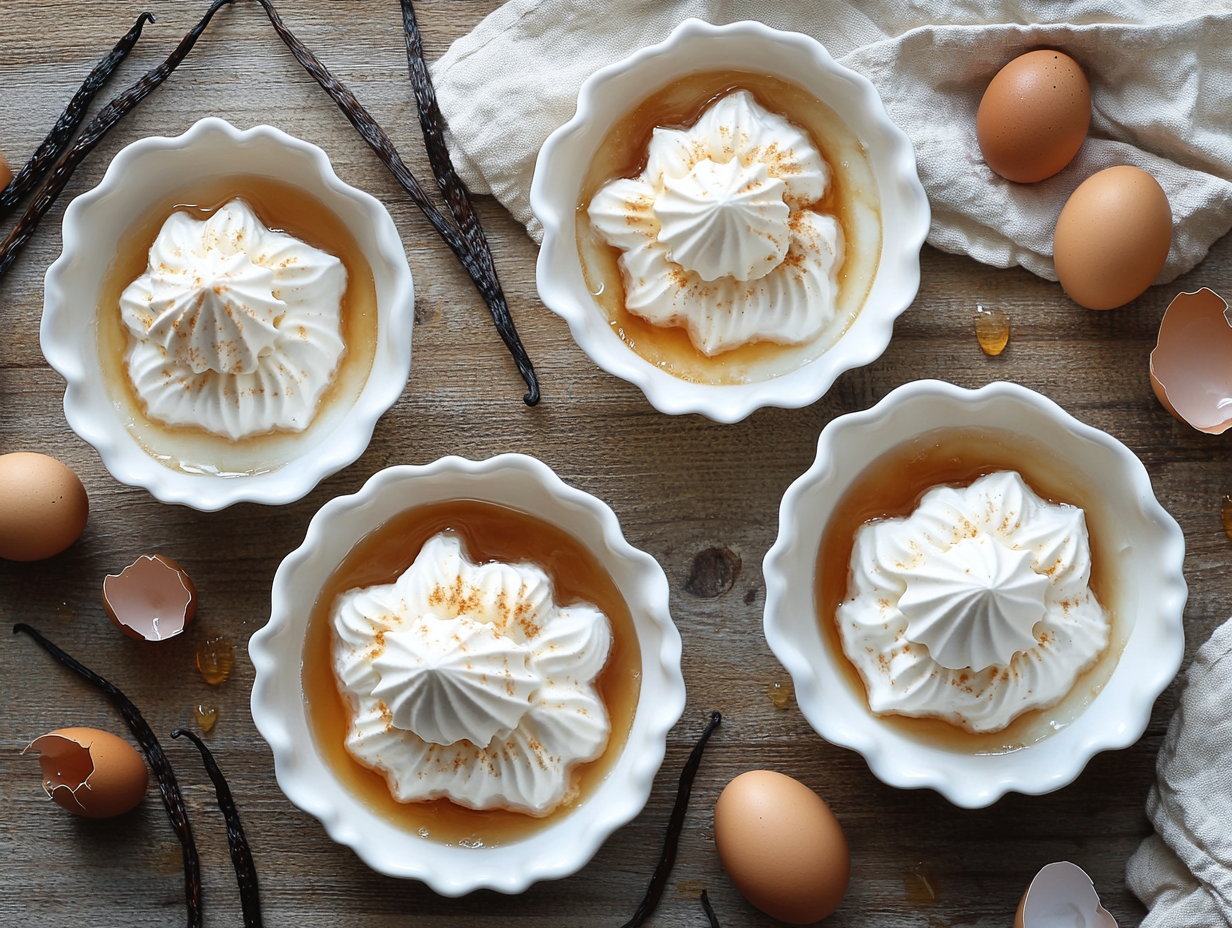
Île Flottante, or “Floating Island,” is a quintessential French dessert that has long graced the tables of bistros, patisseries, and fine-dining establishments across France and beyond. With its roots deeply embedded in classical French cuisine, this dish is a delicate, dreamlike combination of fluffy poached or baked meringue and silky crème anglaise (a light, vanilla custard sauce), finished with a drizzle of amber caramel. Its name poetically evokes the image of floating islands—billowy white clouds of meringue adrift in a golden sea of custard.
Although the exact origins of Île Flottante are somewhat unclear, the dessert has likely evolved from traditional French culinary techniques developed during the 17th and 18th centuries, when meringue and custards became culinary mainstays in European kitchens. These elements—whisked egg whites and egg-based custards—highlight the precision, finesse, and elevation of humble ingredients that characterize haute cuisine.
In French culture, Île Flottante holds a special place, often associated with elegance and nostalgia. It is a dessert that exemplifies refinement, despite its relatively simple ingredients. Egg whites, sugar, milk, and vanilla form the core of the recipe, yet in skilled hands, they are transformed into something quite transcendent—light as air yet rich and luxurious. The visual contrast and texture interplay, from the weightless meringue to the velvety custard, create a multi-sensory experience that appeals as much to the eyes as to the palate.
Traditionally, the meringue was poached, delicate and pillow-soft, floating gently on the crème anglaise. This method, though romantic, can be somewhat temperamental to execute, especially for home cooks. As a result, modern takes on the dish often opt to bake the meringues in a low-temperature oven until just set, still preserving their airy texture without the risk of collapse. Our version follows this more accessible route, delicately baking the meringue dollops to achieve structure while retaining their cloud-like nature.
The custard—creamy, lightly sweetened, and infused with vanilla—is a triumph of simple ingredients handled with care. It’s essential to cook it slowly and attentively so that it thickens gently without curdling. The final flourish, a caramel drizzle, adds both texture and a bittersweet note that balances out the overall sweetness of the dish.
What makes Île Flottante so timeless is not just its flavor or presentation, but its symbolism. It reflects an artful approach to cooking—transforming the everyday into the extraordinary. Whether served as a light finish to a lavish dinner or offered as a refined treat in a tea salon, Île Flottante is a reminder that even the most ephemeral creations can leave a lasting impression.
This dessert also beautifully captures the romantic spirit of French cuisine: imaginative, sensory, and emotionally resonant. The floating island in a sea of custard might even be seen as a metaphor for life’s little indulgences—a fleeting escape into sophistication and pleasure, one spoonful at a time.
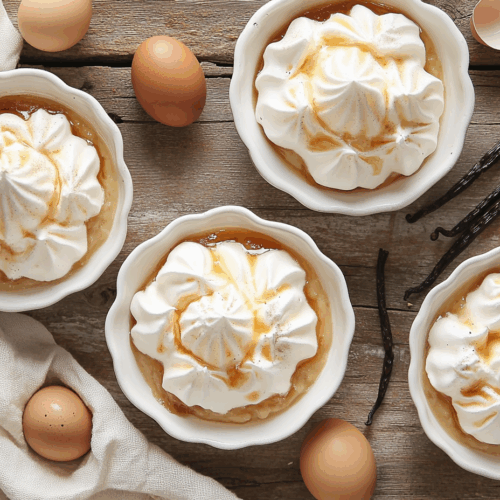
Île Flottante (Floating Island)

Equipment
- Whisk
- Saucepan
- Mixing Bowl
- Baking sheet
- Parchment Paper
- Spoon
Ingredients
For the Meringue:
- 4 large egg whites room temperature
- ½ teaspoon cream of tartar
- 1 cup granulated sugar divided
For the Custard:
- 4 large egg yolks
- 2 cups whole milk preferably organic
- 1 teaspoon vanilla extract
For the Caramel Sauce:
- ½ cup granulated sugar
- ¼ cup water
Instructions
Meringue:
- In a mixing bowl, whisk the egg whites with cream of tartar until soft peaks form. Gradually add 1/2 cup of sugar, whisking until stiff, glossy peaks form.
- Line a baking sheet with parchment paper. Spoon the meringue into six large dollops onto the parchment. Bake gently in a preheated oven at 200°F (93°C) for about 15 minutes until set but not browned.
Custard:
- While the meringues are baking, heat the milk in a saucepan over medium heat until almost simmering. In a separate bowl, whisk the egg yolks and remaining sugar, then slowly add in the hot milk, whisking continuously to prevent cooking the eggs.
- Return the mixture to the saucepan. Stir constantly over gentle heat until the custard thickens and coats the back of a spoon. Stir in the vanilla extract.
Caramel Sauce:
- In a clean saucepan, combine the sugar and water. Heat over medium-high until the sugar dissolves and caramelizes to a golden brown.
Notes
Lori’s Tips:
- For an impressive twist, infuse the custard with a hint of lemon or almond extract.
- If you’re avoiding sugar, use a sugar substitute in the meringue and custard, keeping in mind the caramel will need real sugar for the proper consistency.