

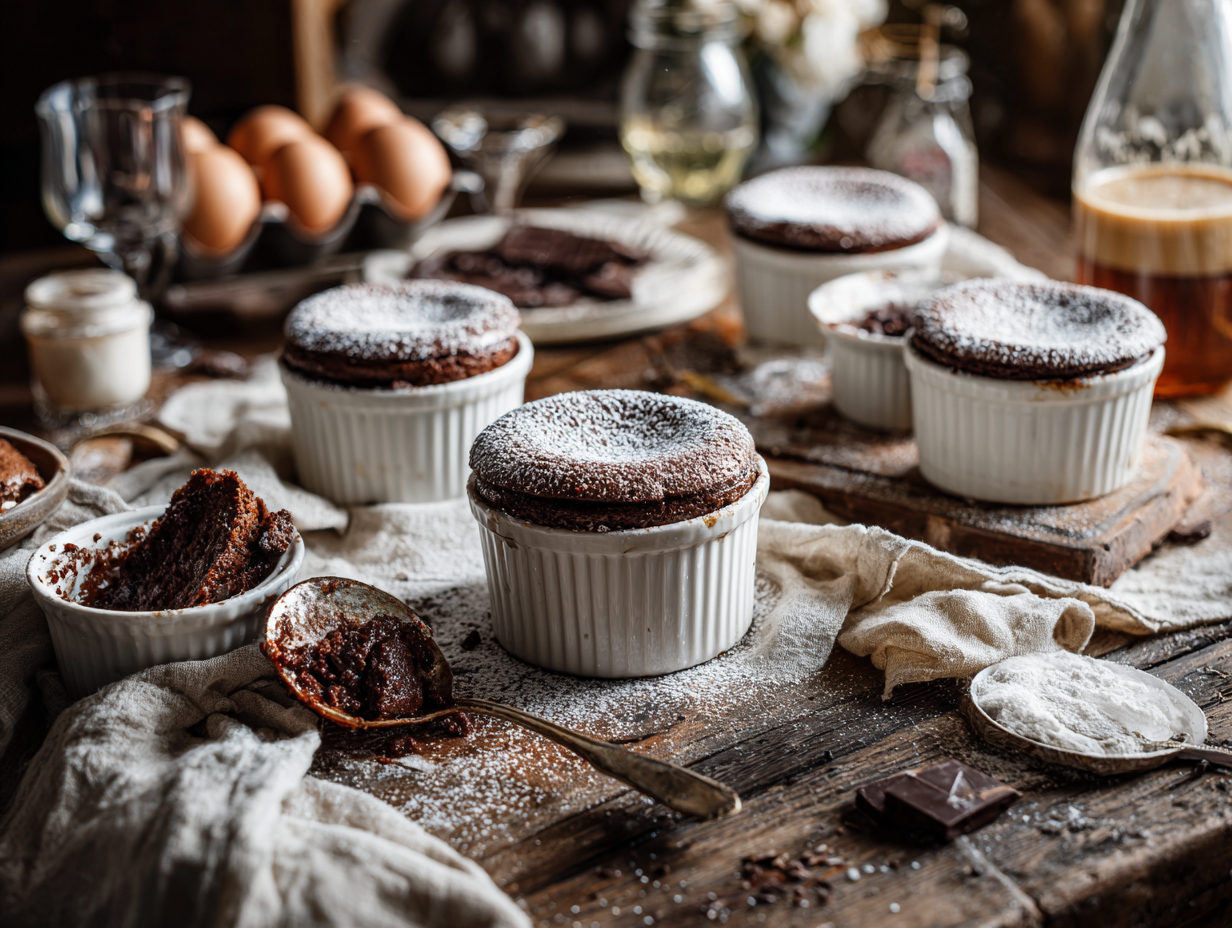
These are individual chocolate soufflés baked in small ramekins — risen, lightly set on the outside, still soft in the center, and ready in about 35 minutes start to finish. The recipe uses just six ingredients, so there’s nowhere to hide a shortcut. That’s actually the reason to make them: once you nail the technique, you have a genuinely impressive dessert that costs almost nothing and looks like you tried very hard.
The short version of why this works
Two things determine whether these soufflés rise properly. First, your egg whites need to reach stiff peaks — not just foamy, not overbeaten to dry clumps, but glossy and firm enough to hold a peak that doesn’t flop over. That structure is what lifts the batter in the oven. Second, folding matters more than most recipes admit. You’re combining a dense chocolate base with a light meringue, and over-mixing collapses the air you just built. Fold until the streaks just disappear, then stop. The slightly wobbly center at the end of baking isn’t underdone — it’s the point. It sets a little more as you carry the ramekins to the table.
Substitutions that actually work
- Dark chocolate: Stick as close to 70% cacao as you can. Lower percentages make the soufflés noticeably sweeter and a bit flatter in flavor. Higher than 85% can make the batter seize more easily when you fold in the meringue.
- Butter (dairy-free): A neutral-flavored vegan butter block works fine for both greasing the ramekins and in the chocolate base. Avoid coconut oil — it changes the texture of the set chocolate.
- Brandy add-in: The recipe card mentions brandy as an optional splash in the yolk mixture. A small amount of espresso or strong brewed coffee does the same job of deepening the chocolate flavor without adding alcohol.
- Vanilla extract: No real substitution needed, but a small scrape of vanilla bean paste gives a slightly more pronounced flavor if you have it on hand.
If something goes sideways
- The soufflés didn’t rise at all: The egg whites were likely under-beaten or the folding deflated them. Make sure the bowl and whisk are completely clean and dry before beating — any grease stops whites from whipping properly.
- They rose unevenly or leaned to one side: Your oven has a hot spot, or the ramekins weren’t level on the baking tray. Rotate the tray at the halfway point only if your oven runs noticeably uneven — do it quickly and close the door immediately.
- The batter looks grainy or broken after adding chocolate to the yolks: The melted chocolate was too hot when you combined it. Let it cool until it’s just warm to the touch before folding it into the yolk mixture.
- The soufflés collapsed before you got them to the table: Some settling is normal, but a full collapse usually means they were overbaked. Pull them when the center still has a slight wobble — they firm up fast once out of the oven, so serve within two minutes.
- The soufflés stuck to the ramekins: The butter coating wasn’t thorough enough, especially up the sides. Butter the ramekins, then coat with sugar and tap out the excess — make sure the entire interior surface is covered, including the rim.
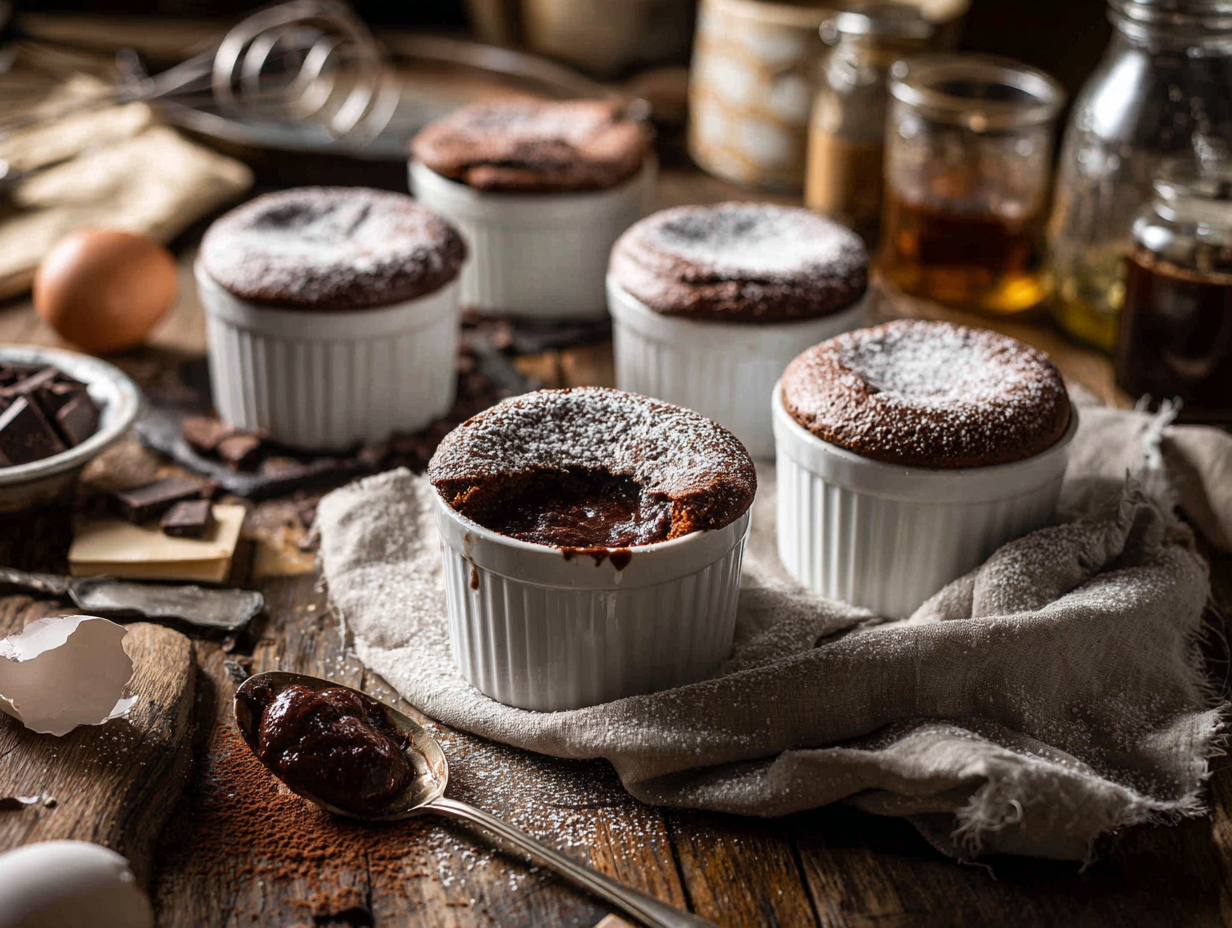
Chocolate Soufflé Cocottes

Equipment
- 4 ramekins (cocottes)
- Double boiler
- Whisk
- Mixing Bowls
- Baking Tray
Ingredients
- 4 ounces dark chocolate preferably 70% cacao, chopped
- 2 tablespoons unsalted butter plus more for greasing
- 3 large eggs separated
- 4 tablespoons granulated sugar divided
- 1 teaspoon vanilla extract
- 1 pinch salt
Instructions
- Prepare the Cocottes: Preheat the oven to 375°F (190°C). Grease the inside of each ramekin with butter and a light dusting of sugar to prevent sticking.
- Melt the Chocolate: In a double boiler, melt the dark chocolate and butter together. Stir until smooth and glossy. Remove from heat and let it cool slightly.
- Make the Meringue: In a mixing bowl, beat the egg whites with a pinch of salt until soft peaks form. Gradually add 2 tablespoons of sugar and continue to beat until stiff peaks form.
- Combine Ingredients: In a separate bowl, whisk the egg yolks with the remaining sugar until slightly pale. Stir in the vanilla extract. Gently fold the melted chocolate into the yolk mixture, and finally fold in the meringue carefully to preserve the airiness.
- Fill and Bake: Divide the mixture evenly among the prepared ramekins. Place them on a baking tray and bake for about 12-15 minutes or until the soufflés have risen and are set but still slightly wobbly in the center.
Notes
Lori’s Tips:
- For a unique flavor, add a splash of brandy to the yolk mixture.
- To make a dairy-free version, substitute margarine for butter.
- To ensure a perfectly risen soufflé, avoid opening the oven door while baking.
Serving Suggestions:
Serve immediately, dusted with cocoa powder or powdered sugar. Pair with a scoop of vanilla ice cream or a glass of dessert wine. The puffiness and center aroma will indicate perfect cook.Culinary Context:
The French cocotte refers to small, individual pots that are widely used in French baking for their precision handling. The soufflé, renowned for its decadent, airy nature, demands attention to detail and timing, elevating the dessert experience to an art form.Nutrition
Common questions
Can I prepare any part of this ahead of time?
Yes — you can make the chocolate-yolk base up to a day ahead and refrigerate it, covered. Bring it back to room temperature before folding in the meringue, then beat the egg whites fresh and assemble just before baking. Trying to hold the fully assembled batter overnight isn’t reliable; the meringue deflates and the rise suffers.
Can I fill the ramekins in advance and bake them later?
You can fill the ramekins and refrigerate them, unbaked, for up to about two hours before your guests arrive. Pull them straight from the fridge into the preheated oven — you may need to add one or two minutes to the bake time. This is the most practical approach for a dinner party.
Do I need special cocotte dishes, or will standard ramekins work?
Standard 6-ounce ceramic ramekins work perfectly. The key is that they’re oven-safe, straight-sided, and all roughly the same size so the soufflés bake evenly in the same time window.
My egg whites won’t stiffen — what’s going wrong?
The most common cause is a trace of egg yolk or grease in the bowl or on the whisk. Even a small amount of fat prevents whites from whipping to stiff peaks. Wipe your bowl and whisk with a little white vinegar on a paper towel before you start, and separate your eggs carefully.
If you liked this one
- French Brown Butter Chocolate Tart
- Chocolate Chai Pots de Crème
- Mediterranean Chocolate Mousse with Olive Oil
- French Chocolate Truffles