

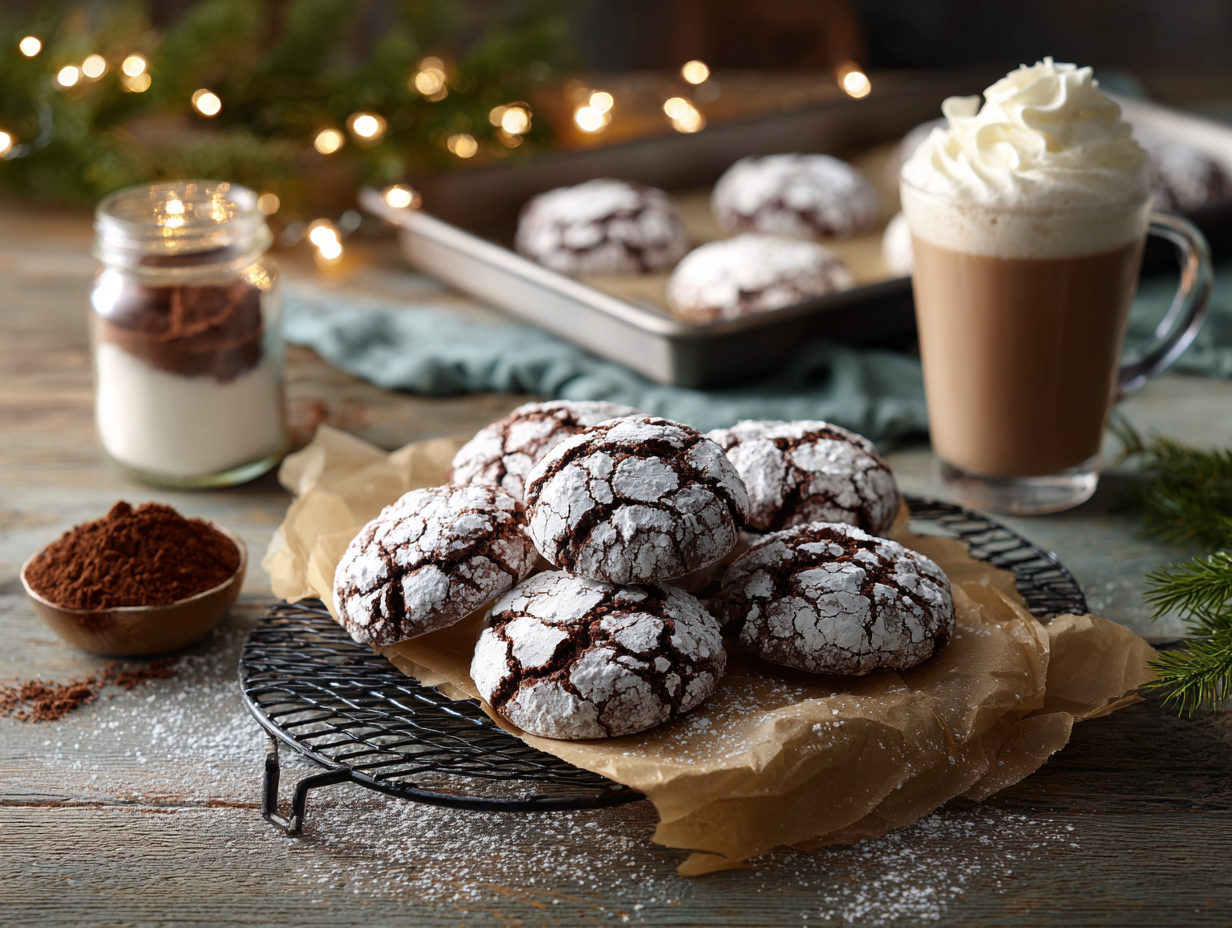
Chocolate crinkle cookies have a brownie-like center, a thin powdered-sugar crust, and that cracked surface that forms on its own in the oven — no decorating required. The dough comes together from pantry staples in about 20 minutes, then chills for at least 2 hours before baking. If you want a reliable chocolate cookie that looks impressive with almost no effort, this is it.
Shopping notes
- Cocoa powder: Dutch-processed is worth seeking out here. It has a smoother, less acidic flavor than natural cocoa, and the darker color makes the crinkle contrast sharper once the cookies bake. Most grocery stores carry it alongside regular cocoa — look for labels that say “Dutch-process” or “alkalized.”
- Vegetable oil: Any neutral oil works — canola, sunflower, or refined coconut oil. Avoid olive oil or anything with a strong flavor.
- Confectioners sugar: Use fresh, lump-free sugar for coating. Sift it if it has been sitting in a humid pantry. Clumpy sugar sticks unevenly and the crinkle pattern suffers.
The technique that matters
The chilling step is not optional. The dough is soft and sticky when it first comes together — too soft to roll into clean balls. Two hours in the fridge firms it up enough to handle, and cold dough also spreads more slowly in the oven, which is what creates that thick, fudgy center rather than a flat, crispy cookie. When you roll the balls in confectioners sugar, coat them generously — a thin coating disappears during baking and you lose the contrast. Roll each ball, set it down, then roll it once more before it goes on the sheet. That double coat is what gives you the bright white cracks against the dark chocolate.
Common problems and fixes
- Cookies spread too thin and turn crispy: The dough was not cold enough. If your kitchen is warm, chill the shaped, coated balls on the baking sheet for 10 minutes before they go in the oven.
- No visible cracks: Usually caused by too little confectioners sugar coating or dough that was too warm. Re-roll in sugar immediately before baking, not in advance.
- Powdered sugar melts into the surface: This happens when cookies are stored in an airtight container while still warm. Cool completely on a wire rack before stacking or packaging.
- Dry, cakey texture instead of fudgy: The cookies were overbaked. Pull them at exactly 10 minutes — the centers will look underdone, but they firm up as they cool on the sheet.
- Dough too stiff to scoop after chilling overnight: Let it sit at room temperature for 10 minutes before rolling. It softens quickly.
Make-ahead notes
The dough keeps in the fridge for up to 3 days, tightly wrapped. For longer storage, portion the dough into balls first, freeze them on a parchment-lined tray until solid, then transfer to a zip-top bag — they keep for up to 2 months. Bake straight from frozen, adding 2 minutes to the bake time, and roll in confectioners sugar just before baking rather than before freezing. Already-baked cookies stay soft for 4 days at room temperature in a container with a loose-fitting lid — skip the airtight seal, which traps moisture and turns the sugar coating tacky. For gifting, layer them between sheets of parchment in a tin or box; they stack cleanly and hold their appearance for 3 days without any special packaging.
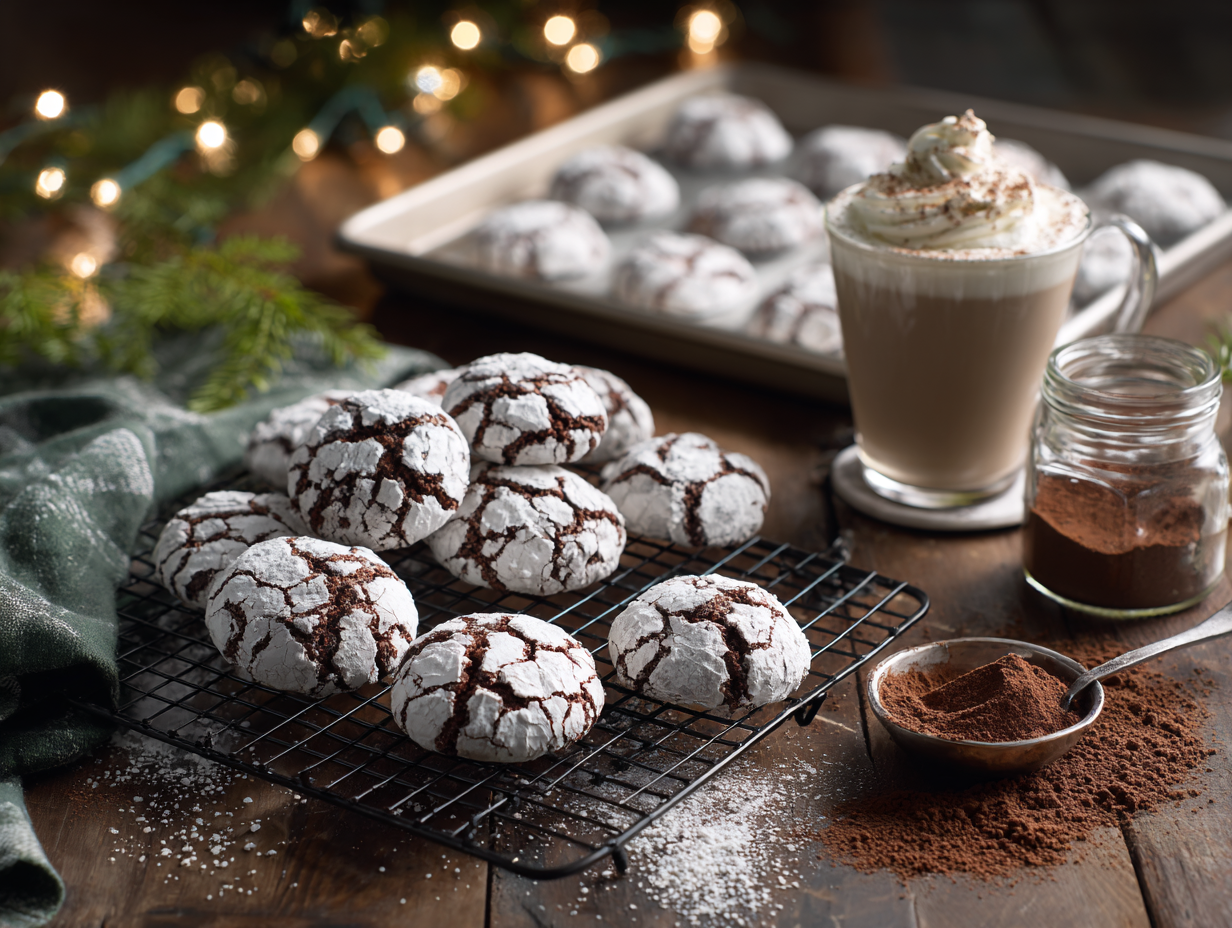
Classic Chocolate Crinkle Cookies

Equipment
- Mixing Bowl
- Whisk
- Baking Sheets
- Parchment Paper
- Measuring cups and spoons
- Sieve
Ingredients
Dry Ingredients
- 1 cup all-purpose flour
- 0.5 cup unsweetened cocoa powder Preferably Dutch-processed for a richer taste
- 1 tsp baking powder
- 0.25 tsp salt
Wet Ingredients
- 0.75 cup granulated sugar
- 0.25 cup vegetable oil
- 2 large eggs Preferably at room temperature
- 1 tsp vanilla extract Pure for the best flavor
Coating
- 0.5 cup confectioners' sugar
Instructions
- Preheat the oven to 350°F (175°C). Line two baking sheets with parchment paper.
- In a mixing bowl, sieve together flour, cocoa powder, baking powder, and salt. This ensures a smooth batter.
- In a separate bowl, whisk together sugar and vegetable oil until well combined and slightly fluffy.
- Add eggs one at a time to the sugar mixture, mixing well after each addition. Stir in the vanilla extract.
- Gradually add the dry ingredients to the wet ingredients, mixing until just combined and a dough forms.
- Use a spoon or dough scoop to form 1-inch balls and roll them in confectioners' sugar until well-coated.
- Place the balls onto the prepared baking sheets, spacing them 2 inches apart.
- Bake for 10 minutes or until the edges are firm. The centers should be slightly soft.
- Allow the cookies to cool on the baking sheets for a few minutes before transferring to a wire rack to cool completely.
Notes
Lori’s Tips
- For a richer flavor, you can substitute some of the granulated sugar with brown sugar.
- To make the cookies more festive, add a pinch of cinnamon or cayenne pepper for a spicy kick.
Nutrition
FAQ
Can I make these without chilling the dough?
No — the dough is too soft to roll without chilling, and skipping it produces flat, greasy cookies. A minimum of 2 hours in the fridge is needed; overnight works even better.
Can I use butter instead of vegetable oil?
You can, but the texture will change. Butter produces a slightly firmer, less tender cookie. If you swap it in, melt the butter and let it cool before mixing — do not cream it.
Why did my confectioners sugar disappear during baking?
The coating was too thin or the dough was too warm when rolled. Coat each ball heavily — it should look almost white — and roll it a second time right before placing it on the sheet.
Can I double the recipe?
Yes, it doubles cleanly. Just make sure your mixing bowl is large enough, since the dough is dense and stiff once the dry ingredients are added.
How do I know when they are done if the centers still look soft?
Look at the edges — they should be set and no longer shiny. The center will look underbaked at 10 minutes, but it continues cooking on the hot sheet for a few minutes after you pull them from the oven.
Can I add mix-ins like chocolate chips or nuts?
Small mix-ins work, but keep the total amount under ¼ cup per batch — too much weight prevents the cookies from spreading and cracking properly. Skip the garnish on top entirely; it does not adhere well and is not worth the extra step.
What to bake next
- Chocolate Peanut Butter Swirl Fudge
- Dark Chocolate Orange Shortbread
- Maple Cream Sandwich Cookies
- French Chocolate Truffles