

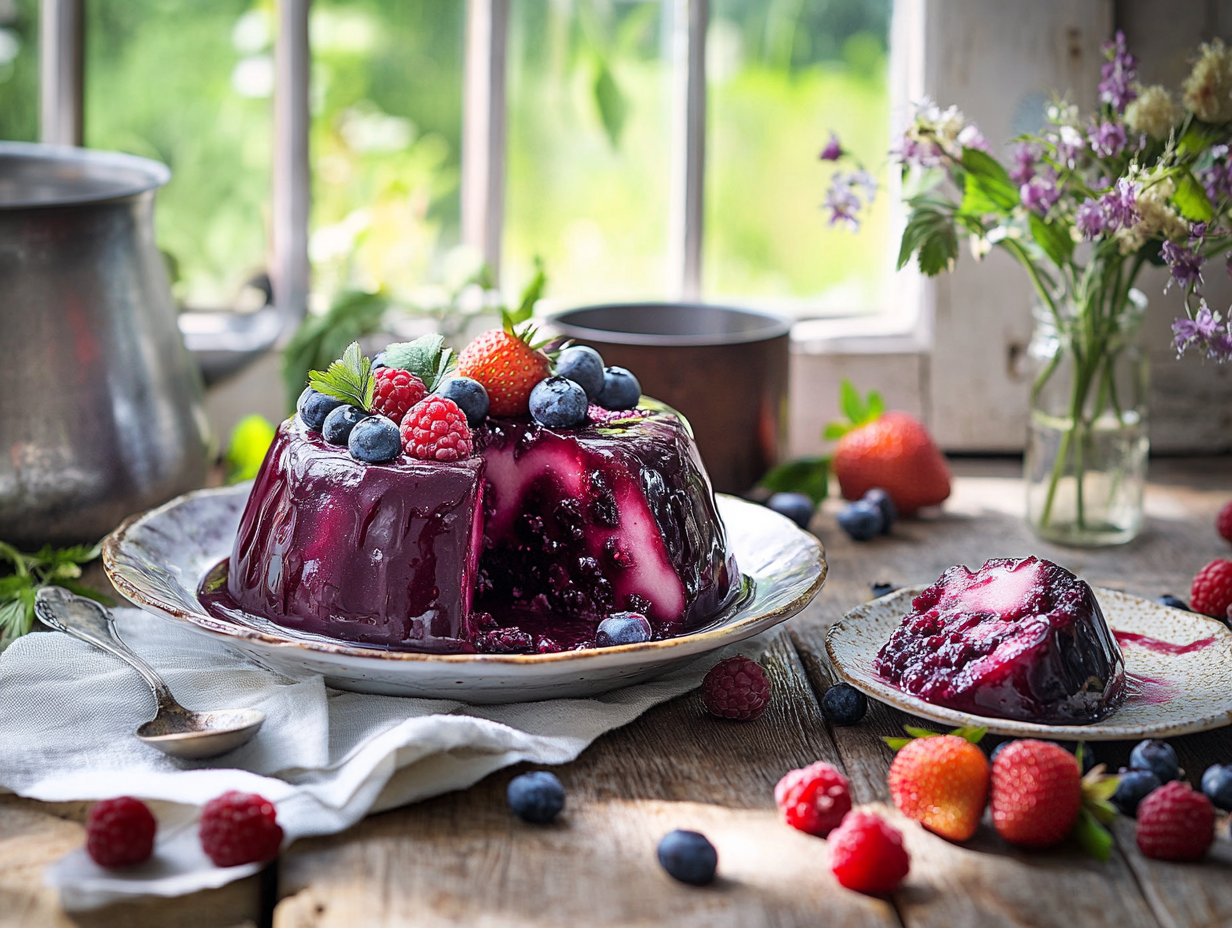
Summer pudding is a no-bake British dessert built from white bread and fresh berries — the bread soaks up the berry juice overnight and sets into a sliceable, deeply colored pudding that unmolds cleanly. It takes about 20 minutes of hands-on work, then the fridge does everything else. If you have a bowl, a saucepan, and a loaf of bread, you can make this.
Why this recipe works
Two things make this pudding succeed. First, the berries are cooked gently over low heat — just long enough to release their juice without turning to mush. That juice is what stains and binds the bread, so protecting it matters. Second, the weight placed on top during chilling compresses the layers, forcing the juice into every gap in the bread and ensuring the pudding holds its shape when you flip it out. Skip the weight or cut the chilling time short and you’ll get a soggy, collapsing result instead of clean slices.
Mistakes to avoid
- Leaving gaps in the bread lining. Any gap becomes a weak point where the pudding cracks or fruit spills when unmolded. Overlap the bread pieces slightly and patch any holes before you add the filling.
- Using fresh, soft bread. Day-old bread absorbs juice without disintegrating. Very fresh bread turns to paste under the weight. If your loaf is fresh, leave the slices out uncovered for a few hours first.
- Not reserving enough juice. You need juice both for dipping the bread and for pouring over any pale patches after unmolding. Keep back more than you think you’ll need — at least a few tablespoons.
- Rushing the unmolding. Pull the pudding straight from the fridge and invert it immediately onto a rimmed plate, not a flat one. The rim catches any juice that runs off. If it sticks, press gently on the plastic wrap through the bowl before lifting.
- Using only one type of berry. A single berry gives a flat, one-note flavor. The mix of tart and sweet varieties — raspberries, blackberries, strawberries, blueberries — is what gives the pudding its depth. Frozen berries work, but thaw and drain them first or the extra water dilutes the syrup.
Keeping it fresh
Summer pudding is genuinely better made ahead — 24 hours is the minimum, but 48 hours gives a firmer set and more evenly saturated bread throughout. Keep it in the pudding basin, still weighted, in the fridge for up to 3 days before serving. Once unmolded, cover and refrigerate leftovers for another day; after that the bread starts to break down. Freezing is not recommended — the bread texture suffers badly on thawing. Serve it cold, straight from the fridge. Skip the garnish — a spoonful of crème fraîche on the side is all it needs, and it saves washing up a piping bag.
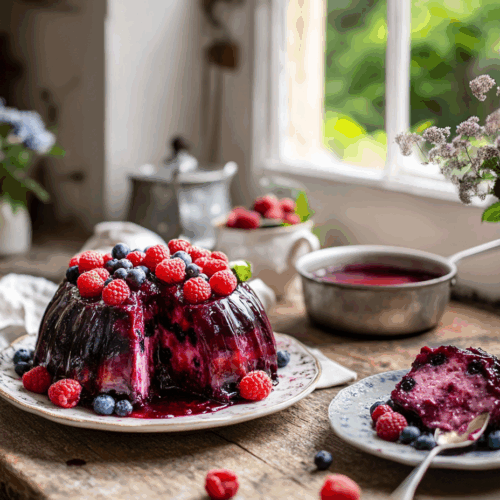
Summer Pudding

Equipment
- 1 Mixing Bowl
- 1 Saucepan
- 1 Sieve
- 1 Pudding basin or bowl
- 1 Plastic wrap
Ingredients
- 4 cups mixed fresh berries such as raspberries, strawberries, blueberries, and blackberries
- 1 cup granulated sugar
- 1 loaf white bread preferably a day old, crusts removed
Instructions
- In a saucepan over low heat, combine 3 cups of the berries with sugar. Stir gently until sugar dissolves, and the berries release their juices, about 5 minutes. Do not let it boil.
- Using a sieve set over a bowl, strain the berry mixture, reserving the juice.
- Line a 1.5-quart pudding basin or bowl with plastic wrap, leaving enough overhang to cover the top later.
- Cut the slices of bread into rectangles and triangles, and dip them briefly into the reserved berry juice.
- Line the base and sides of the pudding basin with juice-dipped bread, ensuring there are no gaps.
- Spoon the whole berries into the basin and cover with more juice-dipped bread, sealing the top completely.
- Fold over the plastic wrap and cover with a small plate, followed by a weight to compress the pudding.
- Refrigerate the pudding for at least 24 hours, allowing the flavors to meld.
Notes
Lori’s Tips
- For a twist of flavor, consider adding a splash of cassis or cherry liqueur to the berry syrup.
- If fresh berries aren't available, frozen berries work just as fine.
Nutrition
FAQ
Can I use any type of white bread, or does it matter?
A plain, medium-sliced white sandwich loaf works best. Thick-cut bread takes longer to soak through and can leave dry patches in the center; thin-cut tears easily when you’re lining the bowl. Avoid anything with seeds, grains, or a thick crust — those textures don’t absorb juice evenly.
What if my pudding has pale, unsoaked patches when I unmold it?
Pour the reserved berry juice directly over the pale spots right after unmolding — it soaks in within a minute or two. This is exactly why you set juice aside, so don’t skip that step even if the pudding looks well-colored in the bowl.
Do I need a proper pudding basin, or will any bowl work?
Any deep, round bowl in the 1.5-quart range works fine. The shape just needs to be wider at the top than the bottom so the pudding slides out cleanly. A standard mixing bowl or even a large glass bowl with straight-ish sides will do the job.
More sweet things to bake
- Strawberry Elderflower Fool
- Roasted Strawberry Ice Cream
- Provence-Inspired Blackberry Lavender Crumble
- Almond Croissant Bread Pudding