

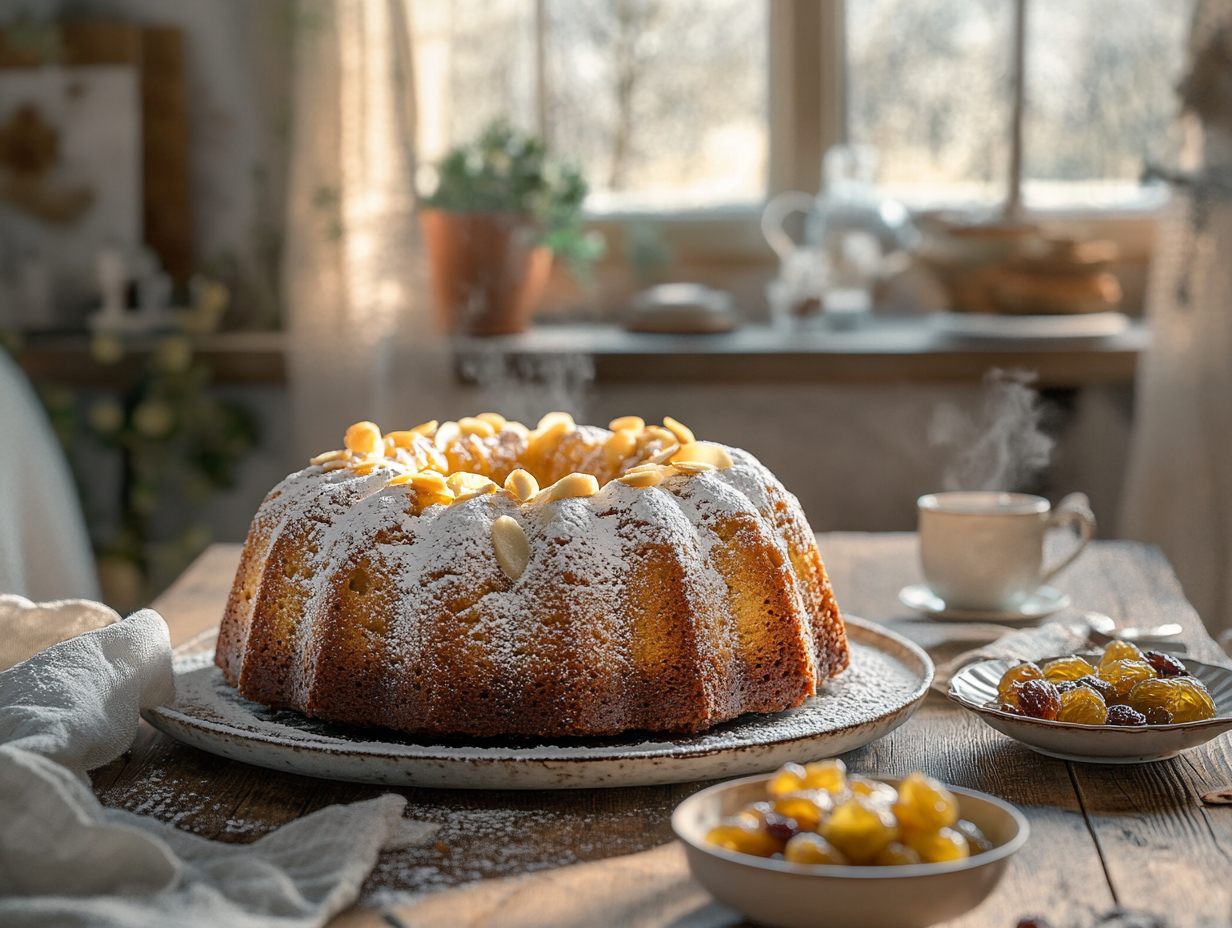
Kouglof is a yeasted, brioche-style cake baked in a tall fluted ring mold, studded with rum-soaked raisins and almonds. It takes the better part of an afternoon because of two long rises, but most of that time is hands-off. The payoff is a cake that’s genuinely different from anything you can buy at a grocery store — tender, lightly sweet, and good for days.
Why this recipe works
Two things make this recipe reliable. First, soaking the raisins in rum before the dough comes together means they won’t pull moisture out of the crumb during baking — you get plump, soft fruit instead of shriveled pockets. Second, the dough is enriched with a full cup of softened butter and four eggs, which slows the yeast slightly and produces a tight, even crumb that holds its shape when you unmold it. That rich dough is also why the cake stays moist for several days without going stale the way a lean bread would.
If something goes sideways
- Dough won’t come together or feels too stiff: All-purpose flour varies by brand and how it’s measured. If the dough looks shaggy after a few minutes of mixing, add warm milk one tablespoon at a time until it smooths out. Don’t add more flour to fix stickiness — this dough is supposed to be soft.
- Cake sticks to the pan: A Bundt pan with any intricate fluting needs more than a light greasing. Use softened butter applied with a pastry brush, get into every groove, then dust with flour and tap out the excess. Skipping the flour step is the most common reason for a stuck cake.
- Top browns too fast before the center is set: Oven hot spots and dark-colored pans both cause this. Tent the pan loosely with foil after 30 minutes if the top is already deep golden. The skewer test is your real doneness signal — color alone isn’t enough.
- Second rise is very slow: Enriched doughs rise more slowly than lean ones, especially if your kitchen is cool. If the dough hasn’t reached the top of the pan after an hour, give it another 20–30 minutes. Rushing it into the oven early means a dense, heavy result.
- Raisins sink to the bottom: This usually happens when the raisins are still wet from soaking. Pat them dry with a paper towel before folding them into the dough. Tossing them in a tablespoon of flour from the recipe’s total also helps them stay distributed.
Storage and freezing
Wrap the cooled cake tightly in plastic wrap and keep it at room temperature for up to 3 days — the butter content actually helps it hold moisture longer than most cakes. For longer storage, freeze individual slices wrapped in plastic and then foil for up to 2 months; thaw at room temperature for about an hour. Skip the powdered sugar before freezing and dust it fresh after thawing, since the sugar absorbs into the surface and disappears otherwise. If you want to spread the work across two days, complete the first rise, punch the dough down, cover it tightly, and refrigerate overnight; shape and do the second rise the next morning straight from the fridge, adding 20–30 minutes to the rise time.
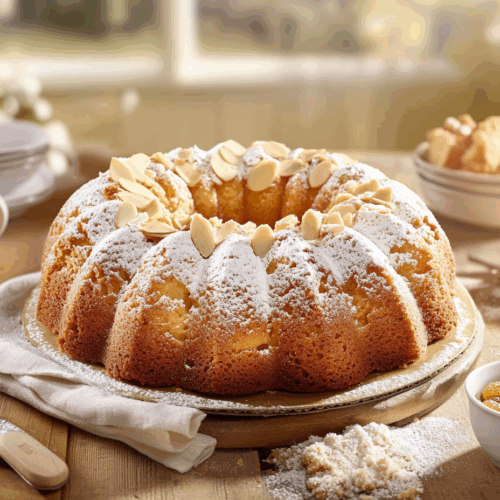
Kouglof (Alsatian Bundt Cake)

Equipment
- Bundt pan
- Mixing Bowls
- Whisk
- Wooden spoon
- Kitchen towel
- Oven
Ingredients
- 1 cup raisins preferably golden raisins
- 2 tablespoons rum dark rum for soaking raisins
- 3 ½ cups all-purpose flour sifted
- ¼ cup warm milk about 110°F (43°C)
- 2 ¼ teaspoons active dry yeast one packet
- 1 cup unsalted butter softened
- ½ cup granulated sugar
- 4 large eggs at room temperature
- 1 teaspoon salt
- ½ cup slivered almonds lightly toasted
Instructions
- Preparation: Begin by soaking the raisins in dark rum for at least 1 hour to allow them to plump and absorb the flavor.
- Activate Yeast: In a small bowl, dissolve the active dry yeast in warm milk. Let it sit for about 5 minutes until frothy— this indicates the yeast is activated.
- Mix the Dough: In a large mixing bowl, combine sifted flour, sugar, and salt. Create a well in the center, and incorporate the yeast mixture, softened butter, and eggs. Mix thoroughly using a wooden spoon until the dough is smooth and elastic.
- First Rise: Cover the bowl with a kitchen towel and place it in a warm area. Allow the dough to rise for about 1.5 hours or until it doubles in size.
- Add Raisins and Almonds: Gently deflate the dough and mix in the soaked raisins and toasted almonds.
- Second Rise: Transfer the dough into a well-buttered Bundt pan, evenly distributing it. Allow it to rise again for 1 hour until it reaches the top of the pan.
- Bake: Preheat the oven to 350°F (175°C). Bake the Kouglof for 45-50 minutes or until it is golden brown and a skewer inserted into the center comes out clean.
- Cool and Serve: Let the cake cool in the pan for 10 minutes before carefully inverting it onto a wire rack. Dust generously with powdered sugar before serving.
Notes
- For a citrusy twist, add some lemon or orange zest to the dough.
- If you prefer a nut-free version, increase the quantity of raisins or use dried cranberries instead.
Nutrition
Frequently asked questions
Can I make this without rum?
Yes — soak the raisins in warm orange juice or apple juice instead. The raisins will still plump up and stay moist in the crumb; you just won’t get the faint boozy warmth, which is a minor difference most people won’t notice.
Do I need a proper Kouglof mold, or will a regular Bundt pan work?
A standard 10-cup Bundt pan works fine. The traditional ceramic mold produces a slightly crispier crust, but the flavor and texture of the crumb are the same — use whatever you have.
My yeast didn’t foam after 5 minutes. What went wrong?
The milk was probably too hot or too cold. Active dry yeast activates best between 105°F and 115°F — above 120°F it dies, and below 100°F it barely moves. Start over with fresh yeast and milk at the right temperature before mixing the dough.
Can I use instant yeast instead of active dry yeast?
Yes, use the same amount and skip the proofing step — just mix it directly into the flour with the other dry ingredients. Rise times may be slightly shorter, so start checking the dough earlier than the recipe suggests.
More sweet things to bake
- Chocolate Babka
- Almond Croissant Bread Pudding
- Pear and Almond Cake
- French Brown Butter Chocolate Tart