

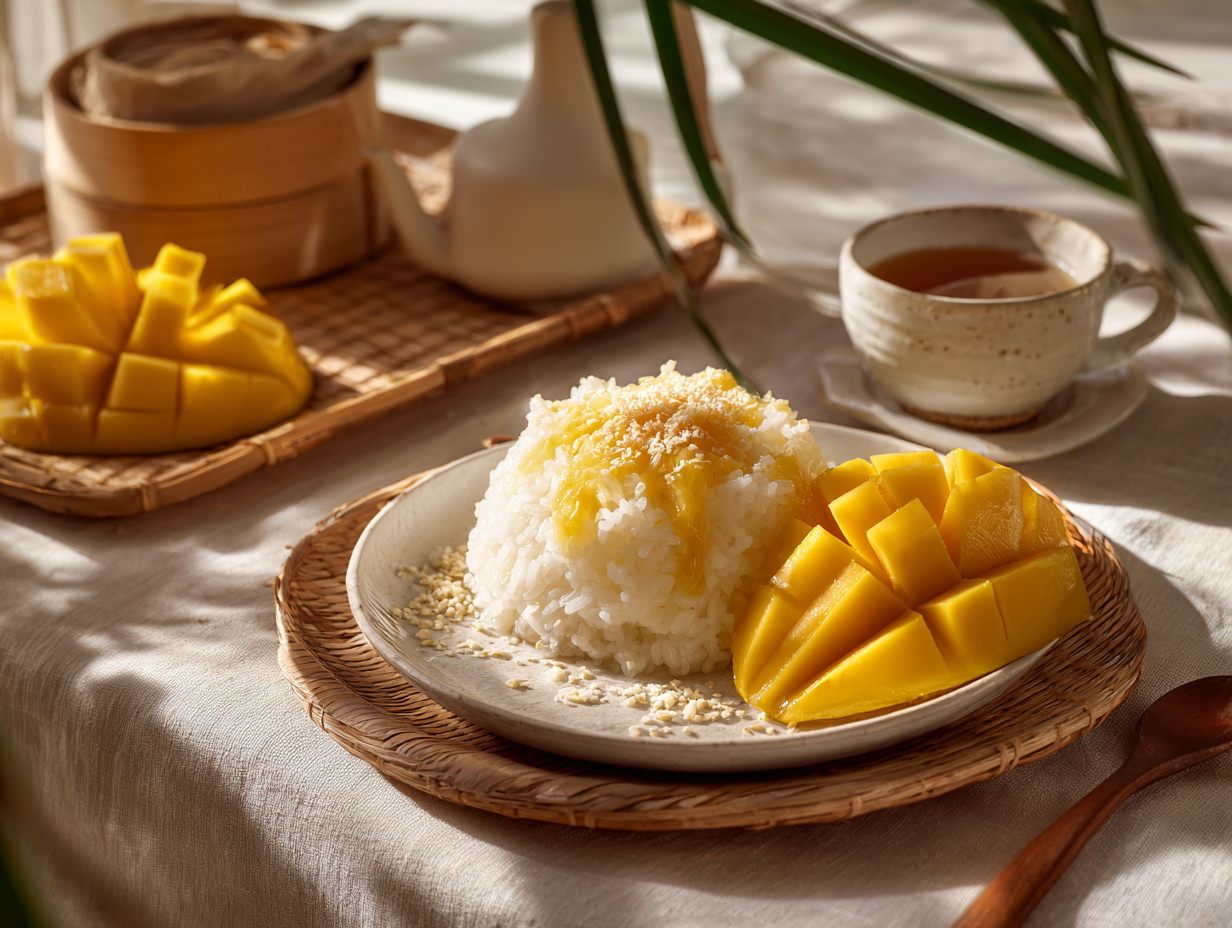
Thai Sticky Rice with Mango—traditionally known as “Khao Niew Mamuang”—is one of Thailand’s most iconic desserts, combining rich cultural heritage with simple, wholesome ingredients. Its popularity spans generations and borders, earning a beloved place on Thai street corners and fine-dining menus alike. This dessert not only highlights the use of indigenous ingredients such as glutinous rice, coconut milk, and mangoes, but also reflects core values of Thai cuisine: balance, harmony, and freshness.
The star of this dessert is glutinous rice, also called sticky rice or sweet rice. Unlike regular rice, sticky rice has a higher starch content (amylopectin), which gives it a chewy and cohesive texture when steamed. This rice has long been a staple, especially in northern and northeastern Thailand, where it plays a central role in daily meals and ceremonial offerings. In desserts such as this one, sticky rice is elevated by being infused with coconut milk—the creamy, slightly sweet liquid extracted from mature coconut flesh. Combined with sugar and a pinch of salt, the coconut milk forms a luscious sauce that transforms the neutral base of the rice into a fragrant and decadent delight.
What truly completes this dish, however, is the ripe mango. Thailand is known for varieties like Nam Dok Mai, recognized for its smooth texture, vibrant orange-yellow color, and intense sweetness. These mangoes are at their peak during the hot summer months, coinciding with major Thai festivals such as Songkran, the Thai New Year. It’s during this time that sticky rice with mango is most frequently enjoyed, not just for its fruity coolness, but also because it symbolizes abundance and prosperity. The mango, in this context, becomes more than just fruit—it’s a gift from the land.
Thai Sticky Rice with Mango also speaks volumes about the Thai approach to dessert. Unlike Western confections that may rely heavily on baking and refined flours, traditional Thai sweets are often steamed, layered, or wrapped, focusing on texture and the natural sweetness of tropical ingredients. The use of sesame seeds as a garnish adds a gentle nuttiness and a slight crunch, contrasting the smooth mango flesh and the tender, sticky rice.
This humble dish also carries ceremonial significance—often featured in family gatherings, weddings, or religious events, it pays homage to the abundance of harvest while celebrating community and kinship. Its presentation—usually on banana leaves or wooden trays—is as thoughtfully curated as its flavor, reflecting the importance of beauty and balance in Thai culture.
In short, Thai Sticky Rice with Mango is more than just a dessert; it’s a cultural expression, a celebration of seasonal bounty, and a sweet reminder of Thailand’s rich culinary heritage. Whether enjoyed on a bustling Bangkok street or recreated in your own kitchen, it offers a beautiful, memorable experience with every bite.
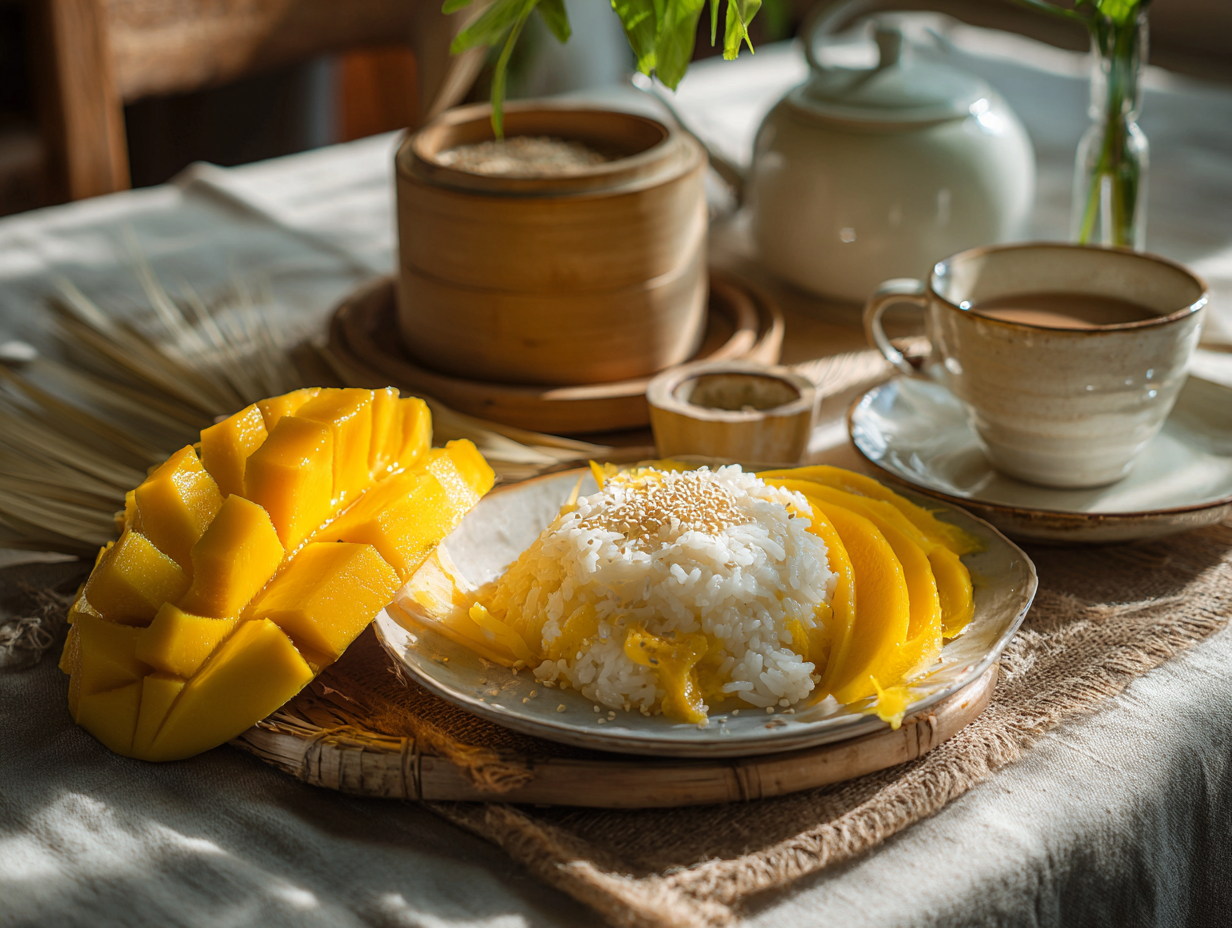
Thai Sticky Rice with Mango

Equipment
- Steamer
- Mixing Bowl
- Saucepan
Ingredients
- 1 cup glutinous rice also known as sticky rice
- 1 ½ cups coconut milk preferably full-fat
- ½ cup sugar granulated
- ½ teaspoon salt
- 2 medium ripe mangoes peeled and sliced
- 1 tablespoon sesame seeds toasted, for garnish
Instructions
- Rinse the glutinous rice several times until water runs clear. Soak the rice in water for at least 2 hours or overnight for better results.
- Drain the soaked rice and place it in a steamer lined with cheesecloth. Steam for 25-30 minutes until the rice is fully cooked and has a glossy sheen.
- In a saucepan, combine coconut milk, sugar, and salt. Heat over medium flame until sugar is fully dissolved, but avoid boiling.
- Transfer the cooked sticky rice to a mixing bowl and gradually stir in the coconut milk mixture. Cover and let the rice absorb the coconut milk for 30 minutes.
- Slice the mangoes thinly, arranging them beautifully on a plate alongside the sticky rice.
- Garnish the dish with toasted sesame seeds.
Notes
Tammy’s Tips:
- For a slightly nutty flavor, you can substitute a portion of the coconut milk with unsweetened almond milk.
- To keep the rice from getting mushy, ensure it’s not over-steamed, maintaining a subtle bite.
Serving Suggestions:
- Present the dish on a banana leaf for an authentic touch.
- Pair it with a light jasmine tea to complement the tropical flavors.