

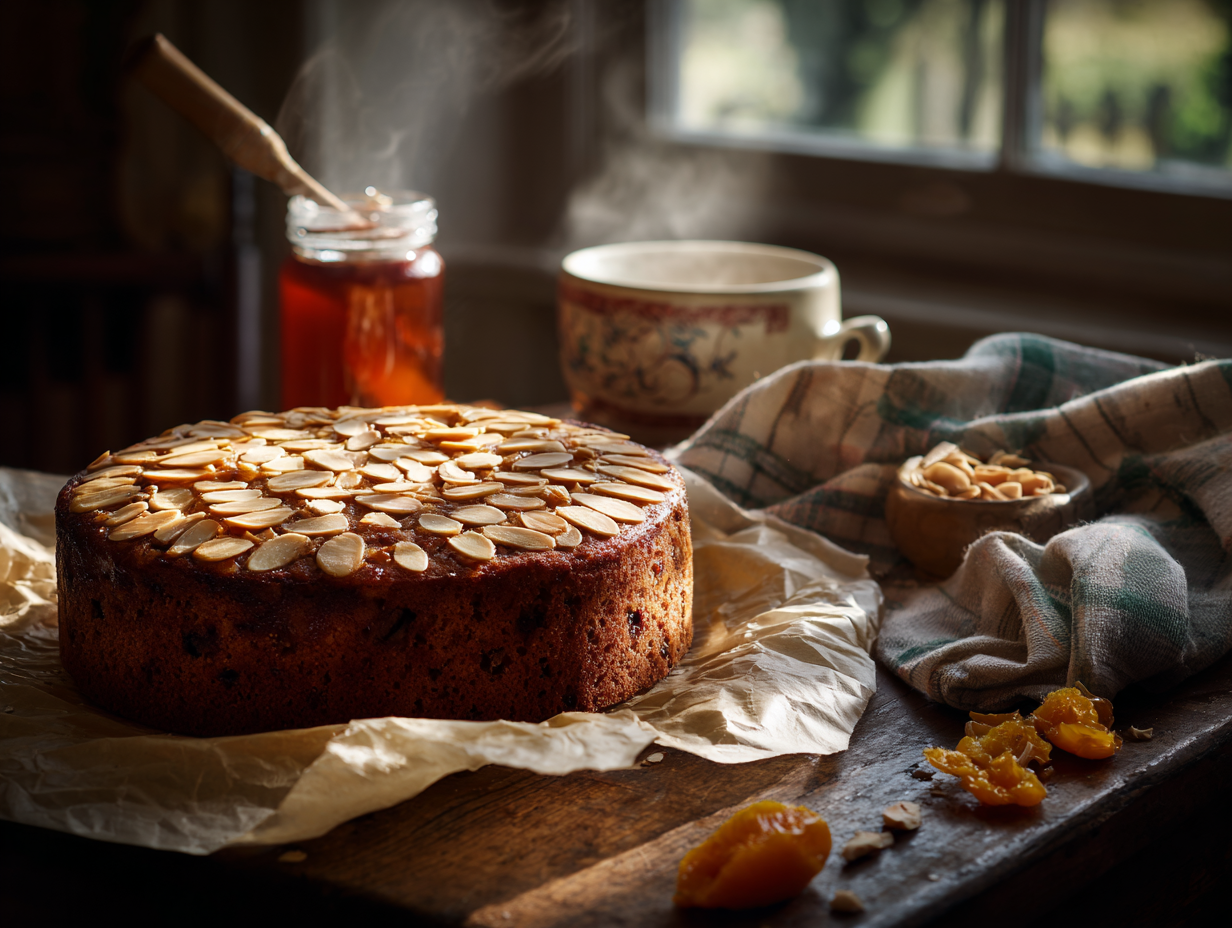
Dundee Cake is a Scottish fruitcake made with dried fruit, orange zest, marmalade, and a blanched almond topping arranged in concentric circles. It bakes low and slow — 2.5 hours at 300°F — which gives it a moist, dense crumb that holds together cleanly when sliced. If you want a cake that keeps well, travels well, and tastes better on day two than day one, this is it.
The technique that matters
The two things that will make or break this cake are creaming and folding. Cream the butter and sugar long enough — at least 3 to 4 minutes with an electric mixer — until the mixture is pale and noticeably fluffy. This builds the structure that keeps the fruit suspended rather than sinking to the bottom. Once you add the flour, switch to a spatula and fold gently. Overmixing at this stage develops gluten and tightens the crumb, which works against the tender texture you’re after. Fold just until no dry streaks remain, then stop. The batter will be thick, and that’s correct.
About the ingredients
- Mixed dried fruits: Most supermarkets sell a pre-mixed bag of sultanas, raisins, and peel — that works fine here. Avoid anything with added sugar coating, which makes the fruit cloyingly sweet.
- Marmalade: Orange marmalade is traditional and the right call. A coarse-cut marmalade adds small pockets of citrus throughout the batter; fine-cut blends in more evenly. Either works.
- Blanched almonds: These go on top for the signature look. Buy them pre-blanched to save time — skip blanching your own almonds at home, not worth the extra dish.
- Orange zest: Use a fresh orange, not bottled zest. The difference in flavor is significant, and you only need two tablespoons.
Keeping it fresh
Wrapped tightly in parchment and then foil, Dundee Cake keeps at room temperature for up to 10 days — the fruit and butter content help it stay moist. If you want to make it further ahead, it freezes well for up to 3 months; wrap individual slices so you can pull out just what you need. Refrigerating it is not recommended because the cold firms up the butter and makes the crumb dense and dry. For the best flavor, bake it at least one day before you plan to serve it; the orange and fruit notes settle and deepen overnight.
Troubleshooting
- Almonds sliding off the top before baking: Press each almond gently but firmly into the surface of the batter before it goes in the oven. They need direct contact with the batter to stay put as the cake rises.
- Top browning too fast before the center is done: Loosely tent the pan with foil after the first 90 minutes. The cake needs the full 2.5 hours, and the low oven temperature helps, but every oven runs differently.
- Fruit sinking to the bottom: This usually means the batter was too thin, often from under-creaming the butter and sugar. Make sure the mixture is genuinely pale and fluffy before you add the eggs.
- Cake sticking to the pan: Line both the base and the sides of the springform pan with parchment, not just the base. The batter is heavy and bakes for a long time, so a full lining is worth the effort.
- Dense, gummy crumb: The cake was likely underbaked. A skewer should come out completely clean with no wet batter clinging to it. If you see moist crumbs, give it another 10 to 15 minutes and test again.
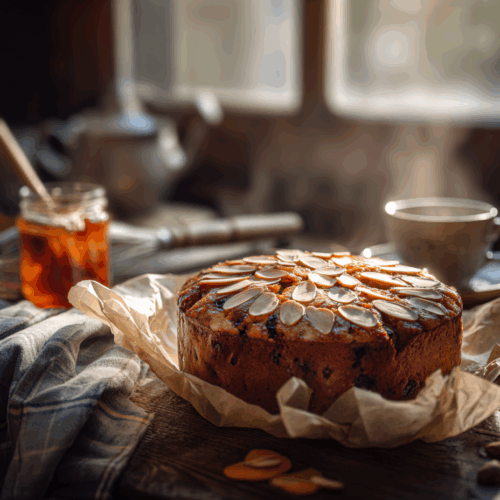
Dundee Cake

Equipment
- 9-inch springform cake pan
- Mixing Bowls
- Electric Mixer
- Whisk
- Spatula
- Oven
Ingredients
- 1 cup unsalted butter softened
- 1 cup granulated sugar
- 4 large eggs room temperature
- 2 cups all-purpose flour sifted
- 1 teaspoon baking powder
- 1 cup mixed dried fruits chopped
- 0.5 cup currants
- 0.5 cup almonds blanched
- 2 tablespoons orange zest freshly grated
- 2 tablespoons marmalade preferably orange
Instructions
- Prepare the Oven and Pan: Preheat your oven to 300°F (150°C). Grease and line a 9-inch springform cake pan with parchment paper.
- Cream Butter and Sugar: In a large mixing bowl, use an electric mixer to cream the softened butter and granulated sugar together until light and fluffy.
- Incorporate Eggs: Add eggs one at a time, beating well after each addition. The mixture should be smooth and well-integrated.
- Combine Dry Ingredients: In a separate bowl, sift together the flour and baking powder. Gradually fold this into the creamed mixture using a spatula.
- Add Fruits and Flavorings: Gently fold in the mixed dried fruits, currants, almonds, orange zest, and marmalade. Ensure they are evenly distributed throughout the batter.
- Pour and Arrange: Pour the batter into the prepared cake pan. Arrange extra blanched almonds in concentric circles over the top for decoration.
- Bake: Bake in the preheated oven for approximately 2 hours and 30 minutes, or until a skewer inserted into the center comes out clean. The cake should have a golden-brown top with a firm texture.
- Cool and Serve: Allow the cake to cool in the pan for 10 minutes before transferring it to a wire rack to cool completely. Serve in slices, ideally with a warm cup of tea.
Notes
- For an added depth of flavor, consider soaking the dried fruits in a little whiskey or brandy overnight. This traditional method enriches the cake and adds a festive aroma.
Nutrition
Your questions, answered
Can I use a regular round cake pan instead of a springform pan?
Yes, a regular 9-inch round pan works, but line it carefully with parchment on the sides and bottom so you can lift the cake out cleanly. A springform just makes removal easier given how dense and heavy this cake is.
Do I have to soak the dried fruit overnight?
No, soaking is optional. The recipe works without it. If you do soak the fruit in whisky or brandy overnight, drain off any excess liquid before folding the fruit into the batter so you don’t throw off the consistency.
My oven runs hot — should I adjust the temperature?
Yes, drop it by 15 to 25°F and start checking for doneness around the 2-hour mark. A cake thermometer reading of 200 to 205°F in the center is a reliable sign it’s done if you’re unsure about the skewer test.
Can I substitute the marmalade with something else?
You can use apricot jam in a pinch, but the citrus note will be much weaker. Orange marmalade is genuinely central to the flavor here, so it’s worth picking up a jar rather than substituting.
How do I know when the cake is fully cooled before slicing?
Wait until the cake is completely cool to the touch at the base — usually 2 hours on a wire rack. Slicing too early causes the crumb to compress and tear because the structure is still setting.
Can I halve the recipe to make a smaller cake?
Halving the ingredients and using a 6-inch pan is possible, but reduce the bake time significantly — start checking at 1 hour 30 minutes. The bake time for fruitcake is tied closely to pan size, so watch it rather than relying on a fixed time.
What to bake next
- Pear and Almond Cake
- Dark Chocolate Orange Shortbread
- Zesty Mediterranean Lemon Yogurt Loaf
- Luxurious Almond Croissant Bread Pudding