

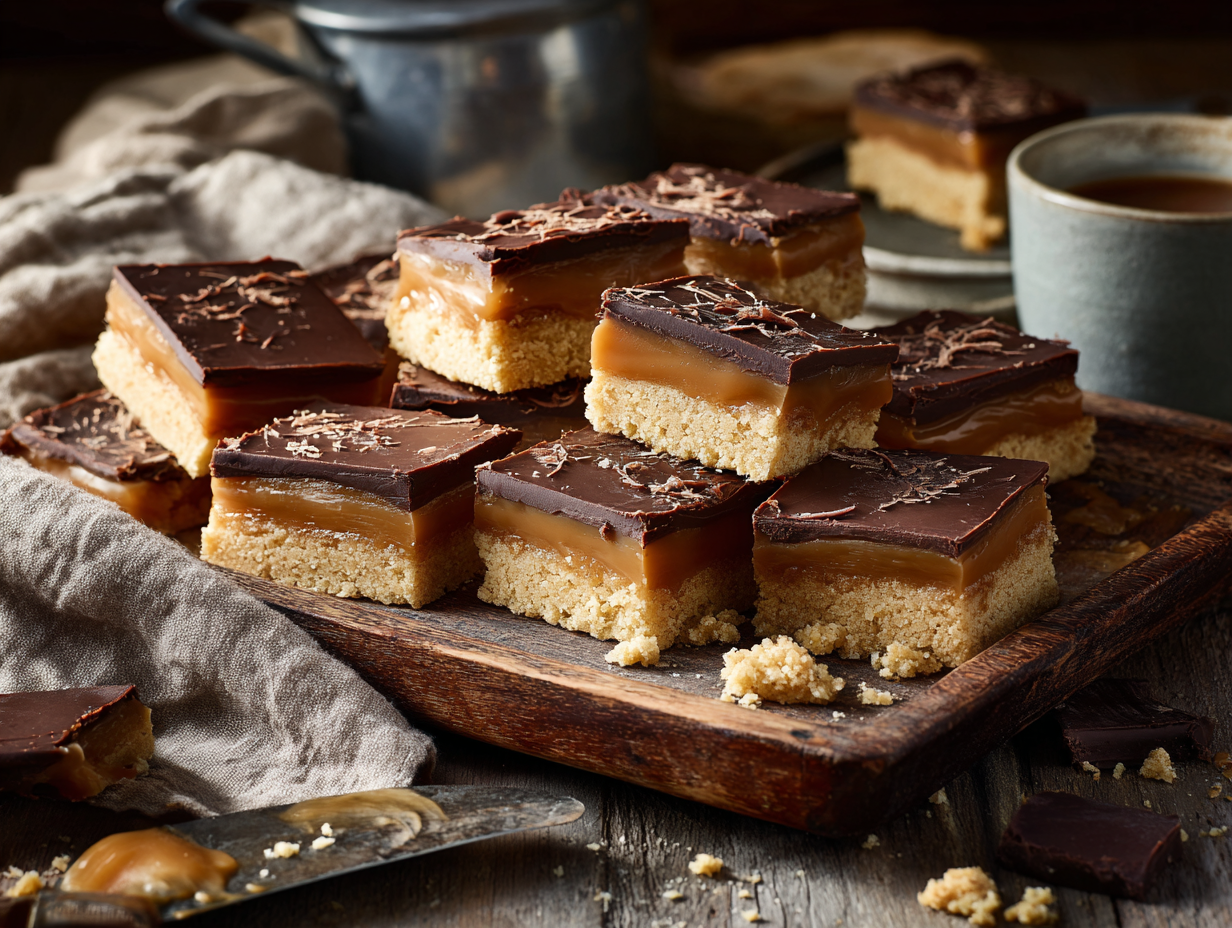
Millionaire’s Shortbread is a British bar cookie built in three layers: a firm, buttery shortbread base, a thick caramel middle, and a chocolate top that sets hard. It takes about 1 hour 40 minutes start to finish, yields 16 squares, and comes in at 481 calories each. The honest reason to make it is that the result looks impressive and tastes genuinely good — and the whole thing is built from pantry staples.
The technique that matters
The caramel is the step that decides whether these bars succeed or fail. Once the condensed milk goes into the pan, you cannot walk away. Keep the heat at medium — not medium-high — and stir constantly, scraping the bottom and corners of the pan. If the heat is too high, the caramel scorches on the bottom before the center thickens. You’re looking for a deep golden color and a mixture that pulls away from the sides slightly; that takes 5 to 7 minutes of active stirring. The second thing that matters is patience with cooling. Pour the caramel over the shortbread and let it sit for a full 30 minutes before adding the chocolate. If the caramel is still warm, the chocolate melts unevenly and the layers bleed together.
About the ingredients
- Sweetened condensed milk: This is not evaporated milk. They are sold near each other on the shelf and the cans look similar — double-check the label. A standard 14 oz can is exactly what this recipe uses.
- Dark chocolate: The recipe calls for 1 cup finely chopped dark chocolate. Chopping a bar yourself melts more smoothly than chocolate chips, which contain stabilizers that can make the top layer grainy or streaky.
- Light brown sugar: Packed means pressed firmly into the measuring cup. Loosely spooned brown sugar will give you less caramel than you expect and a thinner layer.
Common problems and fixes
- Caramel is too soft and doesn’t slice cleanly: It wasn’t cooked long enough. Next time, cook until the mixture is visibly thicker and a shade darker. For the batch you have, refrigerate the finished bars for at least 2 hours before cutting — cold caramel holds its shape much better under a knife.
- Shortbread crumbles when you press it into the pan: That’s normal — shortbread dough is dry by design. Use the flat bottom of a measuring cup or a glass to press it into an even, compact layer. Firm pressure is what holds it together after baking.
- Chocolate top cracks into jagged shards when cut: The chocolate layer was too thick or too cold. Aim for an even layer roughly 3–4mm thick. Before cutting, let the bars sit at room temperature for 10 minutes so the chocolate softens just slightly — a warm, sharp knife also helps.
- Caramel layer separates from the shortbread: The shortbread was still warm when the caramel went on. Always let the shortbread cool completely before pouring. A warm base causes the bottom of the caramel to stay liquid longer, which breaks the bond as it sets.
- Chocolate looks dull or streaky after setting: This is bloom — it happens when chocolate cools too quickly or gets condensation on it. Melt slowly, spread at room temperature, and don’t refrigerate the bars immediately after adding the chocolate. Let the chocolate set at room temperature first, then move to the fridge if needed.
Make-ahead notes
These bars are genuinely better made a day ahead — the layers firm up and the caramel stabilizes, making them much easier to cut cleanly. Store them in an airtight container in the refrigerator for up to 5 days; stack with a sheet of parchment between layers so the chocolate doesn’t scratch. For longer storage, freeze the uncut slab (wrapped tightly in plastic wrap, then foil) for up to 2 months — thaw overnight in the fridge, then cut cold. Skip the sea salt garnish on bars you plan to freeze; it draws moisture and turns gummy. If you want to serve them at a party, cut them straight from the fridge and leave them out for 15 minutes — they’re easier to eat when the caramel has softened just slightly from fridge temperature.
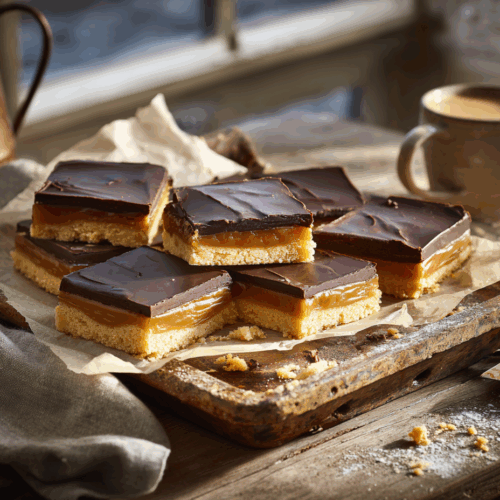
Millionaire’s Shortbread

Equipment
- 8x8-inch baking pan
- Mixing Bowls
- Whisk
- Saucepan
- Rubber spatula
- Sharp knife
Ingredients
For the Shortbread Layer:
- 1 cup unsalted butter softened
- ½ cup granulated sugar
- 2 cups all-purpose flour sifted
For the Caramel Layer:
- 1 cup unsalted butter
- 1 cup light brown sugar packed
- 1 can sweetened condensed milk, (14 oz)
For the Chocolate Layer:
- 1 cup dark chocolate finely chopped
Instructions
- Preheat Oven: Preheat your oven to 350°F (175°C). Grease an 8x8 inch baking pan and line with parchment paper.
- Make the Shortbread: In a mixing bowl, cream together 1 cup softened butter and 1/2 cup granulated sugar until the mixture is light and fluffy. Gradually add in 2 cups sifted all-purpose flour, mixing until the dough just comes together. Press the shortbread dough firmly and evenly into the prepared baking pan.
- Bake the Shortbread: Bake for 20-25 minutes or until the edges are lightly golden. Set aside to cool.
- Prepare the Caramel: In a saucepan over medium heat, melt 1 cup butter and 1 cup packed light brown sugar, stirring constantly until sugar dissolves. Add 1 can sweetened condensed milk, bringing the mixture to a gentle boil. Stir continuously for about 5-7 minutes until the caramel thickens and turns a golden hue. Pour over the cooled shortbread layer, spreading it evenly with a spatula. Allow to cool for about 30 minutes.
- Add the Chocolate Layer: Melt 1 cup chopped dark chocolate over a double boiler or in a microwave in short bursts, stirring until smooth. Spread the melted chocolate over the caramel layer and smooth the top using a spatula.
- Set the Dessert: Refrigerate the assembled shortbread for at least 1 hour or until set. Once set, remove from the pan and cut into neat squares with a sharp knife.
Notes
Lori’s Tips:
- If you prefer a softer caramel layer, reduce cooking time slightly to achieve a creamier texture.
- For a flavor twist, sprinkle a touch of sea salt over the chocolate layer before it sets to enhance the dimension of flavors.
Nutrition
FAQ
Can I use milk chocolate instead of dark chocolate for the top layer?
Yes, milk chocolate works fine. Keep in mind the bars are already very sweet from the caramel layer, so dark chocolate provides a useful contrast — but if you prefer milk chocolate, use it.
My caramel hardened before I could spread it. What happened?
It was cooked slightly too long or cooled too fast in the pan. Work quickly once the caramel is ready — pour it directly onto the shortbread and spread immediately with a spatula. If it seizes in the pan, add a tablespoon of warm cream and stir over low heat to loosen it.
Do I have to use an 8×8 pan, or can I use a 9×13?
A 9×13 pan will work but the layers will be noticeably thinner, especially the caramel. The bars will still taste good but won’t have the same thick, layered look. Reduce the bake time on the shortbread by about 5 minutes and watch it closely.
How do I know when the shortbread is done baking?
The edges should be lightly golden and the center should look set and dry — not shiny or soft. The whole surface may still look pale, and that’s fine; the edges are your cue.
Can I make these without a double boiler?
Yes — the microwave method is straightforward. Melt the chopped chocolate in a microwave-safe bowl in 30-second bursts at 50% power, stirring between each burst. Stop when there are just a few small unmelted pieces and stir until smooth; residual heat finishes the job.
Why is my shortbread base soft and not crisp after baking?
It’s most likely underbaked or the butter was too warm when you mixed the dough. The base should feel firm and dry when you press it lightly after baking. If it’s still soft, give it another 3 to 5 minutes in the oven — a pale, underbaked base will stay soft even after cooling.