

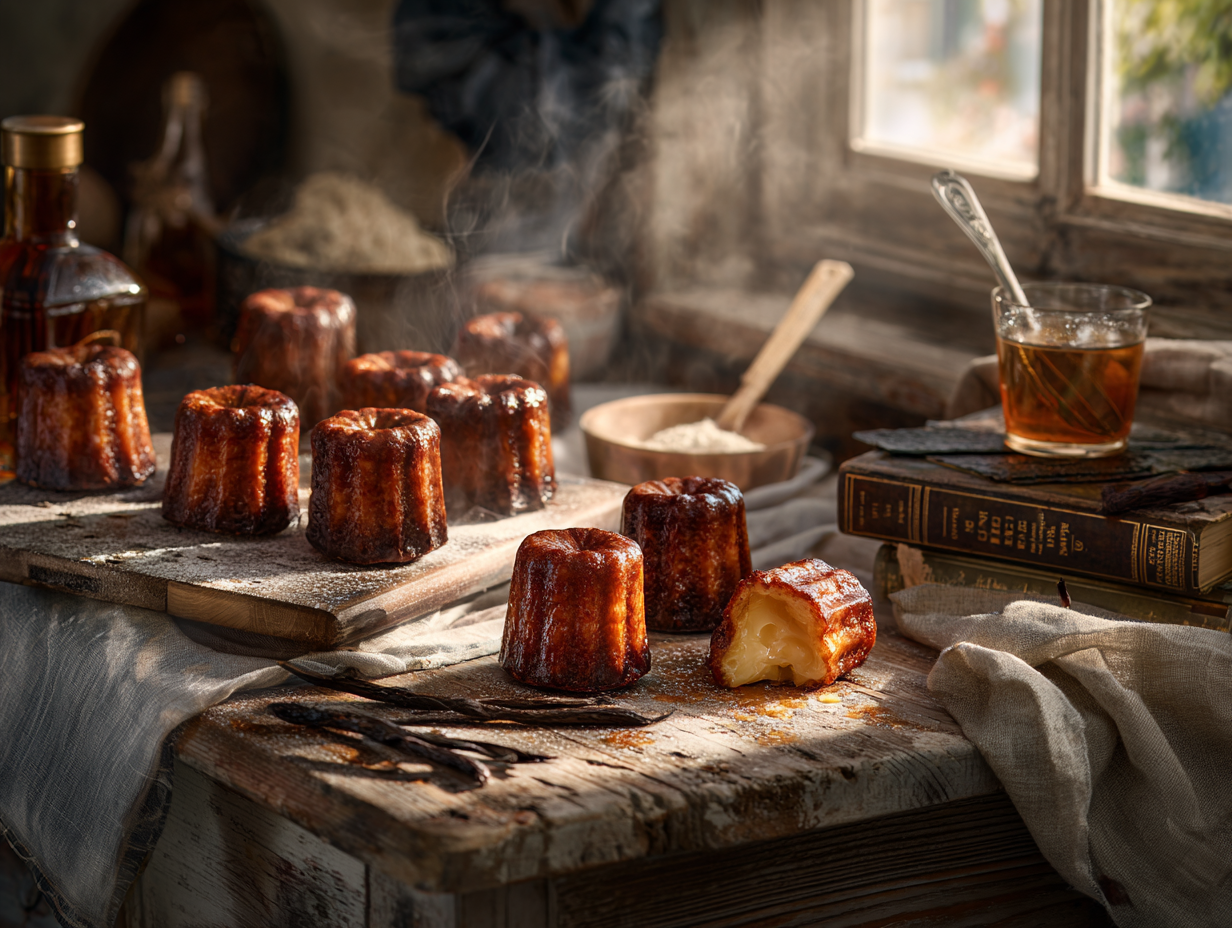
Cannelés are small French cakes with a deeply caramelized, almost mahogany crust and a soft, custardy center flavored with vanilla and rum. The batter takes about 15 minutes to put together, then the fridge does the work overnight — so the actual hands-on effort is low. If you want a showstopper that comes from a short ingredient list and mostly pantry staples, this is it.
Shopping notes
- Whole milk: Use whatever whole milk you have — organic is listed in the recipe but makes no meaningful difference to the final result.
- Dark rum: Any dark or spiced rum works. If you only have light rum, it will still do the job. The recipe card covers the alcohol-free swap already.
- Cannelé molds: Copper molds are the traditional choice, but silicone molds are far cheaper and widely available online. They produce a slightly softer crust, but the interior is identical. Skip the beeswax if you don’t have it — butter greasing works fine for silicone, and the difference in crust is minor unless you’re baking these for a crowd who will compare them side by side.
- Pure vanilla extract: Imitation vanilla extract will work in a pinch. The rum already adds depth, so the vanilla plays a supporting role here.
Why this recipe works
Two things actually drive the result. First, the long rest in the fridge — at least 24 hours — lets the flour fully hydrate and the gluten relax, which is what gives the interior that smooth, almost pudding-like texture rather than a bready crumb. Second, the two-stage baking temperature matters: starting at 450°F blasts the outside and kicks off rapid caramelization, then dropping to 375°F lets the center set gently without drying out. Rush either step and you get either a pale crust or a hollow, overcooked middle.
Mistakes to avoid
- Filling the molds too full: The batter puffs during baking and can overflow if you go past the ¼-inch headspace. Err on the side of slightly less rather than more.
- Skipping the sieve: Even if the batter looks smooth, straining it removes any cooked egg bits from the warm milk contact. A lumpy batter bakes into an uneven interior.
- Opening the oven during the first 15 minutes: The initial high heat is forming the crust. Opening the door drops the temperature at the worst possible moment and can cause the crust to collapse inward.
- Unmolding too late: Let them cool just a few minutes, then unmold. If you leave cannelés sitting in the molds as they cool completely, steam gets trapped and the crust softens significantly.
- Using cold batter straight from the fridge: Let the batter sit on the counter for 15–20 minutes before filling the molds. Pouring ice-cold batter into a hot mold can cause uneven cooking near the edges.
Make-ahead notes
The batter keeps well in the fridge for up to 48 hours, so you can mix it two days ahead — there’s no advantage to going longer than that. Once baked, cannelés are best eaten the same day; the crust is at its crispest within a few hours of coming out of the oven. If you need to store them, keep them uncovered at room temperature for up to 24 hours and reheat in a 375°F oven for 5 minutes to revive some of the crust. Freezing baked cannelés works — freeze them on a tray, then bag them — but expect the crust to be noticeably softer after thawing and reheating, even with the oven refresh.
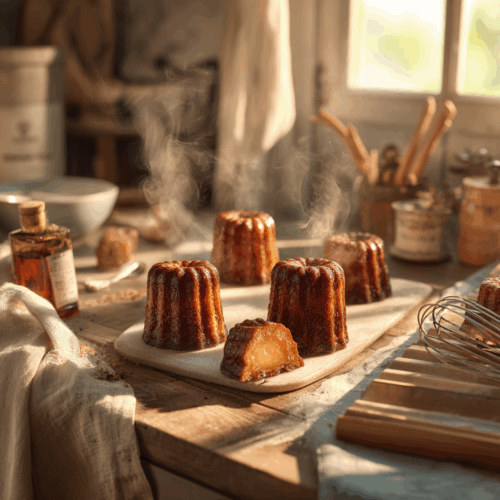
Cannelés de Bordeaux

Equipment
- Medium saucepan
- Mixing Bowl
- Whisk
- Fine Mesh Sieve
- Cannelé molds
- Baking sheet
Ingredients
- 2 cups whole milk preferably organic
- 2 tablespoons unsalted butter
- 1 cup granulated sugar
- 1 cup all-purpose flour sifted
- 2 large eggs room temperature
- 2 teaspoons pure vanilla extract
- 1 tablespoon dark rum
- ¼ teaspoon salt
Instructions
- In a medium saucepan, combine the milk and butter. Heat gently over medium heat until the butter has melted and the milk is just about to simmer. Remove from heat and let it cool slightly.
- In a mixing bowl, whisk together the sugar, flour, and salt until well combined.
- Lightly beat the eggs in a separate bowl, then whisk them into the dry ingredients until smooth.
- Gradually pour in the warm milk mixture, stirring continuously to prevent lumps. Strain the mixture through a fine-mesh sieve to ensure a silky smooth batter.
- Stir in the vanilla extract and dark rum. Cover the batter with plastic wrap, pressing it directly onto the surface to prevent a skin from forming. Refrigerate for at least 24 hours for optimal flavor.
- Preheat the oven to 450°F (230°C). Grease the cannelé molds with butter, and place them on a baking sheet.
- Fill each mold with the batter, leaving about 1/4 inch (0.6 cm) from the top. Bake in the preheated oven for 15 minutes, then lower the temperature to 375°F (190°C) and bake for an additional 45 minutes, until the cannelés are dark brown and caramelized.
- Remove from the oven and let them cool for a few minutes before carefully unmolding. Serve warm or at room temperature.
Notes
Tammy’s Tips:
- For a crispier outer layer, consider using beeswax to coat the molds instead of butter.
- If you prefer a non-alcoholic version, omit the rum and increase the vanilla extract to three teaspoons.
Nutrition
Your questions, answered
Can I make cannelés without special molds?
Silicone cannelé molds are your most practical option and cost a fraction of copper ones. In a real pinch, a mini muffin tin will produce something that tastes similar but looks nothing like a cannelé — the fluted shape and the way heat transfers through a proper mold are what create the characteristic crust.
Why did my cannelés come out hollow inside?
Hollow cannelés almost always mean the oven temperature was too high for too long, or the batter was over-mixed after straining. The interior needs gentle, sustained heat at the lower temperature to set properly — if the outside caramelizes too fast and the inside is still liquid, steam has nowhere to go and creates a cavity.
Do I really need to wait the full 24 hours before baking?
Yes — this rest is not optional if you want the right texture. A batter baked at 4–6 hours will have a slightly gummy, denser interior because the flour hasn’t fully hydrated. The 24-hour rest is the single biggest factor in getting that smooth, custardy center.
What to bake next
- French Brown Butter Chocolate Tart
- Luxurious French Chocolate Truffles
- Caramelized Banana Tart
- Luxurious Almond Croissant Bread Pudding