

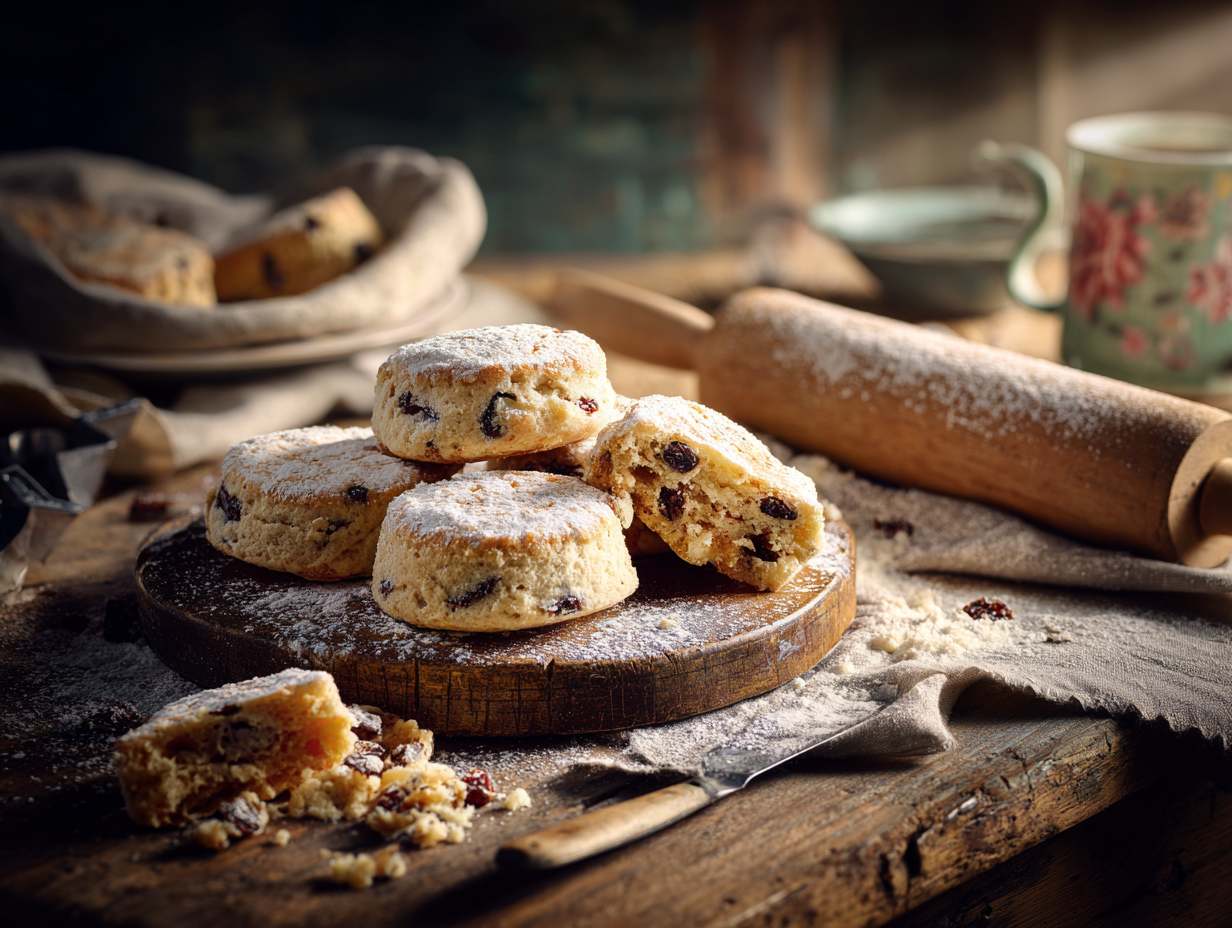
Welsh Cakes are small, round griddle cakes made from a simple shortcrust-style dough with currants and a pinch of mixed spice — cooked on the stovetop in about six minutes flat. No oven needed, no special equipment beyond a heavy pan, and the ingredients are almost certainly already in your pantry. That combination of speed and low cost is the real reason to make them.
The technique that matters
The only technique worth slowing down for is heat management on the griddle. Too high and the outside browns before the center cooks through — you end up with a raw, doughy middle. Too low and they dry out before they color. Medium heat is the target, but every stovetop is different, so cook one test cake first and adjust before you do the rest. The second thing that matters is how you rub the butter into the flour. The butter must be cold and diced small. Work quickly with your fingertips — if the butter warms up and the mixture starts clumping into paste rather than fine crumbs, your cakes will be dense instead of tender. If your kitchen runs warm, chill the bowl for ten minutes before you start.
Make-ahead notes
The dough can be made up to 24 hours ahead, wrapped tightly, and kept in the fridge — bring it out for ten minutes before rolling so it doesn’t crack. Cooked Welsh Cakes keep well at room temperature in an airtight tin for up to four days; they actually firm up slightly on day two, which many people prefer. For longer storage, freeze the cooked cakes in a single layer, then transfer to a bag — they keep for up to two months. Reheat straight from frozen in a dry skillet over low heat for two to three minutes per side, or in a low oven at 300°F for about eight minutes. Skip the microwave — it makes them rubbery.
What can go wrong
- Cakes puffing up and splitting at the sides: The dough was rolled too thick. Aim for a consistent quarter-inch — use two chopsticks or pencils as rolling guides if you don’t have a ruler handy.
- Currants burning on the surface: Any fruit sitting right at the cut edge will scorch on the hot pan. Press any exposed currants back into the dough before cooking, or dust them lightly with flour.
- Dough crumbling and refusing to come together: Add milk one teaspoon at a time, not a tablespoon at once — the dough needs very little liquid and it’s easy to overshoot. If you’re using a large egg on the bigger end of the scale, you may need no milk at all.
- Flat, spread-out cakes with no structure: The butter was too warm when rubbed in, or the dough was overworked. Chill the shaped rounds on a plate for fifteen minutes before cooking — this firms everything back up.
- Uneven browning across the batch: A griddle or large cast-iron skillet gives more even heat than a small pan. If you’re using a regular skillet, rotate the cakes halfway through each side. The center of the pan is always hotter than the edges.
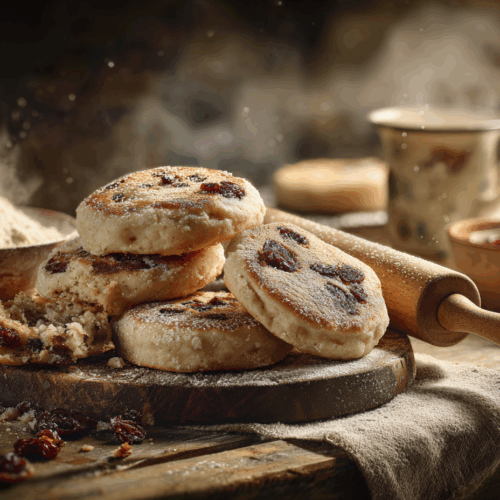
Welsh Cakes

Equipment
- Mixing Bowl
- Rolling pin
- Round cookie cutter
- Griddle or heavy skillet
- Spatula
Ingredients
- 2 cups all-purpose flour preferably organic
- ½ teaspoon baking powder
- ¼ teaspoon mixed spice or substitute with ground cinnamon and nutmeg
- ½ cup unsalted butter chilled and diced
- ⅓ cup caster sugar
- ⅓ cup currants
- 1 large egg beaten
- 2 tablespoons milk or as needed
- 1 tablespoon extra sugar for dusting
Instructions
- In a mixing bowl, sift together the all-purpose flour, baking powder, and mixed spice.
- Add the diced butter to the flour mixture, rubbing it in with your fingertips until the mixture resembles fine breadcrumbs. This can also be done using a food processor for efficiency.
- Mix in the caster sugar and currants until evenly distributed.
- Add the beaten egg and mix to form a soft dough, adding milk a tablespoon at a time if necessary.
- On a floured surface, roll out the dough to about 1/4-inch thickness. Use a round cookie cutter to cut out circles.
- Heat a griddle or heavy skillet over medium heat and lightly grease with butter.
- Cook the Welsh cakes on the griddle for about 3 minutes on each side until golden brown and cooked through, adjusting the heat as necessary to prevent burning.
- Transfer the cooked cakes to a plate and dust with extra sugar while warm.
Notes
- For a slightly different flavor, try adding a pinch of ground ginger or replacing currants with dried cranberries.
- To make them dairy-free, substitute the butter with a dairy-free margarine and use a plant-based milk.
Nutrition
Common questions
Can I use regular granulated sugar instead of caster sugar?
Yes — granulated sugar works fine here. The slightly coarser grain dissolves during cooking, so the texture difference in the finished cake is minimal. Use the same quantity the recipe calls for.
I don’t have mixed spice. What can I use instead?
A pinch each of ground cinnamon and nutmeg is the closest substitute and almost certainly already in your spice drawer. If you only have cinnamon, that alone is enough — use the full quarter teaspoon.
Can I use raisins or sultanas instead of currants?
Raisins and sultanas both work, though they’re larger than currants, so chop them roughly before adding so they distribute evenly through the dough. Dried cranberries are another solid swap and add a slight tartness.
Do I need a special bakestone or griddle, or will a regular pan do?
A heavy skillet — cast iron is ideal — works perfectly well. The key is even heat retention, which thinner pans don’t provide as reliably. If your pan is thin, keep the heat a notch lower and watch the first cake carefully.
What to bake next
- Raspberry White Chocolate Scones
- Lemon Thyme Shortbread Bars
- Dark Chocolate Orange Shortbread
- Espresso Walnut Biscotti