

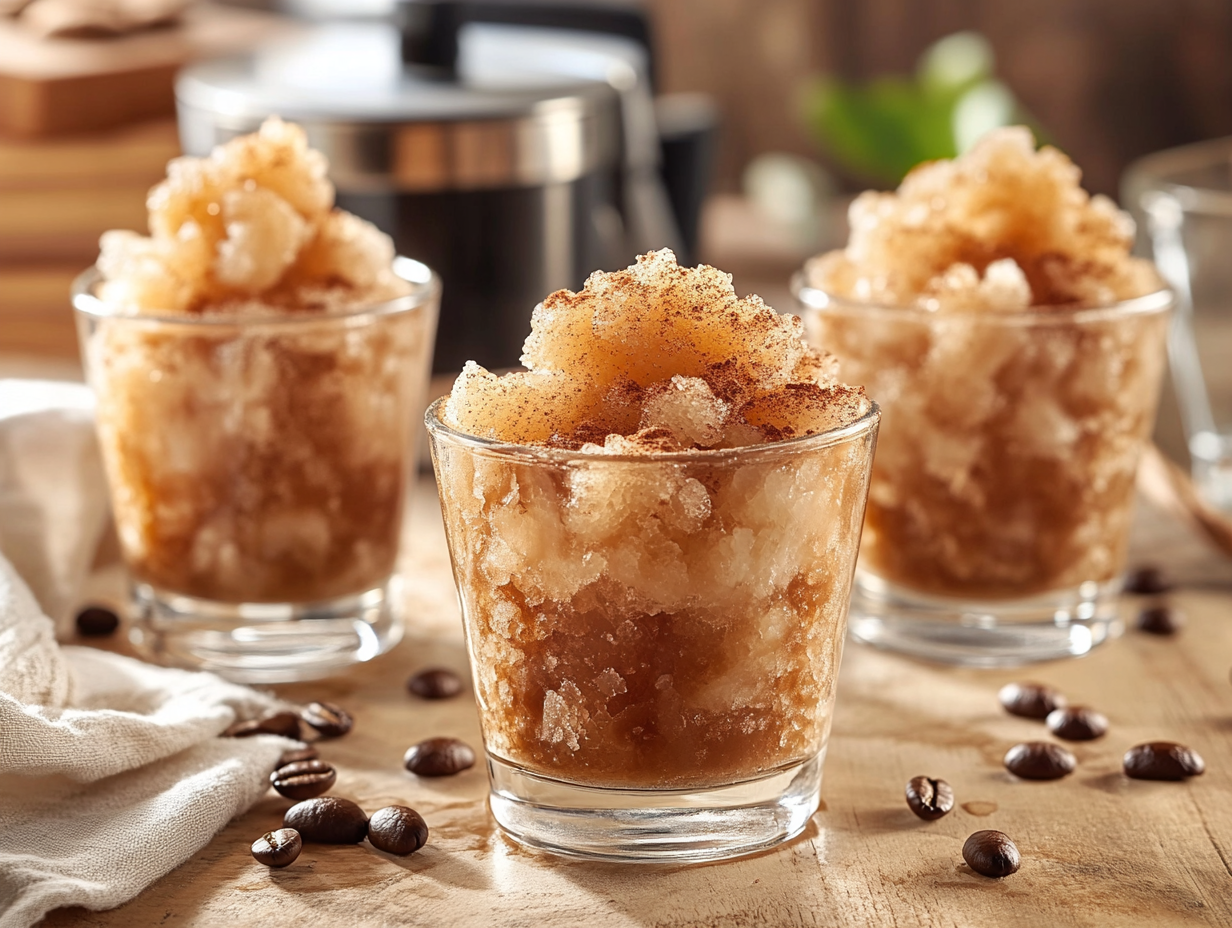
Espresso granita is a frozen Italian dessert with a coarse, crunchy texture — closer to flavored shaved ice than to gelato or sorbet. It takes about three hours from start to finish, but almost all of that is unattended freezer time. The real reason to make it: three pantry staples, no special equipment, and a genuinely impressive result.
Smart swaps
- No espresso machine? A stovetop moka pot works just as well. If you have neither, brew a very strong batch of drip coffee — use roughly double the usual grounds and reduce the water to concentrate the flavor. The granita will be milder but still good.
- Sugar: Regular granulated white sugar is exactly right here. Raw or turbinado sugar dissolves more slowly and can leave a slightly grainy syrup, so stick with white if you have it.
- Filtered water: Tap water is fine in most areas. The recipe calls for filtered water, but unless your tap water has a strong taste or odor, it won’t make a noticeable difference in the finished granita.
- Shallow baking dish: Any wide, flat container works — a 9×13 baking pan, a large pie dish, or even a rimmed sheet pan. The wider the dish, the faster and more evenly it freezes.
What makes this version work
Two things actually matter here. First, dissolving the sugar fully in warm water before adding the espresso gives you a smooth, evenly sweetened base — if sugar granules are still present when the mixture goes into the freezer, you get uneven sweetness and slightly harder crystals. Second, the scraping interval is the whole technique: every 20 to 30 minutes, you break up the ice that forms at the edges and push it toward the center. This keeps large solid sheets from forming and builds up the loose, separate crystals that define granita. Miss a scraping session and you get a solid block; scrape too aggressively and you lose the coarse texture. Set a timer and stay close during those two hours.
If something goes sideways
- It froze into a solid block: Don’t throw it out. Let it sit at room temperature for 10 to 15 minutes, then break it up with a fork and return it to the freezer, scraping every 20 minutes from that point. The texture won’t be quite as light, but it’s salvageable.
- The crystals are too fine and icy, almost like slush: Your freezer may run warm, or the mixture was scraped too frequently. Next time, let 30 minutes pass between scrapings rather than 20.
- It tastes flat or watery: The espresso wasn’t strong enough. For the next batch, reduce the brewed coffee slightly on the stovetop before mixing it in, or cut back on the water by a few tablespoons.
- It’s too sweet: The recipe already notes sugar is adjustable — start with 6 tablespoons instead of a full half cup next time, especially if your espresso is on the lighter side.
- It’s icy and hard straight from the freezer: Granita firms up considerably if left overnight. Give it 5 to 8 minutes on the counter before serving, then scrape with a fork to loosen the crystals again.
Make-ahead notes
Granita keeps well in the freezer for up to two weeks in a sealed container. After the first day, it will freeze harder than it was when freshly made — that’s normal. Before serving, let it sit out for 5 to 8 minutes, then scrape it vigorously with a fork to break it back into loose crystals. Skip the whipped cream topping until just before you serve it — adding it ahead of time means it melts into the granita and you lose the contrast in texture, which is the whole point of the garnish. Actually, if you’re serving this at a casual gathering, skip the garnish altogether — not worth the extra dish.
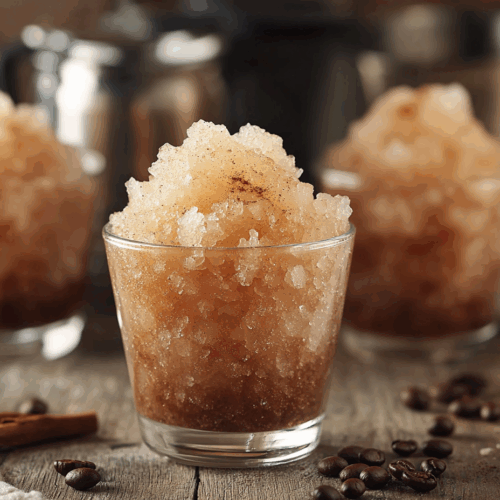
Espresso Granita

Equipment
- Espresso machine
- Medium saucepan
- Fork
- Shallow baking dish
Ingredients
- 1 cup freshly brewed espresso robust and flavorful, preferably made with an espresso machine
- ½ cup granulated sugar adjust to taste
- 2 cups water filtered for purity
Instructions
- Brew 1 cup of espresso and set aside.
- In a medium saucepan, combine 2 cups of water and 1/2 cup of granulated sugar. Heat over medium until the sugar dissolves completely.
- Remove from heat and stir in the freshly brewed espresso. Allow the mixture to cool slightly.
- Pour the espresso mixture into a shallow baking dish.
- Place the dish in the freezer. After 30 minutes, use a fork to scrape the icy edges into the center. Repeat this scraping process every 20-30 minutes for about 2 hours, until the mixture forms light, fluffy crystals.
Notes
Chef’s Tip:
- For an extra layer of flavor, consider adding a splash of vanilla extract or a pinch of cinnamon to the espresso mixture before freezing.
Nutrition
FAQ
Can I make this without an espresso machine?
Yes — a moka pot or very strong drip coffee both work. The key is brewing the coffee concentrated enough that the flavor holds up once it’s diluted with two cups of water and frozen; weak coffee produces a granita that tastes mostly of sweet ice.
Do I really have to scrape it every 30 minutes, or can I just blend it at the end?
You need to scrape during freezing — blending a frozen block at the end gives you a smooth slush, not granita. The scraping process is what creates the separate, coarse ice crystals that give this its texture.
Can I reduce the sugar to cut calories?
You can reduce it, but going below about 4 tablespoons affects more than sweetness — sugar lowers the freezing point and helps keep the texture scoopable rather than rock-hard. Very low-sugar versions freeze much firmer and need longer thawing time before serving.
How do I know when it’s done?
It’s ready when the entire mixture has turned into loose, separate crystals with no liquid pooling at the bottom — usually after about two hours of scraping. If you press a spoonful against the side of the dish and it holds its shape briefly before falling apart, the texture is right.
Try these next
- Espresso Walnut Biscotti
- Espresso Chocolate Semifreddo
- Elegant Strawberry Champagne Sorbet
- Sweet Italian Ricotta Honey Cheesecake