

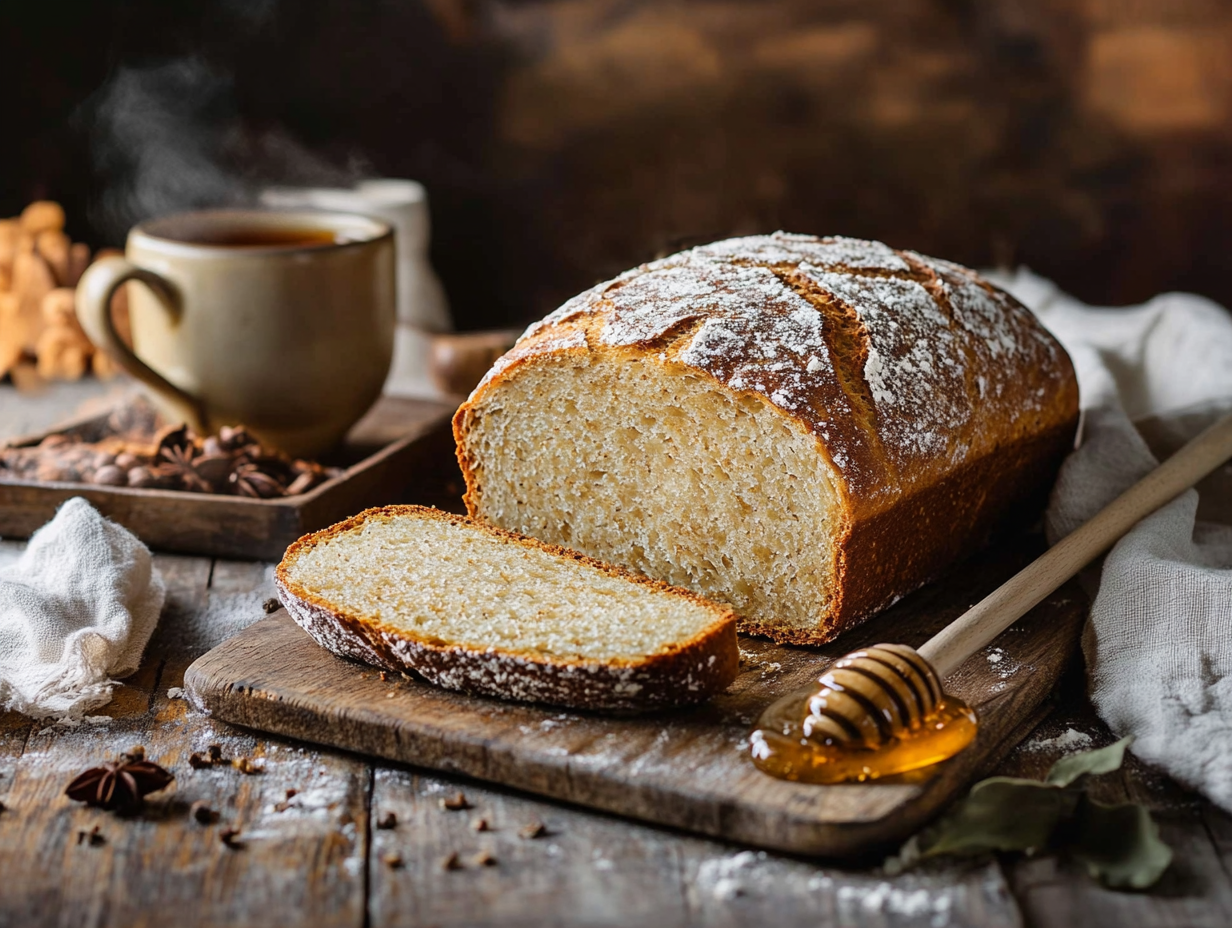
Pain d’Épices is a honey-sweetened, spiced loaf — closer to a quick bread than a yeast bread — that comes together in about 20 minutes of hands-on time. It keeps well, slices cleanly, and the pantry ingredients are almost certainly already in your kitchen. If you want something genuinely fragrant and a little different from your usual baking rotation, this is a good place to land.
Why this recipe works
Two things make this loaf succeed. First, the honey is warmed with water before it meets the dry ingredients. This isn’t just for mixing ease — dissolving the honey fully means it distributes evenly through the batter, so every slice is consistently moist rather than having dense or dry patches. Second, the instruction to stir until just combined matters more here than in most quick breads. With no fat in the batter (no butter, no oil), overdeveloped gluten has nothing to tenderize it, and you’ll end up with a tough, rubbery crumb. Stop stirring the moment you don’t see dry flour.
Common problems and fixes
- Loaf sinks in the center: The batter was overmixed, or the oven door was opened before the 45-minute mark. The honey-heavy batter needs time to set its structure. Use an oven thermometer — many home ovens run 15–25°F low, which also causes sinking.
- Top cracks excessively and bakes unevenly: The oven is too hot. At 325°F this loaf should crack gently down the center, which is normal. A wide, ragged split usually means the temperature is higher than your dial says.
- Bread sticks to the pan: Greasing alone isn’t always enough with a sticky honey batter. Line the bottom of the pan with a strip of parchment after greasing, and the loaf will release cleanly every time.
- Flavor tastes flat after baking: Pain d’Épices actually improves after a day of rest. If you taste it warm from the oven, the spices haven’t had time to meld. Wrap it and wait — the difference at 24 hours is real.
- Loaf is gummy inside even though the toothpick came out clean: The toothpick test can mislead with dense honey loaves. Check that the internal temperature reaches around 200°F, or press the top firmly — it should spring back without leaving an indent.
Smart swaps
- Honey: The recipe calls for a dark, robust honey for good reason — it carries more flavor. Buckwheat honey is the strongest option if you can find it. Clover honey (the standard grocery store bottle) works fine but produces a milder loaf. Avoid whipped or creamed honey; it doesn’t dissolve the same way.
- Brown sugar: Light or dark brown sugar both work. Dark brown sugar adds a slight molasses note that plays well with the spices. In a pinch, granulated white sugar plus a teaspoon of molasses is a direct substitute.
- Spice blend: If you’re missing one of the four spices, don’t buy a new jar just for this recipe. Skip the cloves before you skip the cinnamon or ginger — cloves are the most replaceable here. A pinch of allspice can cover for both cloves and nutmeg if that’s what’s in your cabinet. Skip the garnish of powdered sugar on top — not worth the extra dish.
- All-purpose flour: The recipe already accounts for a gluten-free swap at 1:1 in the card notes. If you want a denser, earthier loaf closer to the traditional style, replace up to half the all-purpose flour with whole wheat flour.
Make-ahead notes
This loaf is genuinely better made ahead. Once fully cooled, wrap it tightly in plastic wrap and store at room temperature — it stays moist for up to 5 days, and the spice flavor deepens noticeably between day one and day two. For longer storage, wrap the whole loaf (or individual slices) in plastic, then foil, and freeze for up to 2 months. Thaw wrapped at room temperature for a few hours. Do not refrigerate it; the fridge dries it out faster than leaving it on the counter.
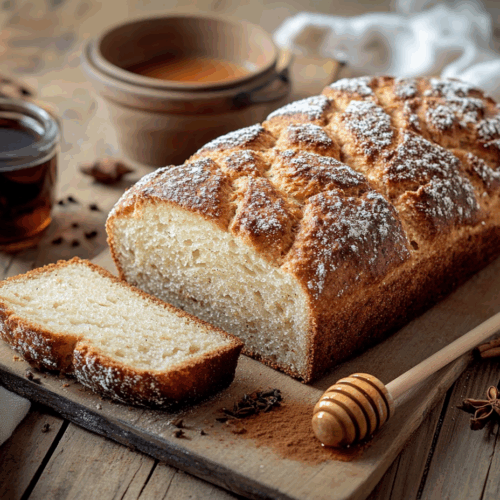
Pain d’Épices (Spiced Bread)

Equipment
- Mixing Bowl
- Saucepan
- Whisk
- loaf pan
- Oven
Ingredients
- 1 cup honey preferably a dark, robust honey for richer flavor
- ¾ cup water
- ½ cup brown sugar packed
- 2 ½ cups all-purpose flour sifted
- 1 ½ teaspoons baking powder
- ½ teaspoon baking soda
- 1 teaspoon salt
- 1 tablespoon ground cinnamon
- 1 teaspoon ground ginger
- ½ teaspoon ground cloves
- ½ teaspoon ground nutmeg
Instructions
- Preheat your oven to 325°F (165°C). Grease a loaf pan and set aside.
- In a saucepan over medium heat, combine honey and water. Heat just until the honey is dissolved and the mixture is smooth. Allow to cool slightly.
- In a large mixing bowl, combine the brown sugar, flour, baking powder, baking soda, and salt.
- Incorporate the spices: cinnamon, ginger, cloves, and nutmeg into the dry mixture.
- Pour the honey mixture into the dry ingredients and stir until just combined. Avoid overmixing for a tender bread.
- Pour the batter into the prepared loaf pan.
- Bake in the preheated oven for 60 minutes, or until a toothpick inserted into the center comes out clean.
- Allow the bread to cool in the pan for 10 minutes, then remove it to a wire rack to cool completely.
Notes
Tammy’s Tips:
- Enhance the flavor by adding a teaspoon of orange zest to the batter.
- If you desire a more moist bread, substitute half the water with freshly squeezed orange juice.
- For a gluten-free version, use a gluten-free flour blend at a 1:1 ratio.
Nutrition
Common questions
Can I use a different size pan?
A standard 9×5-inch loaf pan works best. An 8×4-inch pan also works but will give you a taller loaf that may need an extra 5–10 minutes of baking time — start checking at 60 minutes and go by the toothpick or internal temperature rather than the clock.
Do I have to use all four spices?
No — the bread will still work if you’re missing one. Cinnamon and ginger are the backbone of the flavor, so keep those if you can. Cloves and nutmeg add depth but are the easiest to leave out or substitute with a pinch of allspice.
My honey has crystallized in the jar. Can I still use it?
Yes, crystallized honey is perfectly fine to use. The recipe already calls for warming the honey with water in a saucepan, which will dissolve the crystals completely — no need to do anything special beforehand.
Can I double the recipe?
Yes, a doubled batch fills two standard loaf pans well. Bake them side by side on the same oven rack and rotate the pans halfway through; bake time stays roughly the same at 60 minutes, but check both pans individually since ovens heat unevenly.
Why does the recipe use both baking powder and baking soda?
Baking soda needs an acid to activate, and honey is mildly acidic, so it contributes some lift. The baking powder provides additional, more reliable leavening to make sure the loaf rises evenly. Using both gives a better crumb than either alone in this batter.
Can I reduce the sugar since honey is already sweet?
You can reduce the brown sugar by up to 2 tablespoons without affecting the texture much. Cutting more than that will noticeably change the crumb structure, since sugar does more than sweeten — it holds moisture and affects how the loaf sets.
What to bake next
- Autumn’s Spiced Pear and Almond Cake
- Provence-Inspired Lavender Honey Panna Cotta
- Rustic French Fig Loaf
- Zesty Mediterranean Lemon Yogurt Loaf with Syrup