

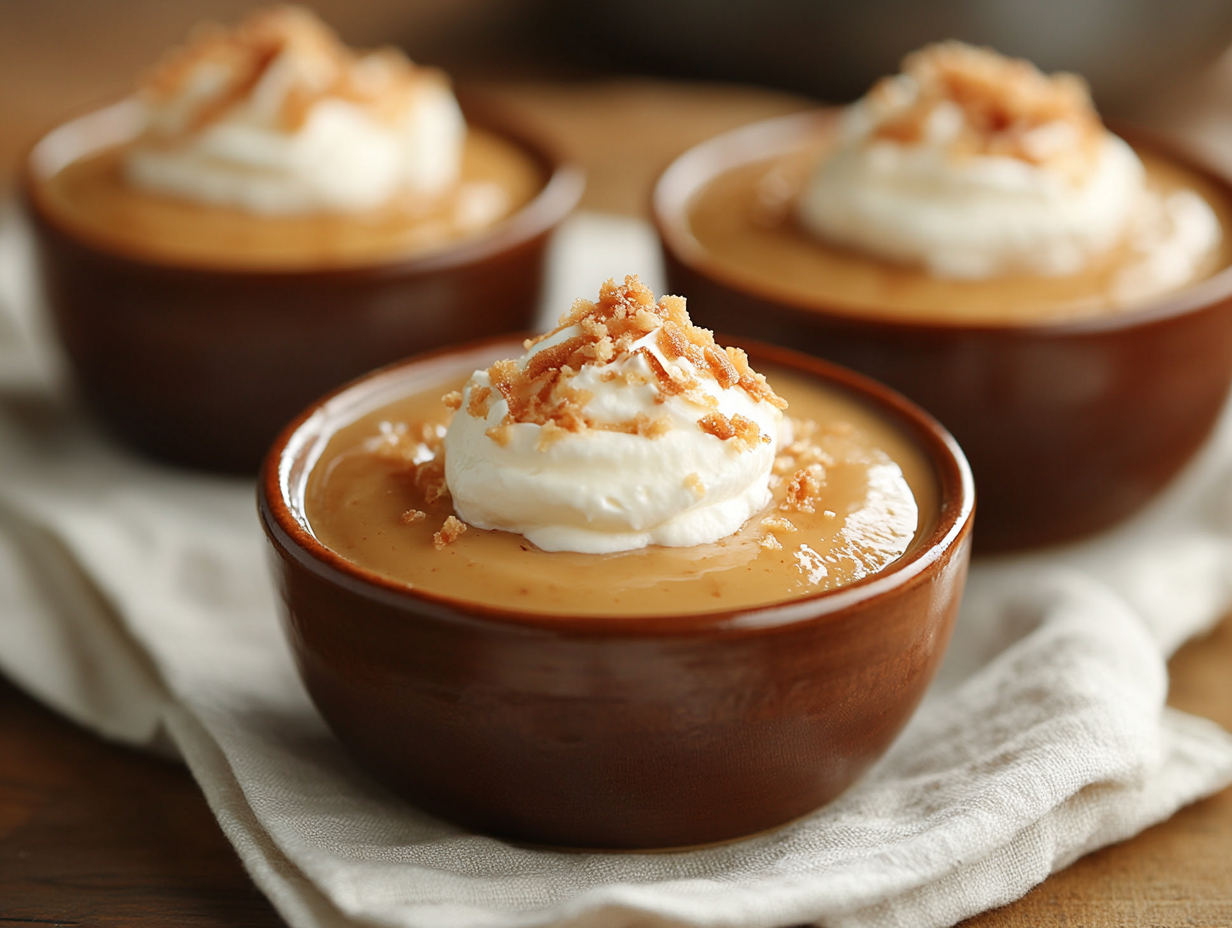
Butterscotch pudding is a stovetop dessert made with dark brown sugar, butter, whole milk, and cornstarch — no oven, no special equipment, just a saucepan and a whisk. It comes together in 45 minutes and chills into a smooth, toffee-flavored pudding that serves four. If you want something genuinely satisfying without a long ingredient list, this is it.
What makes this version work
Two things matter most here. First, cooking the brown sugar and butter together before any liquid goes in — that 5-minute step over medium heat is where the deep, slightly bitter toffee flavor develops. Rush it or skip it and the pudding tastes flat. Second, the cornstarch slurry: whisking cornstarch into a half cup of cold milk before it hits the hot pan prevents lumps from forming. Add it too fast or skip the pre-mixing and you’ll spend the rest of the cook time chasing clumps. Keep the heat at medium throughout and whisk continuously once the milk is in — the pudding can scorch on the bottom if you walk away.
Substitutions that actually work
- Whole milk: 2% milk works but produces a slightly thinner set. Half-and-half makes it richer and sets a little firmer — both are fine swaps.
- Unsalted butter: Salted butter can be used; just reduce the added sea salt to a pinch rather than the full half teaspoon.
- Dark brown sugar: Light brown sugar produces a milder, less complex flavor. It still works, but the pudding will taste noticeably sweeter and less deep — not the same result.
- Pure vanilla extract: Vanilla bean paste is a direct swap and adds visible specks. Imitation vanilla will taste artificial here because vanilla is one of only a few flavors in the recipe.
Common problems and fixes
- Pudding is lumpy: The cornstarch wasn’t fully dissolved before being added, or the milk went in too quickly. Strain the finished pudding through a fine-mesh sieve before pouring into bowls — it smooths out most lumps without any loss of flavor.
- Pudding didn’t set firm enough after chilling: It likely wasn’t cooked long enough after the milk was added. The mixture needs to reach a full bubble and thicken visibly in the pan — if it looked thin when you poured it, it will stay thin. Return it to the saucepan, reheat over medium, and cook another 3–5 minutes while whisking.
- Pudding has a scorched or bitter taste: The heat was too high or the whisking stopped. There’s no fix once it’s scorched — medium heat and constant whisking are non-negotiable.
- Skin formed on top even with plastic wrap: The wrap wasn’t pressed directly onto the surface of the pudding. It needs to make full contact — no air gap. Press it down gently with your fingers before refrigerating.
- Pudding tastes grainy: The brown sugar didn’t fully dissolve during the initial cooking step. Give it the full 5 minutes and make sure the mixture is bubbling and smooth before adding any liquid.
Storage and freezing
Covered tightly in the refrigerator, this pudding keeps well for up to 4 days — the flavor actually improves on day two once everything has had time to meld. Press plastic wrap directly onto the surface of each bowl to prevent a skin. You can make the full batch a day ahead, which makes it a practical option for dinner parties. Freezing is not recommended: the cornstarch-thickened base breaks down when frozen and thawed, turning watery and grainy. Skip the garnish on portions you’re storing — add whipped cream only right before serving, not worth the soggy result.
Butterscotch Pudding

Equipment
- Medium saucepan
- Whisk
- Mixing Bowl
- Measuring cups and spoons
- Plastic wrap
- Serving bowls
Ingredients
- 1 cup dark brown sugar
- 2 tablespoons unsalted butter preferably high-quality European
- ½ teaspoon sea salt to enhance flavor
- 3 tablespoons cornstarch
- 2 cups whole milk at room temperature
- 1 teaspoon pure vanilla extract for depth of flavor
Instructions
- In a medium saucepan, combine the dark brown sugar, butter, and sea salt. Heat over medium heat, whisking constantly until the sugar dissolves and the mixture begins to bubble, about 5 minutes.
- In a separate mixing bowl, whisk together the cornstarch and a half cup of the milk until smooth. Slowly add the mixture into the saucepan, whisking to integrate.
- Gradually whisk in the remaining milk and cook over medium heat, whisking continuously. Watch for the mixture thickening and bubbling, which should take about 10 minutes.
- Remove from heat and stir in the vanilla extract. Pour the mixture into serving bowls.
- Cover each bowl with plastic wrap, pressing it directly onto the surface to prevent a skin from forming. Chill in the refrigerator for at least 2 hours before serving.
Notes
- To give your pudding a unique twist, consider adding a pinch of allspice or cinnamon.
- For a more indulgent take, fold in a half cup of whipped cream just before chilling.
- If you desire a deeper caramel hue, use light brown sugar instead.
Nutrition
Your questions, answered
Can I use light brown sugar instead of dark brown sugar?
Yes, but the flavor will be noticeably milder and sweeter. Dark brown sugar has more molasses, which gives the pudding its characteristic depth and slight bitterness — light brown sugar produces a result that tastes closer to a vanilla pudding with a hint of caramel.
Do I need to temper the eggs?
This recipe contains no eggs, so there’s nothing to temper. The thickening comes entirely from cornstarch, which makes the technique simpler and the result more forgiving than a custard-based pudding.
How do I know when the pudding is thick enough to take off the heat?
It should coat the back of a spoon thickly and hold a line when you run your finger through it. The mixture will also be visibly bubbling throughout, not just around the edges — that’s the signal the cornstarch has fully activated.
Can I serve this warm instead of chilled?
Yes — it’s good warm, with a looser, sauce-like consistency. Just pour it directly into bowls after cooking and serve immediately; it firms up as it cools, so warm serving works best right off the stove.
My pudding seized up and became very stiff in the fridge. What happened?
It was likely overcooked, which causes the cornstarch to over-thicken as it chills. Let it sit at room temperature for 15–20 minutes before serving and stir gently — it will loosen slightly. Next time, pull it off the heat as soon as it reaches a thick, bubbling consistency.
What to bake next
- Toasted Coconut Custard Pie
- Creamy Cardamom Pistachio Rice Pudding
- Chocolate Chai Pots de Crème
- Lavender Honey Panna Cotta