

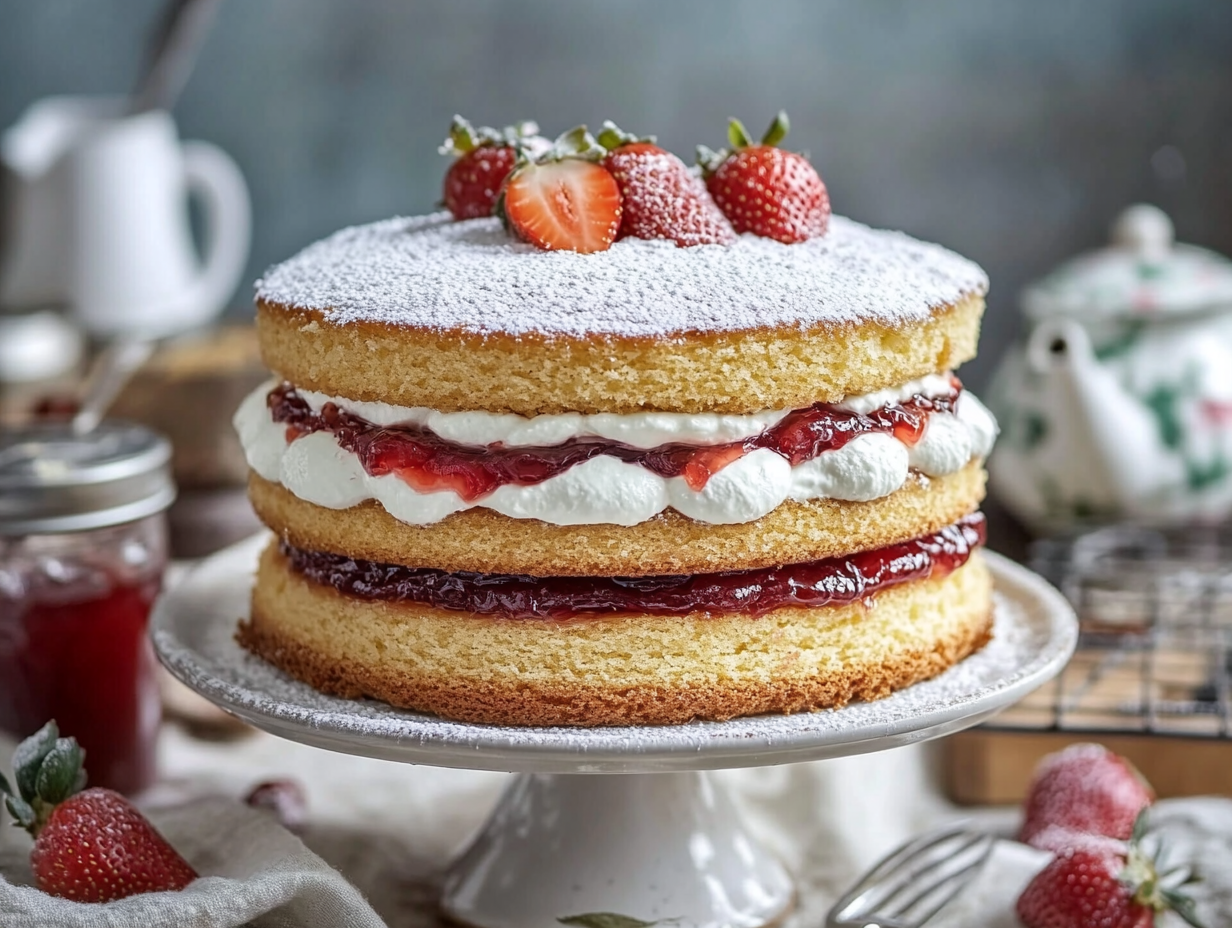
A Victoria sponge is two layers of plain butter cake sandwiched with strawberry jam and whipped cream, finished with a dusting of icing sugar. It takes about 55 minutes start to finish and uses ingredients most bakers already have. The result is light, not too sweet, and holds up well enough to box and give away — which is reason enough to keep this one in regular rotation.
Before you start
Two things actually matter here. First, your butter and eggs must be at room temperature before you start — cold butter won’t cream properly, and cold eggs can cause the batter to curdle and turn grainy. Pull them out at least an hour ahead. Second, fold the flour in gently. Once the flour goes in, gluten develops fast with any aggressive stirring, and you’ll end up with a dense, slightly rubbery crumb instead of the open, tender texture you’re after. Switch to a spatula, use slow folding strokes, and stop the moment you no longer see dry flour.
Ingredient notes
- Strawberry jam: Use a jam with a high fruit content and a firm set. Loose, syrupy jam will soak into the sponge and make the layers slide when you cut or package the cake. Look at the ingredients label — fruit should be first.
- Heavy whipping cream: It must be cold when you whip it. Warm cream won’t hold stiff peaks and will weep within a few hours. If your kitchen runs warm, chill the bowl too.
- All-purpose flour: The recipe calls for sifted flour. This isn’t fussy — it genuinely prevents dense pockets in the batter. Sift it directly into the bowl.
Storage and freezing
Once assembled with cream, the cake should go into the fridge and is best eaten within 24 hours — the whipped cream starts to weep and the sponge softens noticeably after that. If you’re making it ahead or giving it as a gift, bake and cool the sponge layers up to two days in advance, wrap each one tightly in plastic wrap, and keep them at room temperature. Assemble with jam and cream the day you’re serving or delivering. The uniced sponge layers also freeze well: wrap individually in plastic, then foil, and freeze for up to two months. Thaw at room temperature for about two hours before assembling. Skip freezing once the cream is on — it doesn’t survive the thaw.
If something goes sideways
- The batter looks curdled after adding the eggs: This usually means the eggs were too cold or were added too fast. Add a tablespoon of your measured flour and beat briefly — it brings the emulsion back together without affecting the final texture.
- The layers domed and cracked on top: Your oven was likely too hot. An oven thermometer is worth having; most home ovens run 15–25°F hotter than the dial says. Level domed layers with a serrated knife before assembling so the cake sits flat.
- The sponge stuck to the pan: Parchment on the base is essential, but you also need to grease the sides of the pan. If a layer tears, press it back together — the jam and cream will hold it and nobody will see it once the cake is assembled.
- The cream collapsed or turned watery: Overwhipped cream can’t be fixed, but underwhipped cream that’s gone soft can sometimes be rescued by adding a tablespoon of cold cream and whipping briefly again. If the cream has already been spread on the cake and is weeping, the cake is still fine to eat — just serve it sooner rather than later. Skip storing it at room temperature once the cream is on.
- The top layer is sliding when you cut: The jam was too loose or the cream wasn’t whipped to stiff peaks. For cleaner slices — especially if you’re packaging the cake — refrigerate the assembled cake for 30 minutes before cutting. Use a sharp knife and wipe it between cuts.
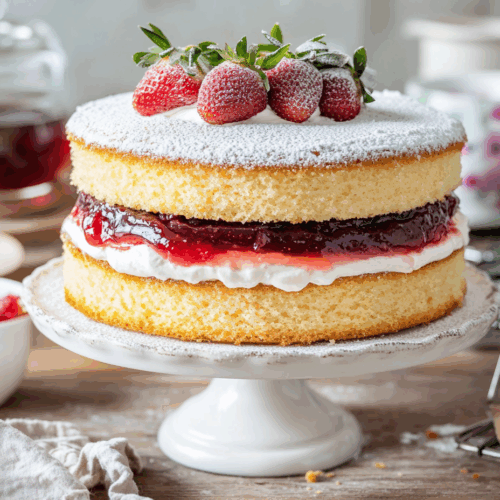
Classic Victoria Sponge Cake

Equipment
- 8-inch round cake pans
- Electric mixer or whisk
- Mixing Bowls
- Cooling Rack
- Spatula
Ingredients
For the Cake:
- 1 cup unsalted butter at room temperature
- 1 cup granulated sugar
- 4 large eggs preferably organic
- 1 teaspoon vanilla extract pure
- 1 ¾ cups all-purpose flour sifted
- 1 teaspoon baking powder
- ¼ cup milk whole or 2%
For the Filling & Topping:
- ½ cup strawberry jam high quality
- 1 cup heavy whipping cream chilled
- 2 tablespoons confectioners' sugar
- 1 tablespoon confectioners' sugar for dusting
Instructions
- Preheat your oven to 350°F (175°C). Grease and line two 8-inch round cake pans with parchment paper.
- In a mixing bowl, cream together the softened butter and granulated sugar until light and fluffy, approximately 3-5 minutes.
- Add the eggs one at a time, beating well after each addition, followed by the vanilla extract.
- In a separate bowl, sift together the flour and baking powder, then gradually fold into the wet mixture, alternating with the milk. Take care not to overmix.
- Divide the batter evenly between the prepared cake pans and smooth the tops with a spatula.
- Bake in the preheated oven for 20-25 minutes, or until a skewer inserted into the center comes out clean. Allow to cool in the pans for 10 minutes, then transfer to a cooling rack.
- For the filling, whip the chilled cream with confectioners' sugar until stiff peaks form.
- Once the cakes are completely cooled, spread the strawberry jam evenly over one cake layer. Top with the whipped cream, then place the second cake layer on top.
- Dust the top with confectioners' sugar just before serving.
Notes
Lori’s Tips:
- For a twist, try using raspberry jam or adding a hint of lemon zest to the batter for a fresh aroma.
- If you have dietary preferences, substitute with gluten-free flour and adjust milk as needed to achieve the right consistency.
Nutrition
Frequently asked questions
Can I make this cake the night before?
Yes, but assemble it the day you need it. Bake the sponge layers the night before, wrap them well in plastic wrap, and leave them at room temperature overnight. Add the jam and whipped cream the next day — assembled cakes with whipped cream don’t hold well past about 24 hours in the fridge.
Do I have to use whipped cream, or can I use buttercream instead?
Buttercream is a practical swap, especially if the cake needs to travel or sit out for a few hours. Whipped cream gives a lighter result but is more fragile; buttercream holds its shape at room temperature and makes the assembled cake much easier to transport without the layers shifting.
My sponge came out flat and dense — what went wrong?
The most common cause is overmixing after the flour was added, which overdevelops the gluten and knocks out the air you built up during creaming. The second most common cause is old baking powder — if yours has been open for more than six months, test it by dropping a teaspoon into hot water; if it doesn’t bubble actively, replace it before baking.
What to bake next
- Strawberry Elderflower Fool
- Nutty Brown Butter Vanilla Bean Cupcakes
- Pear and Almond Cake
- Sweet and Tart Raspberry White Chocolate Scones