

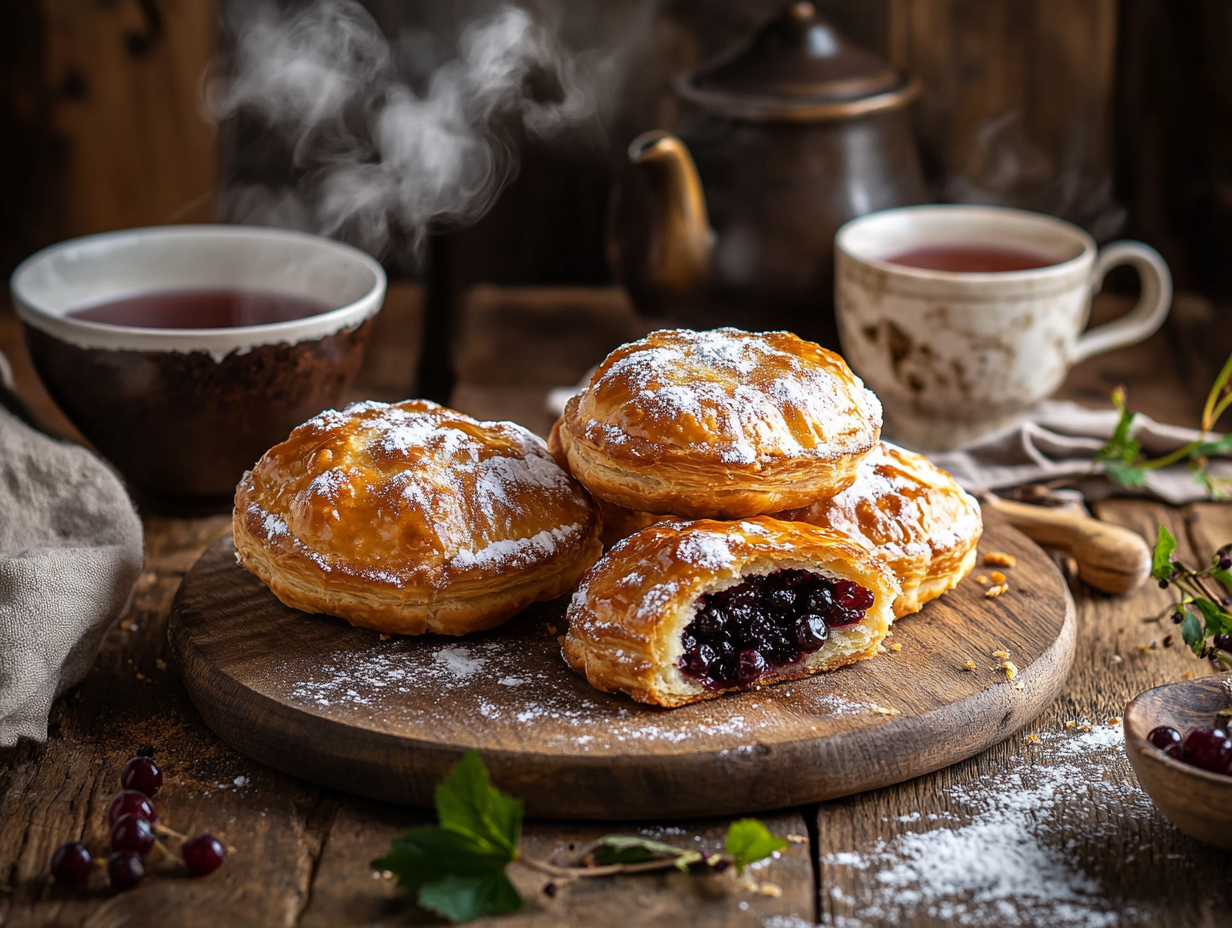
Eccles cakes are small, round pastries filled with spiced currants and sealed inside a flaky, buttery crust. Each one takes about five minutes of hands-on work once the dough is made, and a batch of eight comes out of the oven in under an hour. They travel well, keep well, and taste genuinely good — which is a rare combination in home baking.
The short version of why this works
Two things make or break this recipe. First, the butter must stay cold throughout mixing. Warm butter blends into the flour instead of staying in small pieces, and those pieces are what create flaky layers when they hit the oven. Work quickly and if the dough starts to feel greasy, refrigerate it for ten minutes before rolling. Second, pinching the edges completely shut matters more than it looks. Any gap lets the brown sugar melt out onto the pan and burn. Press firmly, then place the sealed side down and flatten gently — the weight of the pastry helps hold the seal.
About the ingredients
- Currants: These are small dried black currants, not dried cranberries or raisins. The flavor is sharper and less sweet, which balances the brown sugar. If yours look dry or shriveled, soak them in warm water for ten minutes and pat them dry before mixing the filling.
- Buttermilk: It keeps the dough tender and adds a faint tang. If you don’t have any, stir one teaspoon of white vinegar into half a cup of whole milk and let it sit for five minutes.
- Freshly ground nutmeg: Pre-ground nutmeg works, but the flavor is noticeably flatter. A whole nutmeg and a microplane grater are worth the small effort, especially when you’re making multiple batches.
If something goes sideways
- The dough tears when you fold it: It’s been overworked or rolled too thin. Aim for exactly one-eighth inch. If it tears, press the edges back together firmly — the egg wash will help seal small cracks.
- Filling leaks and burns on the pan: The edges weren’t sealed tightly enough, or too much filling was used. One level tablespoon per cake is the right amount. More than that and the pastry can’t close properly.
- The bottoms are pale but the tops are browning fast: Your oven runs hot on top. Move the baking sheet to a lower rack and check at the 15-minute mark. The bottoms should be golden, not just the tops.
- The cakes puff up but don’t flatten: The slits on top weren’t cut deep enough to allow steam to escape. Three short cuts, about half an inch each, is enough. Skip the decorative scoring — not worth the extra fuss when you’re making a large batch.
- The pastry is tough, not flaky: Too much buttermilk was added, or the dough was kneaded rather than just brought together. Mix only until the dough holds when pressed — it should look shaggy, not smooth.
Storage and freezing
Fully baked Eccles cakes keep at room temperature in an airtight container for up to three days. They stay crispest on day one, so if you’re baking for an event, plan accordingly. For longer storage, freeze the baked cakes on a flat tray until solid, then transfer to a freezer bag — they’ll keep for up to two months. Reheat from frozen at 350°F for about ten minutes and they come back close to fresh. You can also freeze the unbaked, filled, and sealed pastries before the egg wash step. Lay them flat on a lined tray, freeze until firm, then bag them. Bake straight from frozen at 375°F for 22 to 25 minutes, adding the egg wash and sugar just before they go in the oven.
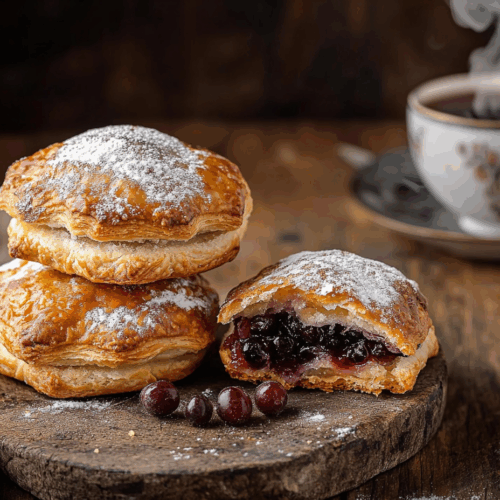
Eccles Cakes

Equipment
- Baking sheet
- Pastry brush
- Rolling pin
- Mixing Bowl
- Sharp knife
Ingredients
For the Pastry:
- 2 cups all-purpose flour preferably unbleached
- 0.5 teaspoon salt
- 1 cup unsalted butter cold and cubed
- 0.5 cup buttermilk chilled
For the Filling:
- 1 cup currants fresh or plump
- 0.5 cup brown sugar lightly packed
- 1 teaspoon ground cinnamon
- 0.5 teaspoon ground nutmeg freshly ground
For the Topping:
- 1 large egg beaten
- 2 tablespoons granulated sugar
Instructions
- Preheat the oven to 375°F (190°C). Line a baking sheet with parchment paper.
- For the pastry, mix the flour and salt in a mixing bowl. Add the cold, cubed butter and rub with fingertips until the mixture resembles coarse crumbs. Stir in the buttermilk and mix until dough forms.
- Roll out the dough on a lightly floured surface to 1/8 inch thick. Cut out circles using a 4-inch cutter.
- To make the filling, combine currants, brown sugar, cinnamon, and nutmeg in a separate bowl.
- Place a tablespoon of filling in the center of each dough circle. Gather the edges and pinch together to seal.
- Place the sealed side down on the baking sheet. Flatten slightly and use a sharp knife to make slits on the top.
- Brush the tops with the beaten egg and sprinkle with granulated sugar.
- Bake for 15-20 minutes or until golden brown. Cool on a wire rack before serving.
Notes
- For a spicier kick, add a pinch of allspice or a few drops of dark rum to the filling.
Nutrition
FAQ
Can I make the dough ahead of time?
Yes — the dough can be made up to two days ahead and kept wrapped in the fridge. Cold dough is actually easier to roll and cut, so making it the night before is a practical move when you’re baking a large batch.
Can I double or triple the recipe?
Doubling works without any adjustments. For larger batches, make the dough in separate batches rather than one giant one — overworking a large mass of dough is easy and leads to tough pastry. The filling can be mixed in any quantity ahead of time and stored in the fridge for up to a week.
Do I need a 4-inch round cutter, or can I use something else?
Any round cutter or template that’s approximately 4 inches across will work — the lid of a wide-mouth mason jar is a common substitute. Smaller circles give you less room to seal the edges, so don’t go much smaller than 3.5 inches.
My currants are very sweet. Will the filling be too sugary?
You can reduce the brown sugar to one-third of a cup without affecting the texture of the filling. The cinnamon and nutmeg will still come through clearly, and the currants provide enough natural sweetness to carry the flavor.
How do I know when they’re done if my oven runs unevenly?
Look at the underside, not just the top — lift one cake gently with a spatula at the 15-minute mark. The bottom should be a deep golden brown, not just pale tan. If the tops are coloring faster than the bottoms, tent loosely with foil and give them another three to five minutes.
More sweet things to bake
- Raspberry White Chocolate Scones
- Strawberry Elderflower Fool
- Lemon Thyme Shortbread Bars
- Almond Croissant Bread Pudding