

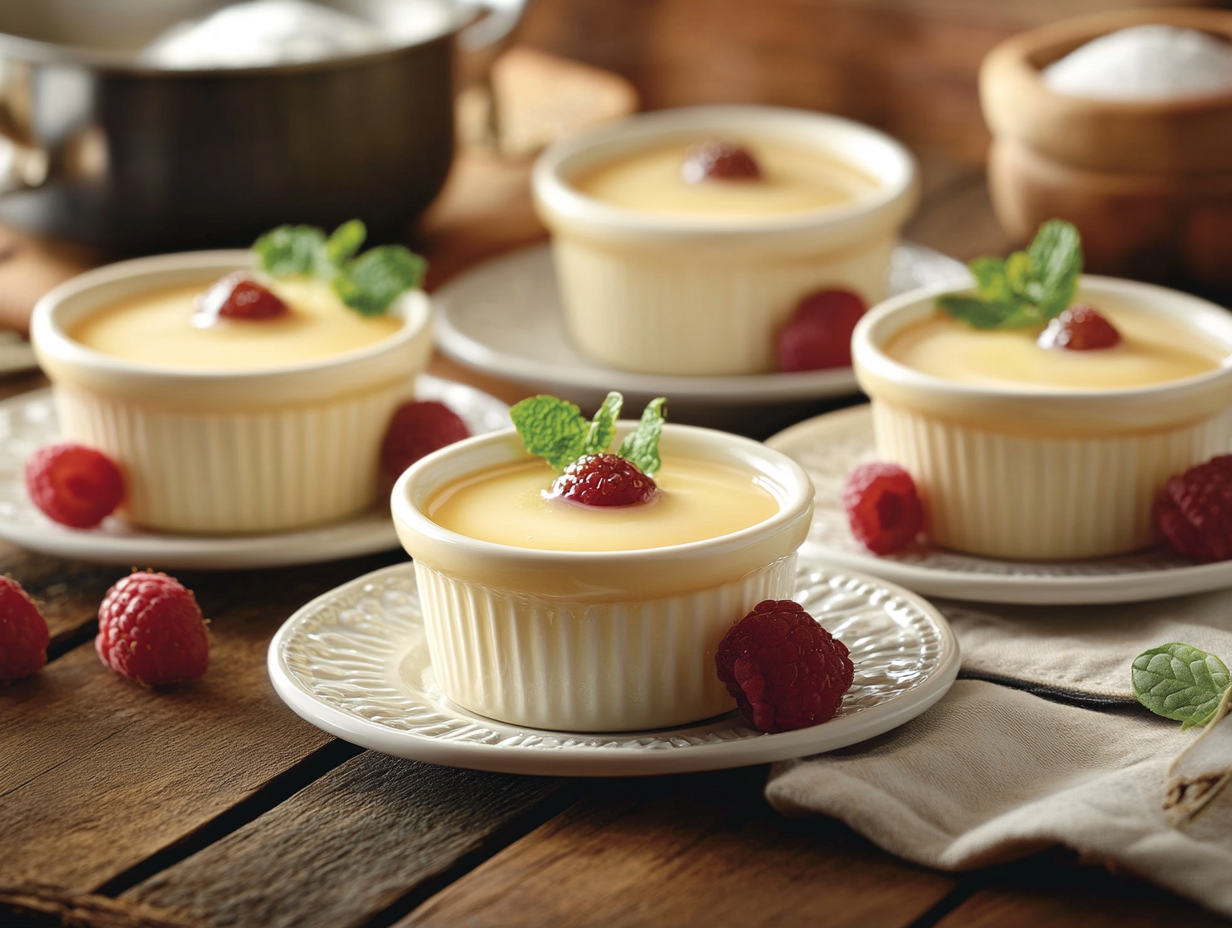
Crème caramel is a baked custard that, once chilled and unmolded, sits in a shallow pool of amber caramel sauce. It takes just five ingredients and some patience, and the result holds up beautifully in the fridge for days — which makes it one of the better make-ahead desserts you can bring to someone’s door.
Why this recipe works
Two things actually matter here. First, tempering — pouring hot milk slowly into the egg mixture rather than all at once — keeps the eggs from scrambling and gives you a smooth, even custard instead of a grainy one. Second, the water bath. Surrounding the ramekins with hot water regulates the oven heat so the custard sets gently and evenly; without it, the edges overcook and turn rubbery before the center firms up. Get those two steps right and the rest is straightforward.
Shopping notes
- Whole milk: Use it. Lower-fat milk produces a noticeably thinner, less stable custard that can weep after unmolding — a real problem if you’re transporting it.
- Eggs: This recipe uses both whole eggs and extra yolks. The yolks add richness and help the custard hold its shape when inverted, so don’t skip them or substitute whole eggs.
- Vanilla extract: Pure extract only. Imitation vanilla turns bitter when baked in a custard at this temperature.
Storage and freezing
Crème caramel keeps well in the fridge, covered tightly with plastic wrap, for up to 4 days — unmolded or still in the ramekins. Leaving them in the ramekins is the better call if you’re making these ahead to give away, since the custard stays protected and travels without risk of the caramel pooling and making a mess. Do not freeze crème caramel; the custard texture breaks down on thawing and turns watery. For gifting, keep the ramekins covered and chilled right up until delivery, and let the recipient unmold at home.
What can go wrong
- Caramel seizes or crystallizes: This usually happens from stirring after the sugar dissolves. Once the mixture is clear and the heat is raised, leave it alone — swirling the pan gently is fine, but a spoon will cause crystallization.
- Caramel hardens before you finish pouring: Work fast once it hits deep amber. Have all your ramekins lined up and ready before the caramel is done. If it sets too thick in one ramekin, a brief warm-up in a low oven will loosen it.
- Custard has bubbles on the surface: Whisking too vigorously incorporates air. Whisk gently when combining the milk and egg mixture, and let it rest a minute before straining. Skip the garnish — not worth the extra dish — but do skim any foam off the top of the custard before pouring into ramekins.
- Custard doesn’t release cleanly: The knife trick works, but run it slowly around the full edge and press the tip gently inward to break the seal. Inverting onto a plate that’s slightly wet makes it easier to slide the custard into position if it lands off-center.
- Watery pool under the custard after chilling: This is usually a sign the custard was overbaked. Pull the ramekins from the oven while there’s still a visible wobble in the center — they continue to set as they cool.
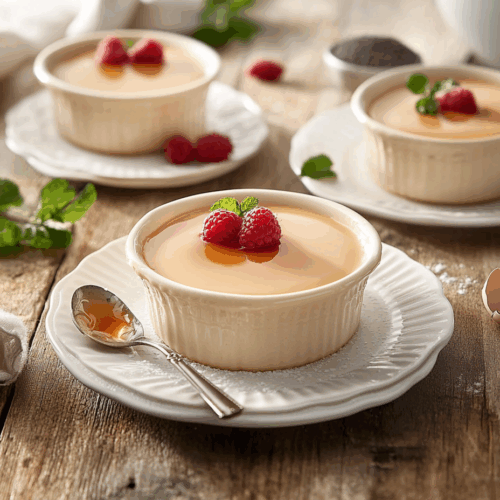
Decadent Crème Caramel

Equipment
- Saucepan
- Mixing Bowls
- Whisk
- Oven-safe ramekins
- Baking dish
- Sieve
Ingredients
Caramel
- 1 cup sugar granulated
- ¼ cup water
Custard
- 2 cups whole milk preferably organic
- 3 large eggs fresh
- 2 large egg yolks eggs
- 1 teaspoon vanilla extract pure
- ⅓ cup sugar granulated
Instructions
- Prepare the Caramel: In a saucepan over medium heat, combine 1 cup sugar and 1/4 cup water. Stir gently until the sugar dissolves, then increase the heat without stirring until you achieve a deep amber caramel. Immediately divide the caramel evenly into each ramekin, swirling to coat the bottom firmly.
- Make the Custard: Preheat your oven to 325°F (165°C). Warm 2 cups of milk in a saucepan over medium heat until just simmering. In a separate bowl, whisk together 3 large eggs, 2 egg yolks, vanilla extract, and 1/3 cup sugar until light and frothy. Gradually whisk the hot milk into the egg mixture, tempering it to prevent curdling. Strain the custard through a sieve to ensure smoothness.
- Bake the Dessert: Pour the custard gently over the set caramel in each ramekin. Set the ramekins in a baking dish and carefully pour hot water to reach halfway up the sides of the ramekins. Bake for 40-50 minutes or until the custard is just set with a slight wobble in the center.
- Chill and Serve: Allow the ramekins to cool at room temperature, then refrigerate for at least 4 hours or overnight. To unmold, run a knife around the edge of each ramekin and invert onto serving plates. Garnish with a mint sprig or fresh berries if desired.
Notes
- For a twist, infused flavored custards with spices or citrus zest.
- Substitute almond extract for vanilla for a nutty aroma.
- Consider incorporating dairy alternatives like coconut milk for a lactose-free variant.
Nutrition
Your questions, answered
Can I make crème caramel the day before serving?
Yes — and it’s actually better that way. The custard needs at least 4 hours to set fully, and overnight chilling gives the caramel time to liquefy slightly, which makes unmolding cleaner and the sauce more pourable.
How do I know when the caramel is the right color?
Pull it off the heat when it reaches a deep amber — think the color of an old copper penny. Pale caramel tastes flat and overly sweet; if it goes dark brown with visible smoke, it will taste bitter.
Can I use a single baking dish instead of individual ramekins?
You can, but unmolding a large custard in one piece is significantly harder and the presentation suffers. Individual ramekins also chill faster and are much easier to wrap and transport if you’re giving them as a gift.
Try these next
- Chocolate Chai Pots de Crème
- Provence-Inspired Lavender Honey Panna Cotta
- Caramelized Banana Tart
- Elegant Black Tea Panna Cotta