

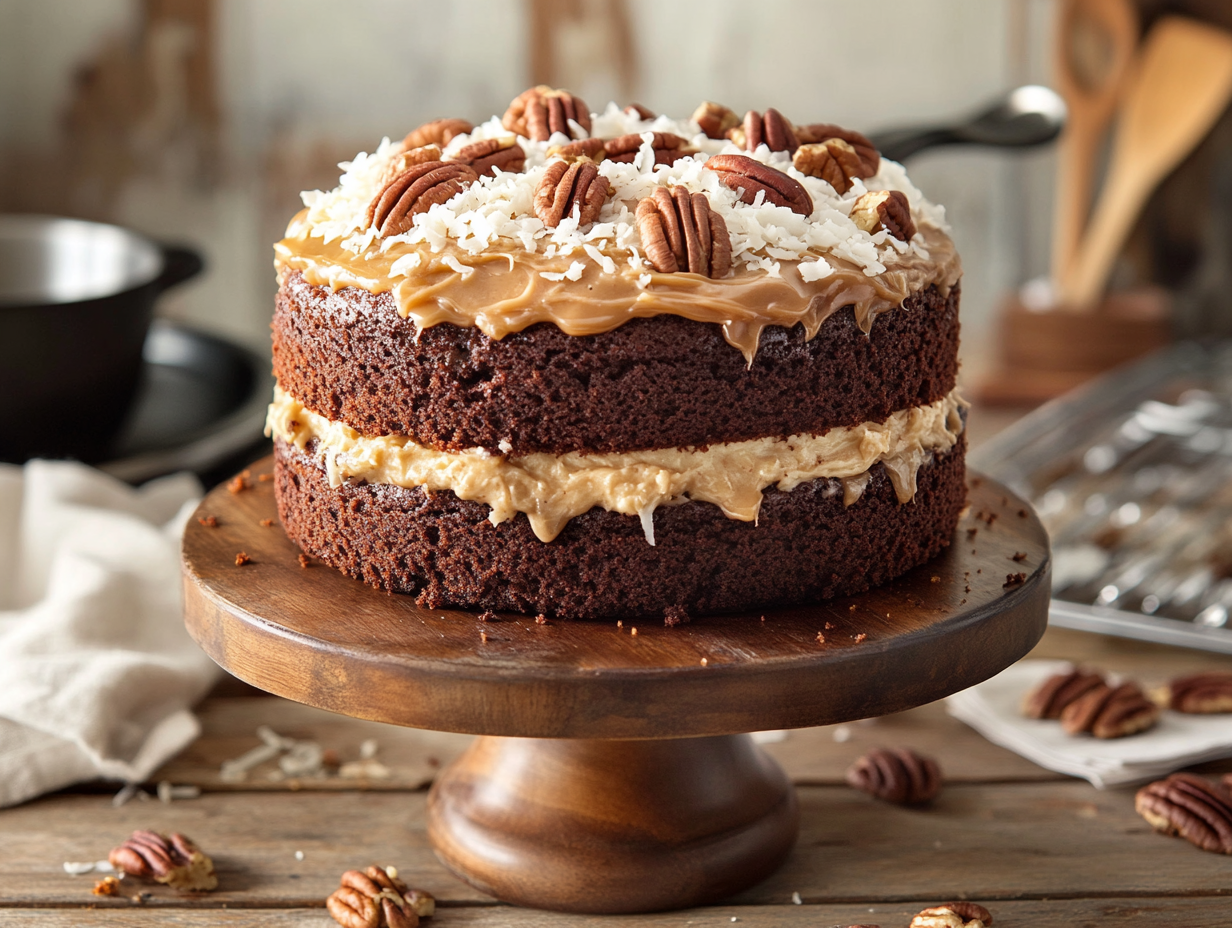
German Chocolate Cake is a three-layer American classic built around a coconut-pecan frosting that sets it apart from every other chocolate cake on the table. The name comes from Sam German, who developed the sweet baking chocolate used in the original 1957 recipe — not from the country. It takes about 75 minutes of active work, but the result is a cake that genuinely impresses without requiring any advanced skills.
What makes this version work
Two things matter most here. First, the frosting is cooked on the stovetop — evaporated milk, brown sugar, butter, and beaten egg yolks stirred together over medium heat for a full 12 minutes. That time is not optional. Pulling it early leaves you with a runny topping that slides off the layers; staying with it until the mixture visibly thickens and coats the back of a spoon gives you the dense, fudgy texture that holds between the cake layers and on top. Second, alternating the flour and buttermilk in three additions — starting and ending with flour — keeps the batter from curdling and produces a crumb that stays moist even after the cake has been refrigerated. Both steps are straightforward, but skipping or rushing either one is the most common reason this cake disappoints.
Troubleshooting
- Frosting is too thin to spread: It needs more cooling time, not more cooking. Pour it into a wide shallow bowl and let it sit at room temperature for 30–45 minutes, stirring occasionally. It thickens significantly as it cools.
- Cake layers dome in the center: This usually means the oven runs hot. Use an oven thermometer to check — even a 25°F difference causes uneven rising. You can also use baking strips (wet fabric strips wrapped around the pans) to encourage flat, even layers.
- Layers stick to the pan: Parchment on the bottom is in the recipe, but greasing the sides of the pan matters just as much. Run a thin offset spatula or butter knife around the edge before inverting.
- Frosting tastes eggy: The egg yolks were added to a mixture that was already too hot, which scrambled them slightly instead of tempering them. Next time, whisk the yolks into the cold evaporated milk before the pan goes on the heat.
- Pecans taste bitter: Toasting is listed in the ingredients but easy to skip — don’t. Spread them on a dry baking sheet at 350°F for 6–8 minutes until fragrant. Raw pecans can taste sharp and astringent in the finished frosting.
Storage and make-ahead
The assembled cake keeps well in the refrigerator, covered, for up to 4 days — the frosting actually firms up and the flavors improve overnight, so making it a day ahead is a genuine advantage, not just a convenience. If you want to spread the work out further, bake and fully cool the cake layers, then wrap each one tightly in plastic wrap and freeze for up to 6 weeks; thaw overnight in the refrigerator before assembling. The frosting can also be made up to 3 days ahead and stored in an airtight container in the fridge — rewarm it gently in a saucepan over low heat, stirring until just spreadable again. Skip making a separate chocolate garnish or drizzle on top; the coconut-pecan frosting is the whole point of this cake and it doesn’t need the extra step.
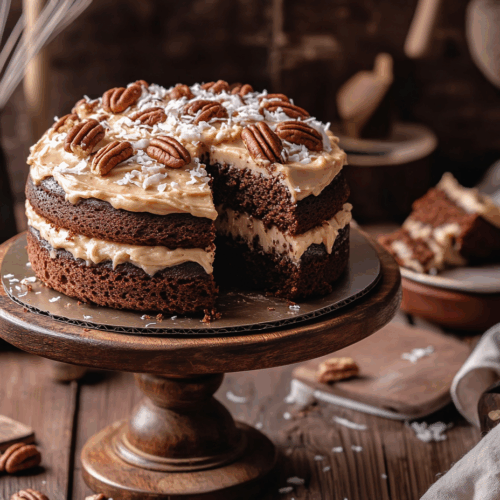
German Chocolate Cake

Equipment
- 9-inch round cake pans
- Electric Mixer
- Mixing Bowls
- Saucepan
- Whisk
Ingredients
Cake Ingredients
- 2 cups all-purpose flour
- 1 teaspoon baking soda
- ½ teaspoon salt
- 4 ounces semi-sweet chocolate roughly chopped
- 2 cups granulated sugar
- 1 cup unsalted butter softened
- 4 large eggs room temperature
- 1 teaspoon vanilla extract
- 1 cup buttermilk
Frosting Ingredients
- 1 cup evaporated milk
- 1 cup brown sugar packed
- ½ cup unsalted butter
- 3 large egg yolks beaten
- 1 teaspoon vanilla extract
- 1 ⅓ cups sweetened shredded coconut
- 1 ⅓ cups chopped pecans toasted
Instructions
Preparation Instructions
- Preheat your oven to 350°F (175°C). Grease three 9-inch round cake pans and line the bottoms with parchment paper.
- In a small saucepan, melt the semi-sweet chocolate over low heat, stirring constantly. Once melted, set aside to cool.
- In a medium bowl, whisk together the flour, baking soda, and salt. Set aside.
- In a large mixing bowl, cream the sugar and butter together using an electric mixer until light and fluffy. Add the eggs one at a time, beating well after each addition. Mix in the vanilla extract and melted chocolate.
- Alternately add the flour mixture and buttermilk to the chocolate mixture in three additions, beginning and ending with the flour. Beat just until combined.
- Divide the batter evenly among the prepared cake pans. Bake in preheated oven for 30 minutes or until a toothpick inserted into the center comes out clean. Let them cool in the pans for 10 minutes, then remove from pans and transfer to wire racks to cool completely.
Frosting Instructions
- In a medium saucepan, combine the evaporated milk, brown sugar, butter, and egg yolks. Cook over medium heat, stirring constantly, until thickened, about 12 minutes. Remove from heat and stir in the vanilla extract, coconut, and pecans. Cool until spreadable.
- Place one cake layer on a serving plate. Spread a third of the frosting over the top. Repeat with the second layer, then top with the third layer and remaining frosting.
Notes
Tammy’s Tips
- For added texture, consider using toasted pecans and coconut for the frosting.
- If you prefer a less sweet cake, reduce the sugar in the frosting by 1/4 cup.
- For an extra decadent experience, drizzle melted chocolate over the top of the cake once frosted.
Nutrition
Frequently asked questions
Can I use a box of chocolate cake mix instead of making the batter from scratch?
Yes, and it works fine for a first attempt. Use the mix as directed, then focus your energy on getting the coconut-pecan frosting right — that’s what makes this cake distinctive, and the from-scratch batter is straightforward enough that you won’t need the shortcut once you’ve tried it.
My grocery store doesn’t carry buttermilk. What can I use instead?
Add 1 tablespoon of white vinegar or lemon juice to a measuring cup, then fill to the 1-cup line with regular whole milk and let it sit for 5 minutes. It curdles slightly and behaves like buttermilk in the batter, giving you the same tender crumb.
How do I know when the frosting is thick enough to stop cooking?
Drag a spoon through the mixture — it should leave a clear path that holds for a second or two before closing back in, and the texture should look like loose pudding rather than warm milk. At 12 minutes over medium heat this is usually where you land, but stovetop temperatures vary, so watch the texture rather than the clock.
What to bake next
- Nostalgic Malted Milk Chocolate Cake
- Southern Classic Pecan Pie
- Ultimate Chocolate Sheet Cake
- Tropical Coconut Tres Leches Cake