

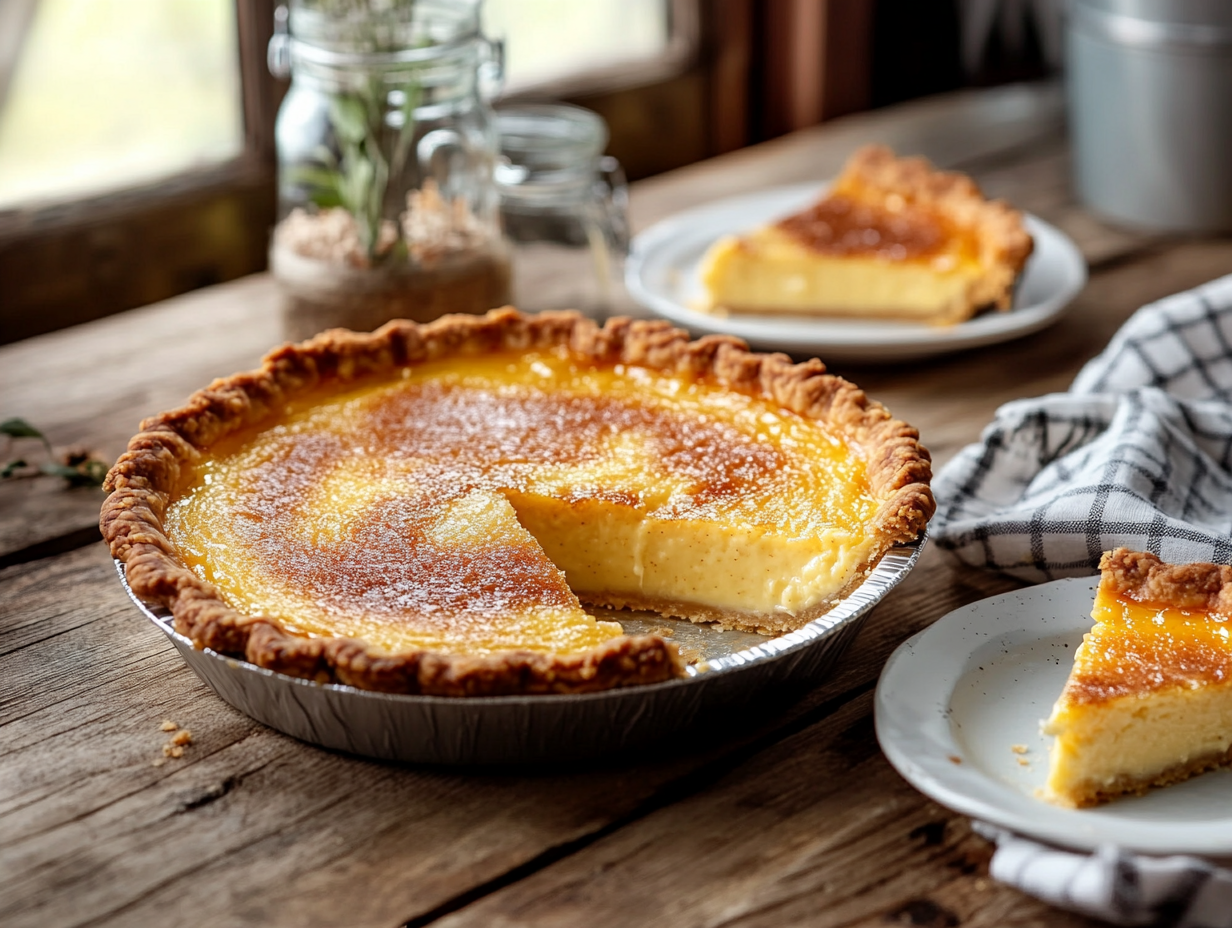
Chess pie is a baked custard pie — eggs, sugar, butter, a little cornmeal, and flour poured into a pastry shell and baked until the top turns a deep golden brown. It makes eight generous slices from one 9-inch pie, the filling sets firm enough to cut cleanly, and the ingredient list is short enough that you can have two pies in the oven without breaking a sweat. That’s the honest reason most people keep coming back to it.
What makes this version work
Two things matter most here. First, the butter needs to be melted and cooled before it hits the eggs — pour it in hot and you risk scrambling the eggs before the pie even reaches the oven, which gives you a greasy, curdled filling instead of a smooth one. Second, don’t rush the cooling. The center will look slightly underdone when you pull it at 45–50 minutes, and that’s correct. The residual heat finishes the job as it cools. Cut into it warm and the filling runs; give it a full hour at room temperature and it slices cleanly every time.
About the ingredients
- Cornmeal: This is the one ingredient that raises questions. It doesn’t make the filling gritty — one tablespoon in a full pie is barely detectable — but it helps the custard set with a slightly firm, almost crackly top rather than a soft pudding surface. White or yellow cornmeal both work; fine-ground is preferable over coarse.
- Whole milk: Don’t substitute skim. The fat in whole milk contributes to the texture of the custard. In a pinch, half-and-half works fine and makes the filling a touch richer.
- Pie crust: A store-bought refrigerated crust works well here and saves real time when you’re making multiple pies. If you’re going homemade, blind-baking is not required — the filling is dense enough that a soggy bottom isn’t a common problem with this recipe.
Mistakes to avoid
- Overbaking until the top cracks deeply: A few hairline cracks are normal, but if the surface splits wide open, the oven ran too hot or the pie stayed in too long. An oven thermometer is worth using if you’re unsure of your oven’s calibration.
- Skipping the room-temperature eggs: Cold eggs straight from the fridge don’t incorporate as smoothly into the melted butter and sugar. Set them out 20–30 minutes before you start.
- Pouring the filling into a warm crust: If you’re pre-baking or handling the crust in any way, let it cool before adding the filling. A warm crust can cause the bottom to puff unevenly.
- Not protecting the crust edge: The crust edge browns faster than the filling sets. Cover it loosely with foil or a pie shield after the first 20 minutes if it’s darkening too quickly.
- Stacking pies before they’re fully cool: If you’re making a batch, resist the urge to stack or wrap them early. Trapping steam softens the top and makes the filling tacky. Cool completely on a wire rack first — skip the plastic wrap until they’re fully at room temperature.
Storage and make-ahead
Chess pie keeps well at room temperature for up to two days, loosely covered — the sugar content helps preserve it. After that, refrigerate it for up to five days; the texture stays good, though the top loses some of its crispness. For make-ahead baking, you can bake the pie up to two days before you need it and store it at room temperature, which makes it a practical choice when you’re preparing for a gathering and oven space is tight. Chess pie also freezes well: wrap individual slices tightly in plastic wrap, then foil, and freeze for up to two months. Thaw overnight in the refrigerator and bring to room temperature before serving.
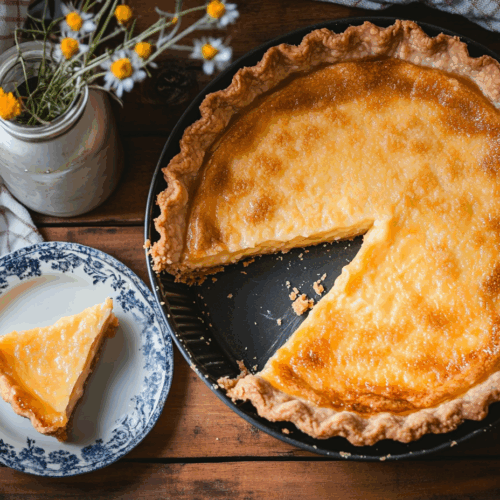
Classic Southern Chess Pie

Equipment
- Mixing Bowl
- Whisk
- 9-inch pie pan
- Measuring cups and spoons
- Spatula
Ingredients
Filling
- 1 ½ cups granulated sugar Ensure it's fine grain for smooth blending.
- ½ cup unsalted butter melted and cooled slightly.
- 4 large eggs room temperature
- 1 tablespoon cornmeal white or yellow, for texture.
- 2 tablespoons all-purpose flour sifted
- ¼ cup whole milk
- 1 teaspoon vanilla extract pure for best flavor.
Crust
- 1 store-bought pie crust or homemade if preferred
Instructions
- Preheat your oven to 350°F (175°C).
- Press the pie crust into a 9-inch pie pan, ensuring there's an even edge. Set aside.
- In a large mixing bowl, whisk together the sugar, melted butter, eggs, cornmeal, and flour until the mixture is smooth and well combined.
- Add the milk and vanilla extract, continuing to whisk until fully incorporated.
- Pour the filling into the prepared pie crust.
- Bake in the preheated oven for 45-50 minutes or until the pie is set and golden brown on top. A little jiggle in the center is normal as it will set upon cooling.
- Let the pie cool completely before slicing and serving to ensure the filling is firm.
Notes
Tammy’s Tips
- For a twist, add a teaspoon of lemon zest into the filling for a citrusy uplift.
- If desired, substitute a gluten-free flour blend to make this pie suitable for gluten intolerances.
Nutrition
Your questions, answered
Can I double the recipe and bake two pies at once?
Yes, and this recipe scales up without any issues. Mix a double batch in one large bowl, then divide evenly between two prepared pie shells. If baking both pies on the same oven rack, rotate them halfway through to account for any hot spots; if using two racks, swap their positions at the 25-minute mark.
How do I know when the pie is actually done?
The edges should be set and the top golden brown, but the center two inches will still have a slight wobble — that’s what you want. If the whole surface jiggles like liquid, give it another five minutes; if it’s completely firm with no movement at all, it’s likely overbaked.
Do I need to pre-bake (blind-bake) the crust?
No. Chess pie filling is dense and bakes at a moderate temperature, so the crust cooks through adequately without blind-baking. Blind-baking is more important for no-bake or very wet fillings — this one doesn’t need it.
If you liked this one
- Southern Classic Pecan Pie
- Southern-Style Lemon Pie with Condensed Milk
- Toasted Coconut Custard Pie
- Southern Maple Bourbon Bread Pudding