

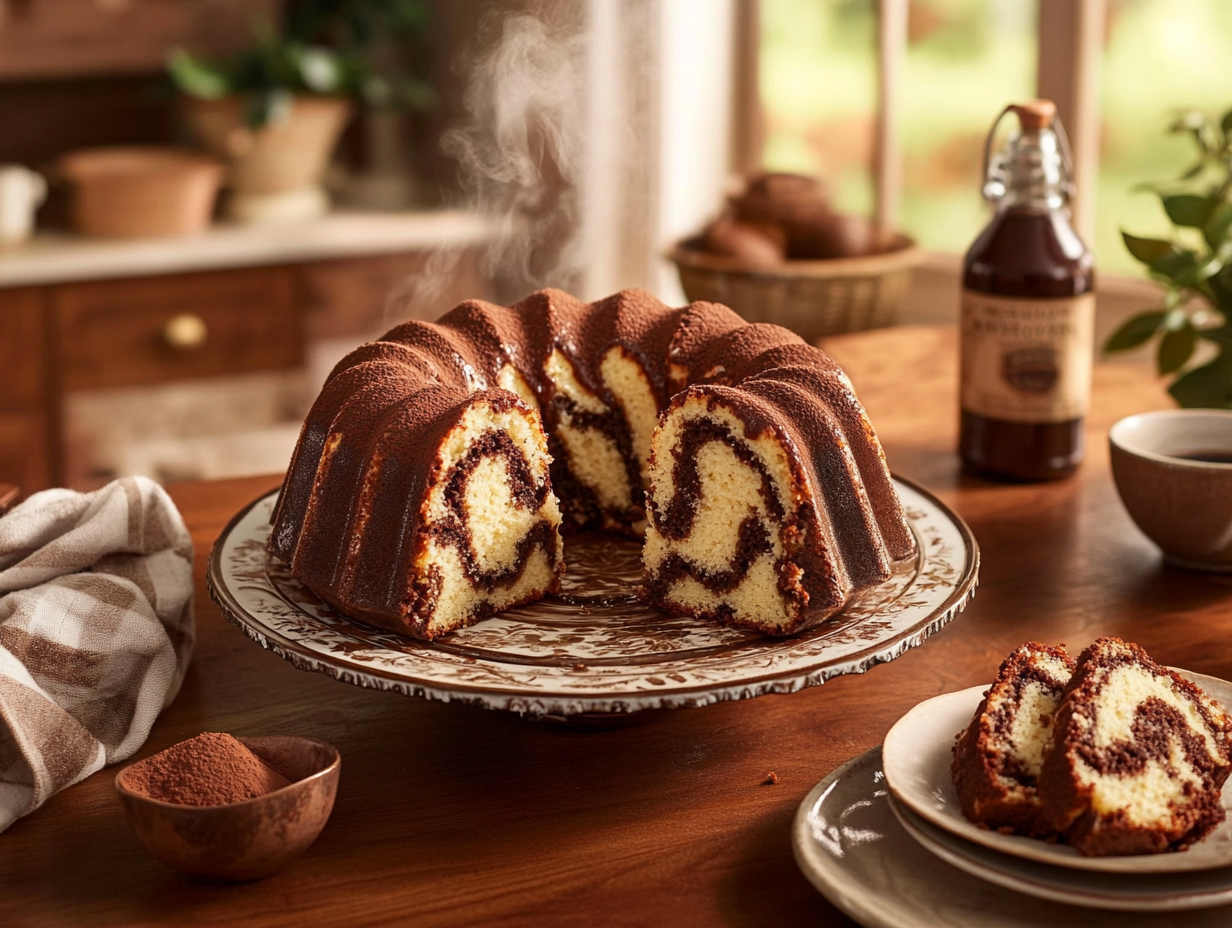
The Marble Cake is a dessert that perfectly illustrates the balance between beauty and flavor. A visual marvel as well as a culinary classic, it showcases a swirl of light vanilla and dark chocolate batters—each a distinct flavor, yet united in perfect harmony. The artistry lies in its marbled interior, forming a striking contrast that resembles fine veining found in natural marble stone. But the appeal of this cake runs deeper than its looks.
The origins of Marble Cake date back to 19th-century Germany, where bakers first began experimenting with combining light and dark batters to create a more visually interesting and varied eating experience. Originally, the darker swirls were made using molasses and spices. Chocolate—now the more favored companion to vanilla in marble cakes—became a standard addition with the increasing accessibility and popularity of cocoa in European households in the late 19th and early 20th centuries.
The Marble Cake is particularly associated with European traditions but has been embraced globally due to its elegant appearance and crowd-pleasing flavor. It made its way to America with German Jewish immigrants, becoming a staple in Jewish bakeries and beyond. Over time, it evolved to fit different cultural preferences, incorporating various twists—from citrus zest in Mediterranean versions to rich coffee or even rum flavoring in Caribbean adaptations.
What makes the Marble Cake unique is its dual personality: it’s a cake that satisfies both lovers of light and rich flavors. The vanilla batter offers a delicate sweetness and soft texture, while the swirl of chocolate provides a richer, deeper taste that cuts through the sweetness for a bold contrast. The cake’s soft crumb and moist texture make it suited for everything from afternoon tea to festive family gatherings.
From a technical perspective, the preparation of a Marble Cake is a wonderful exercise in balance and proportion for both seasoned and budding bakers. The key to a successful marbled look lies in the way the two batters are laid into the pan and gently swirled—too much blending can result in a muddled color rather than a distinct pattern, while too little may leave uneven flavor pockets.
The use of a Bundt pan, as indicated in this recipe, not only enhances the cake’s visual appeal with its molded ridges but also allows for more even baking and a beautiful golden crust. The result is a dessert that’s not only easy to prepare but also consistently stunning.
Whether served plain, dusted with powdered sugar, or topped with a light glaze, Marble Cake is sure to delight. It’s a nostalgic dessert that appeals to both the eye and the palate—a testament to how simplicity, when done right, can be the most memorable.
Ultimately, Marble Cake celebrates the idea of complementing contrasts, where two classic flavors—vanilla and chocolate—come together to create something far greater than the sum of their parts.
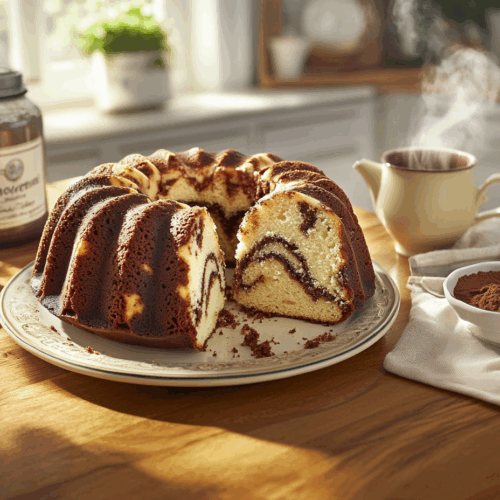
Marble Cake

Equipment
- 1 9-inch Bundt pan
- 1 Mixing Bowls
- 1 Whisk
- 1 Spatula
- 1 Toothpick
Ingredients
- 2 cups all-purpose flour sifted
- 1 cup granulated sugar preferably organic
- 1 cup unsalted butter room temperature
- 4 large eggs at room temperature
- 1 tsp vanilla extract
- 1 cup whole milk
- 2 tsp baking powder
- ¼ tsp salt
- ⅓ cup cocoa powder sifted
Instructions
- Preheat the oven to 350°F (175°C). Grease a 9-inch Bundt pan liberally.
- In a mixing bowl, cream together the butter and sugar until light and fluffy.
- Add eggs one at a time, beating well after each addition, then stir in the vanilla extract.
- In a separate bowl, sift together flour, baking powder, and salt.
- Gradually add flour mixture to creamed mixture, alternating with milk, until fully incorporated and smooth.
- Divide the batter into two bowls — add the cocoa powder to one and mix until well combined.
- Spoon the batters alternately into the prepared pan. Use a knife or spatula to gently swirl through the batter, creating a marble effect.
- Bake in preheated oven for 45 minutes or until a toothpick inserted into the center comes out clean.
- Allow to cool in the pan for 10 minutes, then remove from pan and cool completely on a wire rack.
Notes
- For a richer chocolate flavor, replace cocoa powder with melted semi-sweet chocolate chips.
- You can also add a touch of orange zest to the batter for a citrusy twist.