

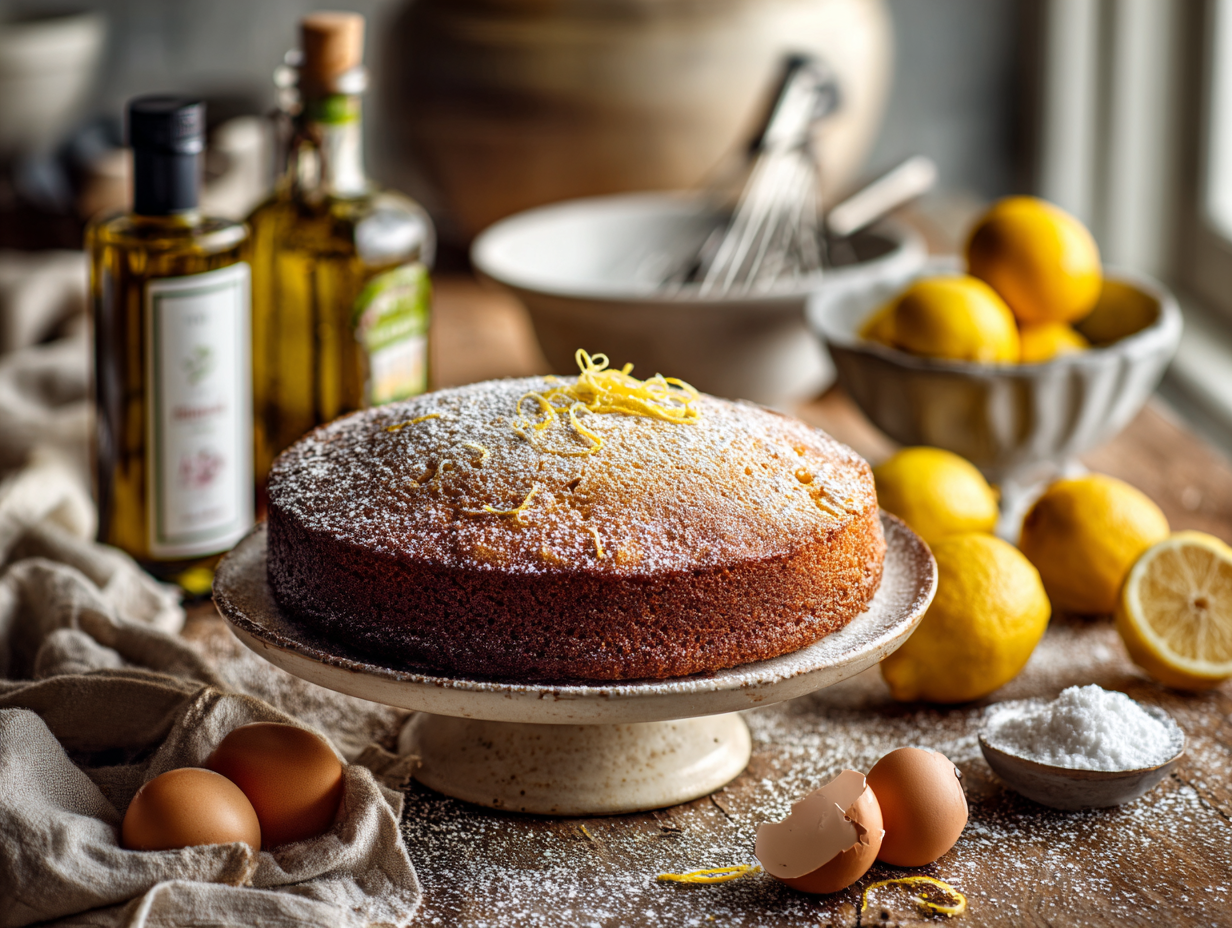
This is a one-bowl lemon cake made with olive oil instead of butter — no mixer needed, about 15 minutes of hands-on work, and a genuinely moist crumb that holds up for days. The honest reason to make it: it’s simpler than most cakes and the result tastes like you put in more effort than you did.
What makes this version work
Two things matter here more than anything else. First, rubbing the lemon zest directly into the sugar before adding any liquid — use your fingertips and work it for a full minute until the sugar feels damp and smells strongly of lemon. This breaks open the oils in the zest and distributes them through the batter in a way that stirring alone never would. Second, adding the flour in two additions with the milk in between keeps the batter from getting overworked. Overmixing at the flour stage develops gluten and tightens the crumb; splitting the addition gives you a tender, even texture instead of a rubbery one.
What can go wrong
- The cake sinks in the center. This usually means the oven door was opened before the cake had set — wait until at least 35 minutes have passed before checking. It can also happen if the baking powder is old; test it by dropping a teaspoon into hot water. If it doesn’t bubble vigorously, buy a fresh can.
- The top browns too fast before the center is done. Oven hot spots are usually the culprit. Tent the cake loosely with foil after 30 minutes if the top is already deep golden, and keep baking until the toothpick test passes.
- The cake sticks to the pan. Parchment on the bottom is listed in the recipe, but also grease the sides of the pan — not just the bottom. A thin coat of olive oil on the sides works fine and won’t affect flavor.
- The crumb is dense and heavy. Cold eggs or cold milk can cause the batter to seize slightly when the olive oil hits them. Both should be at room temperature before you start — set them out 30 minutes ahead.
- The olive oil flavor is too strong. This happens with very robust, peppery extra virgin olive oils. A mild or light-tasting extra virgin olive oil keeps the lemon front and center without the oil competing with it.
Ingredient notes
- Extra virgin olive oil: Use a mild-tasting one. Fruity and grassy oils work; intensely bitter or peppery ones can overwhelm the lemon. If you only have a strong oil on hand, you can substitute up to half of it with a neutral oil like avocado or sunflower.
- Lemon zest: Organic lemons are worth it here since you’re using the skin. Conventional lemons often have wax and pesticide residue on the rind. If organic isn’t available, scrub the lemons well with warm water and a brush before zesting.
- Whole milk: Don’t swap this for skim — the fat content contributes to the tender crumb. Full-fat oat milk is a workable dairy-free substitute if needed, though the crumb will be very slightly less rich.
Storage and make-ahead
Store the cooled cake at room temperature, wrapped tightly or under a cake dome, for up to 3 days — the texture actually improves on day two as the olive oil and lemon settle into the crumb. Skip the fridge; refrigeration dries it out faster than it would at room temperature. For longer storage, wrap individual slices in plastic wrap and freeze for up to 2 months; thaw at room temperature for about an hour. If you want to dust with powdered sugar, do it right before serving — skip the garnish if you’re making this ahead, since the sugar absorbs into the surface and disappears overnight.
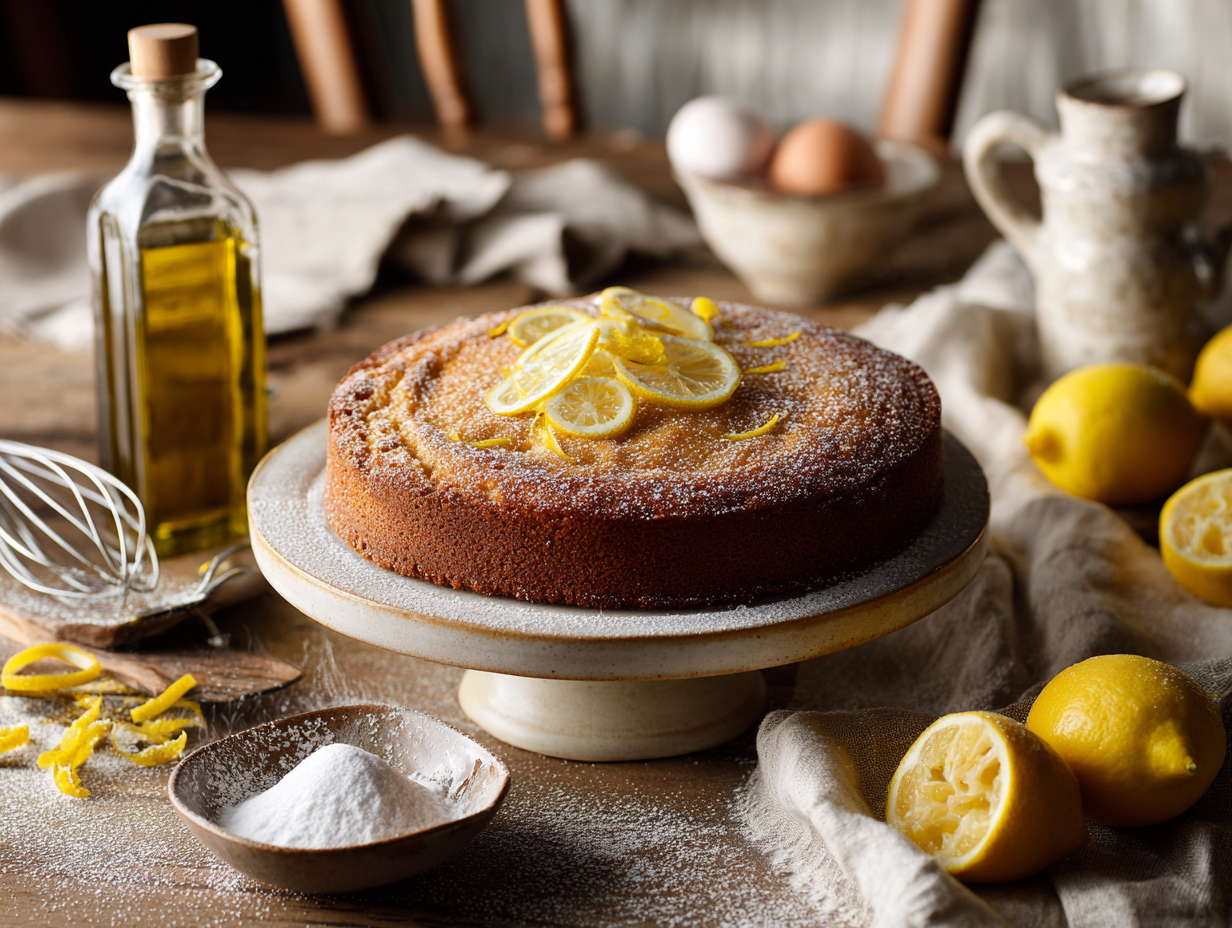
Lemon Olive Oil Cake

Equipment
- Mixing Bowls
- Whisk
- 9-inch round cake pan
- Microplane or zester
- Measuring cups and spoons
- Rubber spatula
- Cooling Rack
Ingredients
- 1 ½ cups all-purpose flour
- 2 teaspoons baking powder
- ½ teaspoon kosher salt
- 1 cup granulated sugar
- 3 teaspoons lemon zest preferably from organic lemons
- ¾ cup extra virgin olive oil
- 3 large eggs room temperature
- ¼ cup lemon juice freshly squeezed
- ½ cup whole milk room temperature
Instructions
- Preheat the oven to 350°F (175°C). Lightly grease a 9-inch round cake pan and line it with parchment paper for easy removal.
- In a mixing bowl, sift together the flour, baking powder, and salt. Set aside.
- In another bowl, combine the sugar and lemon zest. Rub the zest into the sugar with your fingertips until the sugar is fragrant and moist.
- Whisk in the olive oil until fully combined, then add the eggs, one at a time, whisking well after each addition.
- Stir in the lemon juice and half of the flour mixture, followed by the milk. Once combined, add the remaining flour mixture and stir until smooth.
- Pour the batter into the prepared cake pan. Smooth the top with a rubber spatula.
- Bake for 45 minutes, or until a toothpick inserted into the center comes out clean and the cake is golden brown. Allow the cake to cool in the pan for 15 minutes before transferring it to a cooling rack.
Notes
- For extra flavor, consider adding a pinch of freshly ground black pepper to the mix. This will enhance the lemon's zing and add depth.
Nutrition
Frequently asked questions
Can I use bottled lemon juice instead of fresh?
No — bottled lemon juice won’t give you the same result here. Fresh juice has a brightness that bottled versions lose in processing, and since lemon is the main flavor in this cake, the difference is noticeable.
Can I bake this in a loaf pan instead of a round cake pan?
Yes, a standard 9×5-inch loaf pan works, but the bake time will be longer — start checking at 50 minutes and expect it to take up to 60. The center takes more time to set in a deeper pan, so use the toothpick test rather than going by time alone.
What can I serve with this cake?
Fresh berries or sliced stone fruit alongside a slice is the easiest option and needs no extra prep. If you want something richer, a spoonful of whipped mascarpone with a little honey stirred in takes about two minutes to put together and pairs well with the lemon.
More sweet things to bake
- Mediterranean Lemon Yogurt Loaf with Syrup
- Mediterranean Sunshine Lemon Crumble Bars
- Orange Blossom Olive Oil Cake
- Mediterranean Honey Almond Semolina Cake