

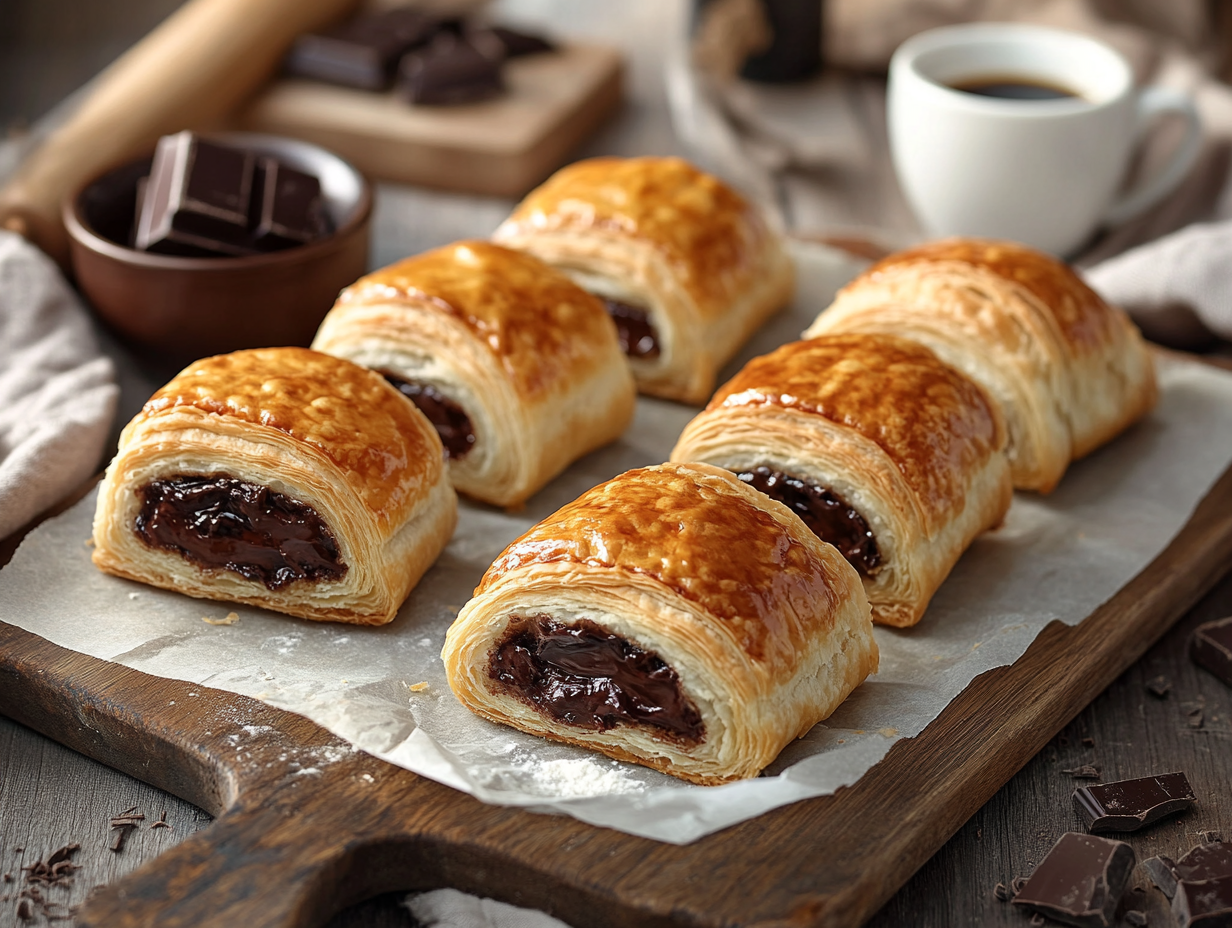
Pain au chocolat is a laminated pastry — yeast dough folded repeatedly with cold butter to build thin, flaky layers around a center of dark chocolate. Each batch makes 8 pieces and takes about 3 hours 20 minutes start to finish, most of that hands-off chilling time. The honest reason to make these at home is control: you choose the chocolate, you know exactly what’s in the dough, and the result is noticeably better than most grocery-store versions.
Shopping notes
- Instant yeast: The recipe calls for one packet (2¼ tsp). Don’t substitute active dry yeast without adjusting — active dry needs to be proofed in warm liquid first, which changes the process here.
- Chocolate sticks: The recipe calls for 8 sticks of dark chocolate. Look for baking chocolate batons (Valrhona and Cacao Barry both make them) at specialty stores or online. In a pinch, break a good-quality dark chocolate bar into thick rectangles — aim for pieces roughly 3 inches long and ½ inch wide.
- Butter: The recipe notes European-style butter as an upgrade. It has a higher fat content than standard American butter, which makes the layers more distinct. Worth it if you can find it; the pastries will still work with regular unsalted butter.
- Milk: Use whole milk. Lower-fat milk gives you less richness in the dough.
The short version of why this works
Two things actually drive the result here. First, keeping everything cold. Butter that warms up during lamination smears into the dough instead of staying in discrete layers — those layers are what create the flaky, open crumb. Work quickly, and don’t skip either of the chilling steps. Second, the fold sequence. Rolling and folding the dough into thirds twice, with a rest in between, multiplies the butter layers without overworking the gluten. Overworked dough gets tough and won’t puff properly in the oven. If the dough starts springing back hard when you roll it, stop and refrigerate it for 15 minutes before continuing.
Troubleshooting
- Butter breaks through the dough while rolling: The butter got too cold and brittle. Let the dough sit at room temperature for 5 minutes, then try again with lighter pressure on the rolling pin.
- Pastries didn’t rise much during the final proof: The room was probably too cold. A good trick is to place the baking sheet inside an unheated oven with just the oven light on — it creates a warm, draft-free environment around 75–80°F.
- Chocolate leaked out during baking: The seam wasn’t sealed tightly enough, or the seam was placed face-up on the pan. Always rest the rolls seam-side down on the parchment.
- Layers look solid rather than flaky after baking: This usually means the dough was over-proofed. Once the rolls have visibly puffed and jiggle slightly when you nudge the pan, they’re ready to bake — skip the full hour if they get there sooner.
- Pale, soft exterior instead of a deep golden crust: Make sure the egg wash covers the full surface without pooling in the folds. A second thin coat applied right before the pastries go into the oven gives a noticeably better color — skip the garnish of extra chocolate shavings on top, not worth the extra dish.
Keeping it fresh
Pain au chocolat is best within a few hours of baking, but fully baked pastries keep at room temperature in an airtight container for up to 2 days — reheat them in a 325°F oven for 5 to 8 minutes to bring back the crisp exterior. For longer storage, freeze the unbaked shaped rolls after the final proof: place them on a parchment-lined tray until solid, then transfer to a zip-top bag for up to 1 month. Bake from frozen at 375°F, adding about 5 extra minutes to the bake time. You can also freeze fully baked pastries for up to 3 weeks; thaw at room temperature and warm in the oven before serving. Do not refrigerate baked pastries — the cold stales them quickly.
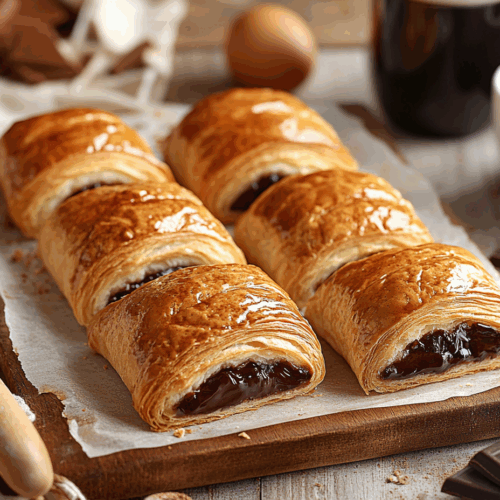
Pain au Chocolat

Equipment
- 1 Rolling pin
- 1 Baking sheet
- 1 Parchment Paper
- 1 Pastry brush
- 1 Sharp knife
Ingredients
Croissant Dough
- 2 cups all-purpose flour plus extra for dusting
- 1 cup cold unsalted butter cut into cubes
- ⅔ cup cold milk
- 2 tablespoons sugar
- 1 teaspoon salt
- 1 packet instant yeast
Filling & Glaze
- 8 sticks dark chocolate use high-quality for best results
- 1 large egg beaten, for glaze
Instructions
- In a mixing bowl, combine 2 cups of all-purpose flour, instant yeast, sugar, and salt.
- Add the cold butter cubes into the flour mixture and incorporate using your fingertips until the mixture resembles coarse bread crumbs.
- Pour in the cold milk and mix until a shaggy dough forms. Cover and chill for 1 hour.
- Roll the dough into a rectangle on a floured surface, approximately 18x10 inches.
- Fold the rectangle into thirds, like a letter, then roll out again into the same size. Repeat folding one more time, then wrap and refrigerate for another 1 hour.
- Roll the dough out to a 20x12-inch rectangle. Cut the rectangle into eight equal strips.
- Place a stick of dark chocolate at the end of each strip and roll it up tightly. Ensure the seams are sealed well to prevent chocolate leakage.
- Place each roll on a baking sheet lined with parchment paper. Cover and let them rise in a warm area for about 1 hour, until doubled in size.
- Preheat your oven to 375°F (190°C).Brush each roll with beaten egg for a golden finish.
- Bake for 15-20 minutes until golden brown and crisp.
Notes
- For a professional touch, consider using European-style butter for a richer taste and flakier texture.
- If you prefer a semi-sweet filling, you can substitute milk chocolate for dark chocolate.
Nutrition
Your questions, answered
Can I make the dough the night before?
Yes — this is actually the most practical approach. After the second fold and chill, wrap the dough tightly and refrigerate it overnight (up to 16 hours). The next morning, roll it out, shape the pastries, let them proof, and bake.
Do I need a stand mixer for this dough?
No. The dough comes together by hand — you work the butter into the flour with your fingertips, then stir in the cold milk until a shaggy dough forms. Keeping it hand-mixed actually helps you feel when the butter is the right texture and avoid overworking the dough.
How do I know when the pastries have proofed enough?
They should look noticeably puffed — roughly doubled in size — and feel light when you gently lift the parchment. If you press one lightly with a fingertip, the indent should spring back slowly rather than immediately.
My dough feels sticky and hard to roll. What’s wrong?
A little sticking is normal — dust the surface and rolling pin lightly with flour as needed, but don’t overdo it or the dough will dry out. If it’s sticking badly and tearing, it’s likely too warm; refrigerate it for 15 minutes and try again.
What to bake next
- Luxurious Almond Croissant Bread Pudding
- French Brown Butter Chocolate Tart
- Luxurious French Chocolate Truffles
- Chocolate Babka