

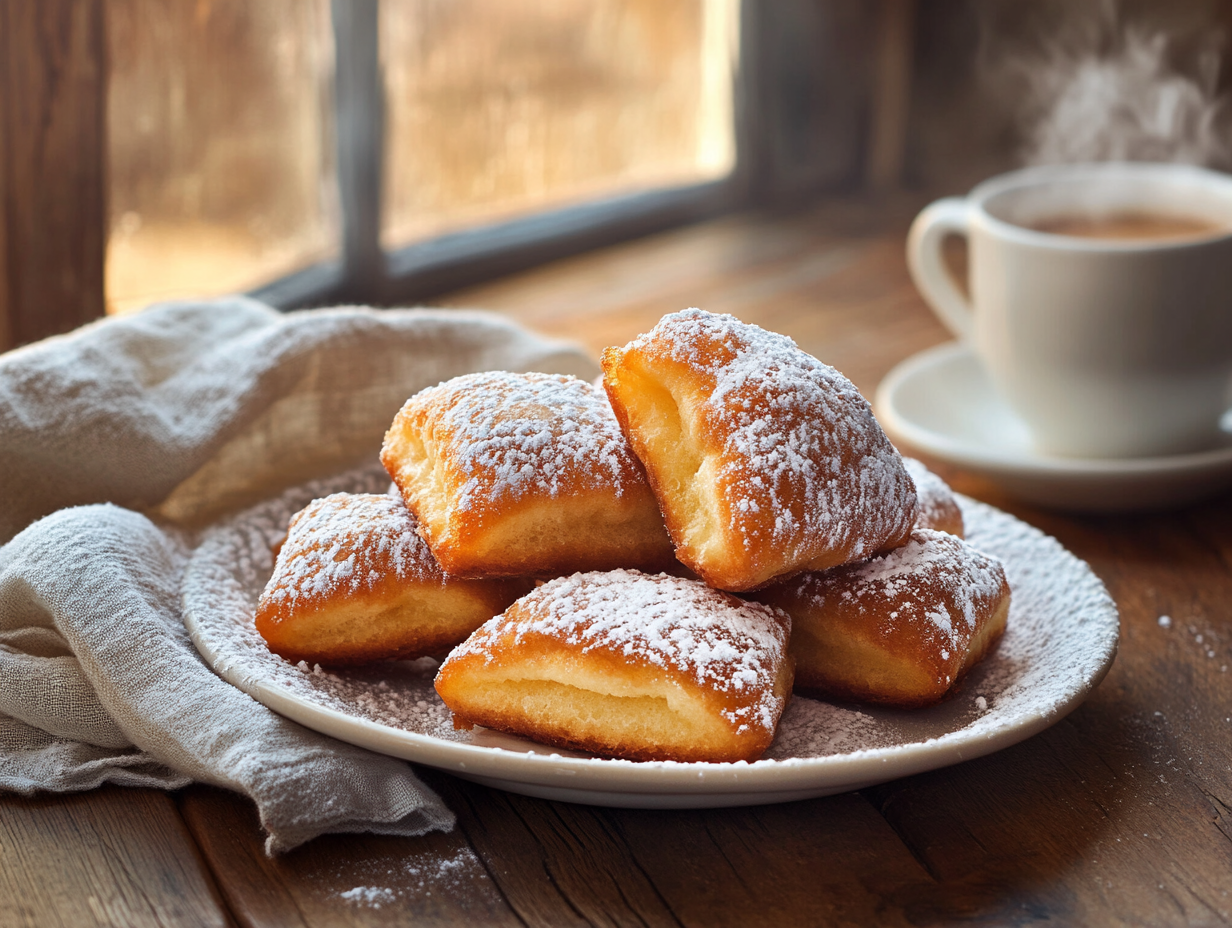
Beignets are square, yeast-leavened dough puffs that fry up hollow and light, then get buried in powdered sugar while still hot. The dough comes together with pantry staples and about 1 hour 50 minutes start to finish. The real reason to make them at home: they are genuinely better fresh, and the process is straightforward enough to do on a weekend morning without much stress.
The technique that matters
Oil temperature is the one thing you cannot wing here. Too cool — below 170°C/340°F — and the dough absorbs oil before the crust sets, leaving you with greasy, dense puffs. Too hot and the outside browns before the inside cooks through. Keep a thermometer in the oil the whole time, and let it recover between batches. The second technique worth respecting is the roll-out thickness. At 1/4 inch the dough has enough structure to puff dramatically in the oil; thinner and you lose that hollow interior, thicker and the center stays doughy. Use a ruler the first time if you are not sure by eye.
Mistakes to avoid
- Cutting the rise short. If the dough hasn’t clearly doubled, the beignets won’t puff properly in the oil. A slightly under-proofed dough looks almost right but bakes flat. Give it the full hour, or longer if your kitchen is cold.
- Crowding the pan. Adding too many pieces at once drops the oil temperature fast. Fry in small batches — four to five pieces maximum in a standard deep pan — and wait for the oil to return to 180°C/350°F before the next batch goes in.
- Dusting too late. Powdered sugar sticks best to warm dough. If you wait until they cool, the sugar sits on the surface instead of adhering. Dust within 60 seconds of draining.
- Uneven squares. Ragged or very different-sized pieces fry unevenly. Use a bench scraper or sharp knife and aim for consistent 2-inch cuts. Skip the garnish — not worth the extra dish.
- Pressing down during frying. The dough needs to float and turn freely to puff evenly on both sides. Don’t press or hold pieces under the oil; just let them move.
Shopping notes
Active dry yeast and instant yeast both work here — the recipe card confirms either is fine. If you use instant yeast, you can skip the 10-minute bloom step, though doing it anyway doesn’t hurt. For the oil, any neutral high-smoke-point oil works: sunflower, canola, or refined peanut oil are all good choices. Whole milk is worth using as written; lower-fat milk produces a slightly less tender crumb. Powdered sugar is sold in different grades of fineness — the standard 10X confectioners’ sugar you find at any grocery store is exactly right.
Make-ahead notes
Beignets are best eaten immediately, but the dough can be made ahead. After the first knead, place the dough in a greased bowl, cover tightly with plastic wrap, and refrigerate for up to 24 hours — the cold slows the rise rather than stopping it, so the dough will still be ready to roll when you take it out. Let it sit at room temperature for 30 minutes before rolling and cutting. Already-fried beignets do not hold well; they go soft and lose their crust within an hour. If you need to prep for a group, cut and separate the raw squares on a parchment-lined tray, cover, and refrigerate for up to 4 hours before frying.
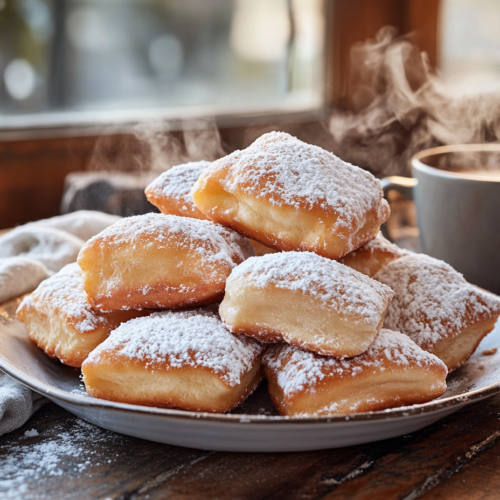
Classic French Beignets

Ingredients
Dough Ingredients
- 240 ml whole milk Warm, about 43°C/110°F
- 60 g granulated sugar
- 7 g active dry yeast Instant yeast can also be used
- 2 large eggs Room temperature
- 60 g unsalted butter Melted and slightly cooled
- 480 g all-purpose flour + extra for dusting
- 2 g salt Fine sea salt works best
Frying and Sugar Dusting
- 1 L vegetable oil Enough for frying, typically about 4 cups
- 60 g powdered sugar For dusting generously
Instructions
- In a large bowl, combine warm milk, granulated sugar, and yeast. Let the mixture sit until frothy, about 10 minutes.
- Add eggs and melted butter to the yeast mixture. Gradually mix in the flour and salt, forming a soft dough.
- Transfer dough to a floured surface and knead for about 5 minutes until smooth and elastic. Place in a greased bowl, cover, and let it rise in a warm place for 1 hour or until doubled in size.
- Roll out dough on a floured surface to about 1/4-inch thickness. Cut into 2-inch squares with a knife or dough cutter.
- Heat vegetable oil in a deep-frying pan or fryer to 180°C/350°F. Fry beignets in batches for 2-3 minutes on each side, until golden brown. Remove and drain on paper towels.
- Dust generously with powdered sugar while warm. Serve immediately for best flavor and texture.
Notes
Nutrition
Frequently asked questions
Can I use instant yeast instead of active dry yeast?
Yes, instant yeast works as a direct substitute in the same quantity. You can add it straight to the flour without blooming it first in warm milk, though the bloom step won’t cause any problems if you do it anyway.
How do I know when the oil is hot enough without a thermometer?
A thermometer is strongly recommended — guessing oil temperature is the most common reason beignets fail. If you don’t have one, drop a small pinch of dough into the oil; it should sizzle immediately and rise to the surface within a few seconds, not sit on the bottom.
Why did my beignets come out flat instead of puffing up?
The two most likely causes are under-proofed dough or oil that wasn’t hot enough. Make sure the dough has genuinely doubled in size before you roll it, and check your oil temperature before each batch.
Can kids help with this recipe?
Yes — several steps are well-suited for younger helpers. Measuring and mixing the dough, pressing out the dough with a rolling pin, and cutting squares with a bench scraper are all manageable with supervision. Keep children away from the hot oil entirely; that part is adults only.
Can I bake these instead of frying them?
No — baking won’t produce the same result. The rapid heat of hot oil is what creates the steam inside the dough that makes beignets puff and hollow out. Baked versions turn into a different pastry entirely, closer to a dinner roll.
What to bake next
- Pistachio cream profiteroles
- French vanilla bean custard squares
- Almond croissant bread pudding
- French brown butter chocolate tart