

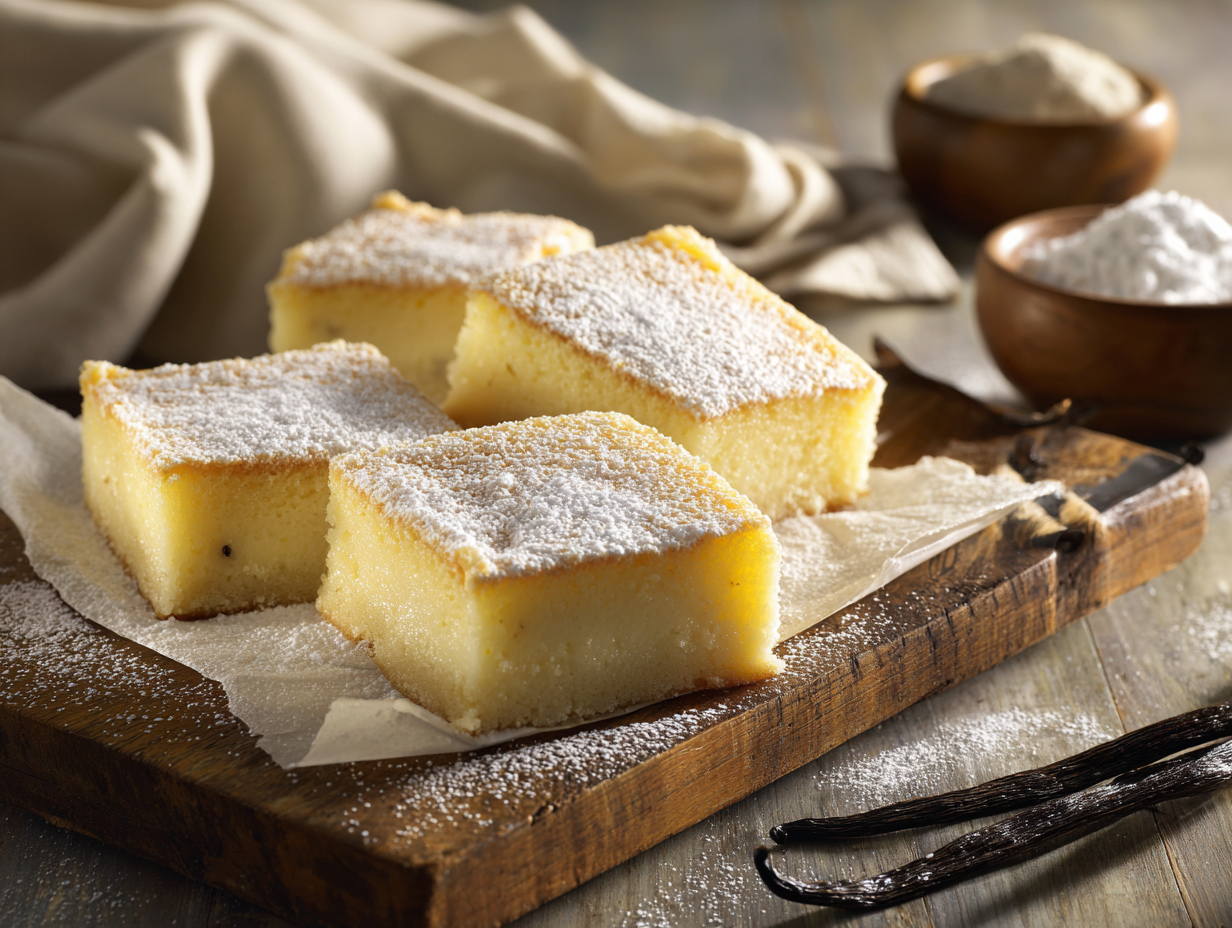
Vanilla Bean Custard Squares are a baked, sliceable custard — eggs, whole milk, sugar, flour, and a real vanilla bean, set in an 8-inch pan and cut into eight portions. The texture is firm enough to hold its shape but still creamy in the middle. They come together in about 70 minutes and chill down to something that slices cleanly and travels well, which is reason enough to keep this recipe on rotation.
Before you start
Two things determine whether this custard sets properly. First, heat the milk slowly and pull it off before it boils — a hard boil will cook the vanilla unevenly and can cause the eggs to scramble when you combine the mixtures. Steam rising from the surface is your cue to stop. Second, when you add the hot milk to the egg mixture, go slowly and whisk the whole time. Pouring it all in at once raises the temperature of the eggs too fast and you’ll get lumps or worse, cooked egg strands in your custard. A thin, steady stream with constant whisking takes about 60 seconds and it’s the step that separates a smooth result from a grainy one.
Ingredient notes
- Vanilla bean: One pod is the right amount for this volume of milk. Split it lengthwise and scrape the seeds out with the back of your knife — both seeds and pod go into the milk during infusion, then the pod is removed before baking. Don’t substitute vanilla paste here without reducing the quantity; paste is more concentrated and can turn the flavor sharp.
- Flour: The quarter cup of sifted all-purpose flour is what gives these squares enough body to slice. Don’t swap in cornstarch at a 1:1 ratio — the texture will be noticeably more wobbly and the squares won’t hold their edges when packaged.
- Eggs: Room temperature eggs blend into the sugar and flour more smoothly. Cold eggs straight from the fridge can cause the batter to look slightly curdled before the milk goes in — it bakes out, but it’s an unnecessary stress point.
Common problems and fixes
- Custard is rubbery or tough: The oven ran too hot or it baked too long. An oven thermometer is worth using here — many home ovens run 15–25°F high. Pull the pan when the center has just a slight wobble; it will firm up as it cools.
- Squares crack on top when slicing: The custard was cut before it was fully cold. Even if it looks set at room temperature, the interior is still soft. A full 2-hour chill is the minimum; overnight is better if you’re planning to package or transport them.
- Butter pooled on top instead of forming a golden layer: The melted butter was poured onto batter that was too warm, or the pan was jostled moving it to the oven. Drizzle the butter in a thin, even layer just before the pan goes in, and move the pan carefully.
- Custard stuck to the pan despite parchment: The parchment overhang wasn’t used to lift — instead, a knife was run around the edge. Let the custard cool completely, then lift straight up using both sides of the overhang. Skip the garnish of powdered sugar before packaging — it absorbs moisture in a container and turns patchy, not worth the extra step.
- Eggy smell or flavor: The milk wasn’t hot enough when combined with the eggs, so the eggs didn’t temper properly. The milk should be steaming and hot to the touch before it goes into the egg mixture.
Keeping it fresh
Once cooled and sliced, store the squares in a single layer in an airtight container in the fridge. They keep well for up to 3 days — the texture actually improves slightly on day two as the custard firms and the vanilla flavor deepens. If you need to stack them for transport or gifting, place a sheet of parchment between layers; the tops are delicate and will stick together without it. For longer storage, the squares freeze surprisingly well: wrap each one individually in plastic wrap, then place in a freezer-safe container for up to 6 weeks. Thaw overnight in the fridge, not on the counter, to keep the texture even. You can bake the full batch up to two days ahead of when you need them — they hold their shape and flavor without any last-minute work.
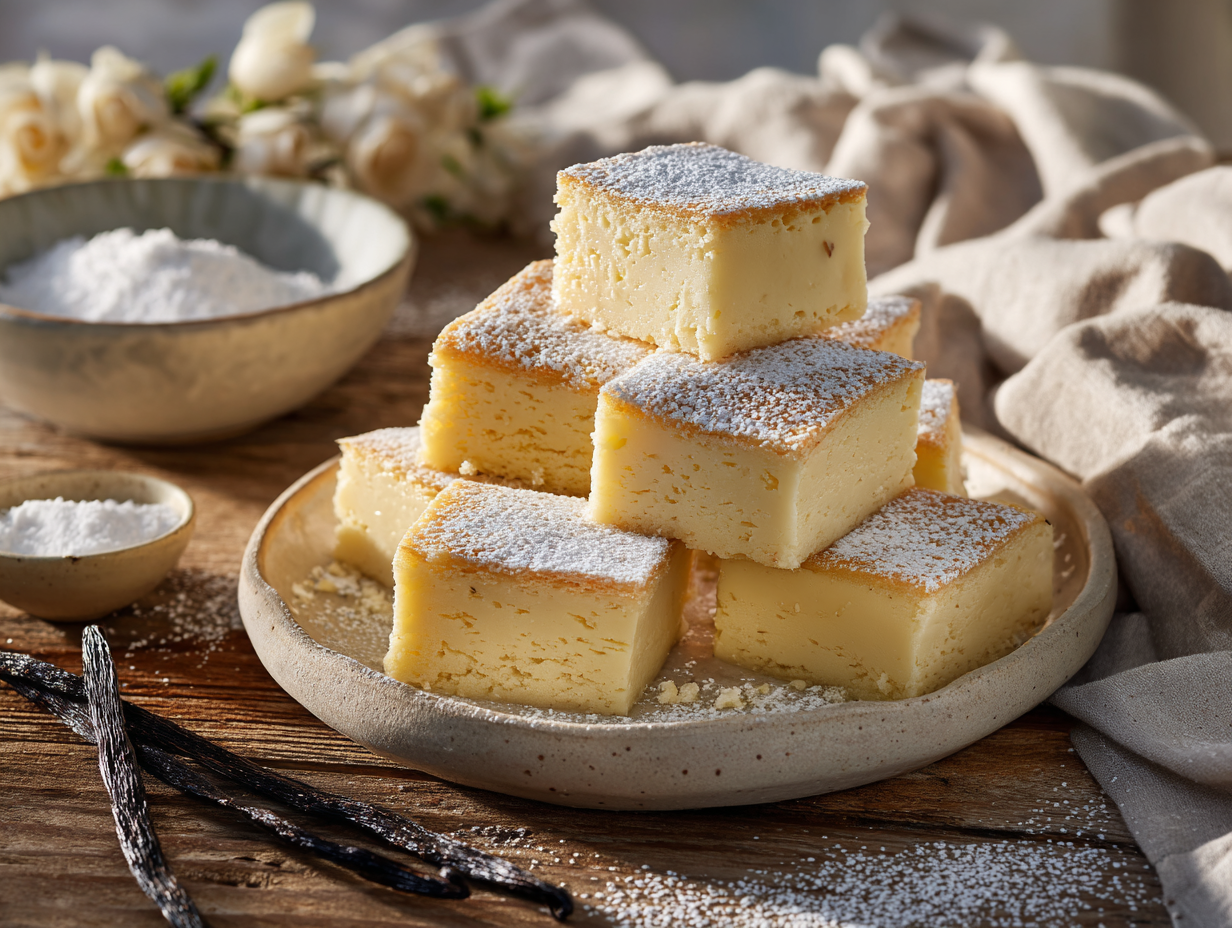
Vanilla Bean Custard Squares

Equipment
- Mixing Bowls
- Whisk
- 8x8-inch baking pan
- Parchment Paper
- Knife
- Fine grater
Ingredients
- 2 cups whole milk preferably organic
- 1 pod vanilla bean split and seeds scraped
- 4 large eggs room temperature
- ½ cup granulated sugar
- ¼ cup all-purpose flour sifted
- ½ teaspoon salt
- 2 tablespoons unsalted butter melted
Instructions
- Preheat your oven to 350°F (175°C). Line an 8x8 inch baking pan with parchment paper, leaving an overhang on the sides.
- In a saucepan, gently heat the milk and vanilla seeds, along with the vanilla pod, over medium heat until it begins to steam. Do not let it boil. Remove from heat and let it infuse for 15 minutes.
- In a large bowl, whisk the eggs, sugar, flour, and salt until smooth and pale. Gradually add the infused milk, whisking continuously, until fully combined. Remove the vanilla pod.
- Pour the mixture into the prepared baking pan. Drizzle the melted butter over the top. Bake for 30 minutes, or until the custard is set and slightly golden on top.
- Allow the custard to cool to room temperature before slicing into squares. For best results, refrigerate for at least 2 hours before serving.
Notes
- Enhance the flavor by using a pinch of freshly grated nutmeg before baking.
- For a dairy-free version, substitute whole milk with almond milk.
Nutrition
Frequently asked questions
Can I use vanilla extract instead of a vanilla bean?
Yes, but use 1½ teaspoons of pure vanilla extract and add it after you remove the milk from the heat, not during heating. You won’t get the visible specks or quite the same depth of flavor, but the custard will still taste good.
How do I know when the custard is done baking?
The edges should be set and the center should have only a slight wobble when you gently shake the pan — similar to a just-set cheesecake. The top will be lightly golden. If the whole surface jiggles like liquid, give it another 3–5 minutes and check again.
Can I double the recipe for a larger batch?
Yes, double all ingredients and use a 9×13-inch pan. Increase the bake time by roughly 8–10 minutes and start checking for doneness at the 35-minute mark, since the deeper fill takes longer to set through.
Why does the recipe call for sifted flour?
Sifting prevents lumps in the batter, which matters here because the flour is whisked directly into the eggs without any cooking step to smooth it out. A few seconds of sifting saves you from specks of raw flour in the finished custard.
Will these squares hold up if I need to transport them?
They travel well once fully chilled — at least 2 hours in the fridge, ideally overnight. Pack them in a single layer in a rigid container with a tight lid, and keep them cold during transport; they soften quickly at room temperature.
More sweet things to bake
- Toasted Coconut Custard Pie
- Nutty Brown Butter Vanilla Bean Cupcakes
- Black Tea Panna Cotta
- Chocolate Chai Pots de Crème