

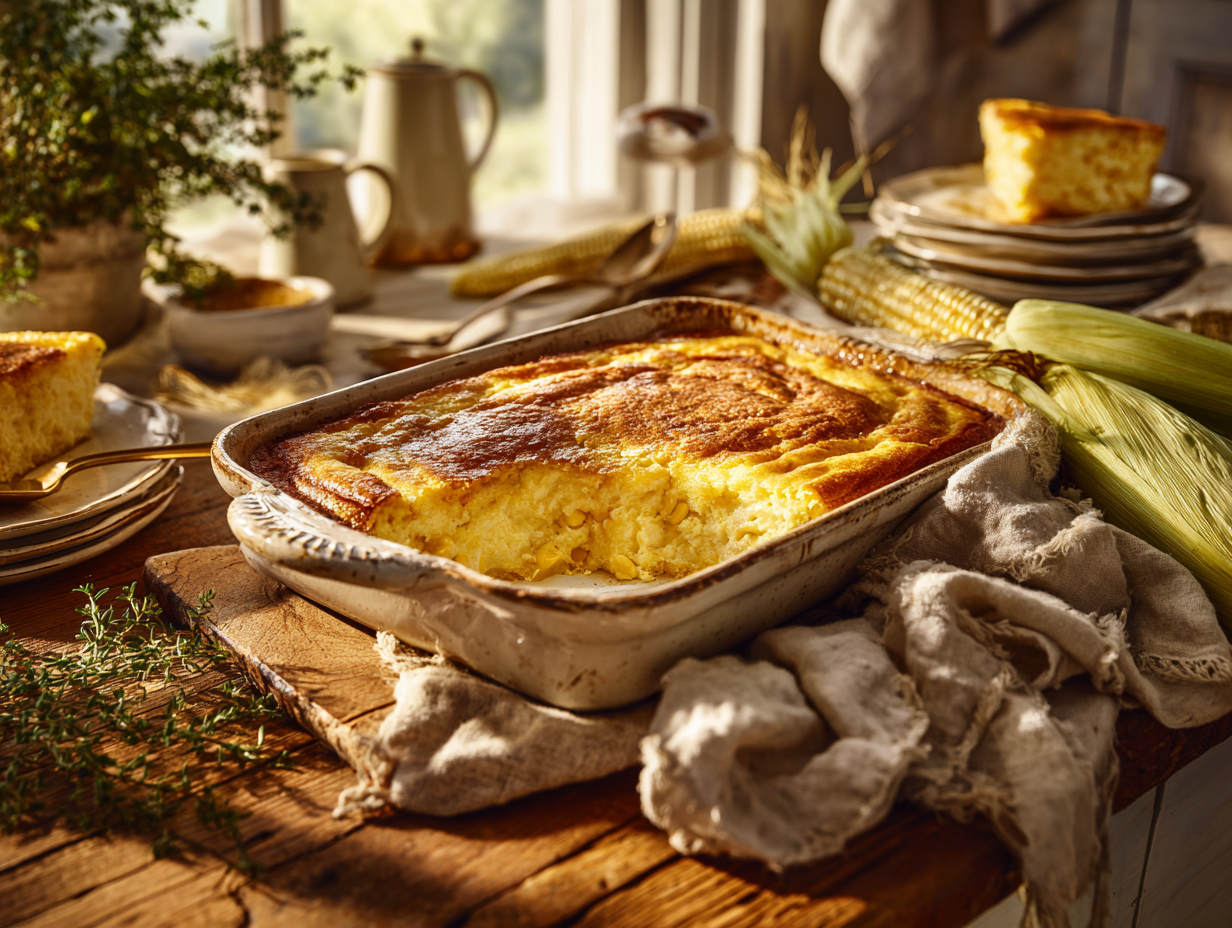
Corn pudding sits right at the edge of savory and sweet — creamy, custardy, and genuinely easy to pull off. It takes about 20 minutes of hands-on work, bakes in under an hour, and feeds six people without much fuss. If you need a crowd-pleasing dish that holds well and reheats cleanly, this is a reliable one to have in your back pocket.
Before you start
The two things that actually matter here are temperature and mixing order. Your eggs, milk, and cream should be at room temperature before you combine them — cold dairy mixed with warm melted butter can cause the butter to seize into small clumps, which throws off the texture of the finished custard. The second thing: whisk the dry ingredients together separately before adding them to the wet mixture. Flour has a tendency to clump when it hits liquid, and nutmeg and pepper distribute unevenly if you just dump everything in at once. Thirty extra seconds of dry-mixing prevents a gummy streak or a bite that tastes like straight pepper.
Troubleshooting
- Center is still jiggly after 50 minutes: Ovens run differently. Tent the dish loosely with foil to prevent the top from over-browning, then continue baking in 5-minute increments. The pudding is done when the edges are fully set and the center has only a very slight wobble — it will firm up as it cools.
- Watery layer at the bottom after baking: This usually means the eggs were cold when mixed, or the pudding was pulled too early. Make sure your custard is fully set before removing it from the oven, and let it rest at least 10 minutes before serving so the structure can stabilize.
- Top is golden but the inside tastes eggy or rubbery: The oven temperature was likely too high, or the dish was placed on a high rack. Bake on the center rack at a true 350°F — use an oven thermometer if you haven’t recently, because even 25 degrees over will scramble the custard proteins before the center cooks through gently.
- Corn kernels sinking to the bottom: Frozen corn that wasn’t fully thawed and drained releases excess water as it bakes, which weighs the kernels down and thins the custard. Thaw completely and pat dry before mixing in.
- Pudding tastes flat: Salt is doing more work here than it seems. If the flavor feels muted after baking, a small pinch of flaky salt on individual servings at the table fixes it without changing the recipe.
Shopping notes
Fresh corn works best in peak summer when the kernels are sweet and starchy — skip the garnish of reserved raw kernels on top, not worth the extra dish. Frozen corn is the practical choice the rest of the year and produces a nearly identical result as long as it’s fully thawed and dried. Heavy cream is not optional if you want the custard texture; half-and-half will give you something thinner and less set. Ground nutmeg from a jar is fine, but if you have a whole nutmeg and a microplane, a quick fresh grating makes a noticeable difference in aroma.
Make-ahead notes
This pudding is well-suited to advance preparation, which makes it especially useful around holidays. You can whisk together the full unbaked mixture up to 24 hours ahead, cover the baking dish tightly with plastic wrap, and refrigerate it — give it a quick stir before it goes into the oven, since the flour can settle. Alternatively, bake it completely, cool it to room temperature, cover, and refrigerate for up to 3 days. Reheat covered in a 325°F oven for 20 to 25 minutes until warmed through; it reheats evenly and the texture holds up well. For longer storage, the fully baked pudding freezes for up to 2 months — wrap individual portions so you can reheat only what you need, and thaw overnight in the refrigerator before warming.
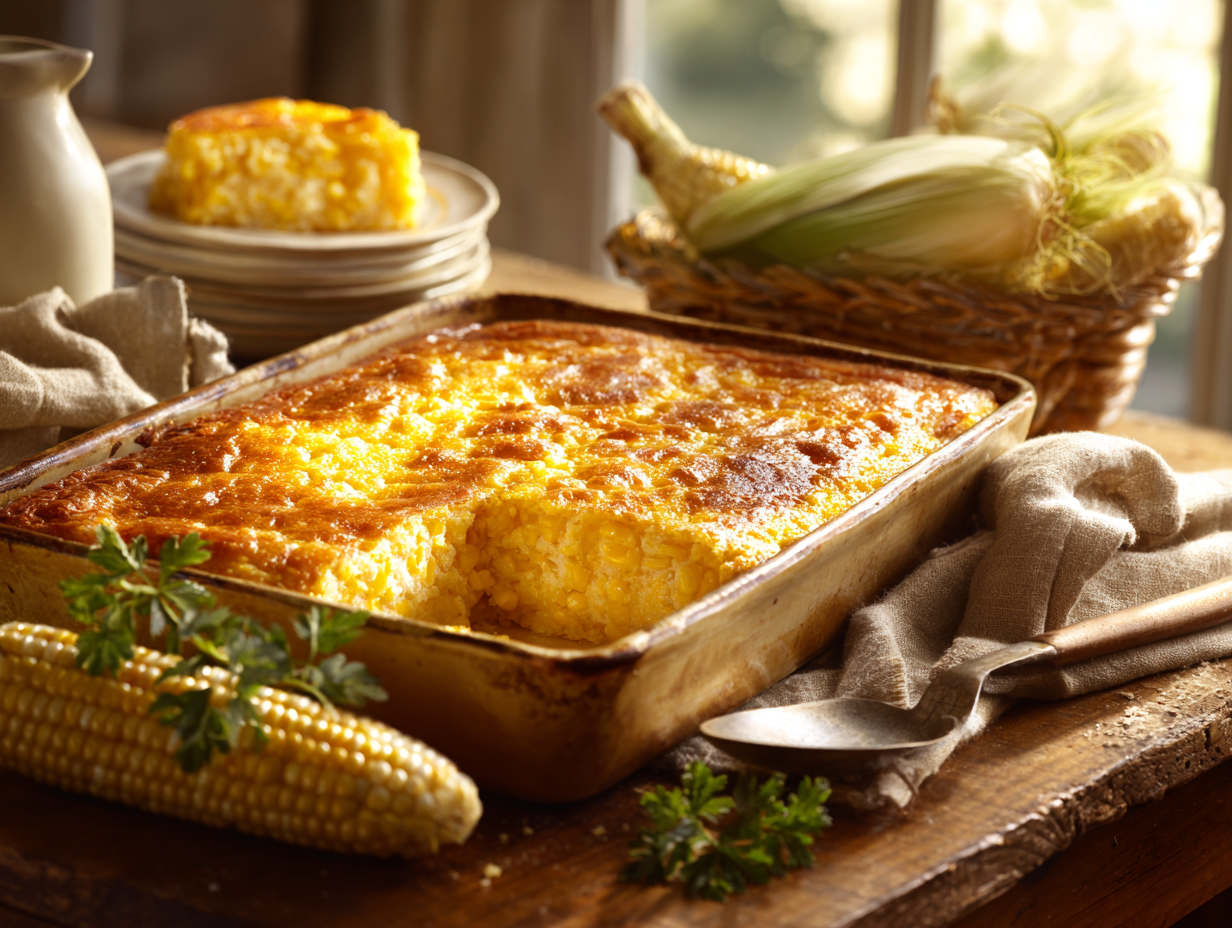
Classic Southern Corn Pudding

Equipment
- Baking dish (9x13 inches)
- Mixing Bowls
- Whisk
- Measuring cups and spoons
- Knife
Ingredients
- 4 cups corn kernels fresh or frozen, thawed
- 3 large eggs beaten
- 1 cup whole milk
- 1 cup heavy cream
- ½ cup granulated sugar
- ¼ cup unsalted butter melted
- 3 tablespoons all-purpose flour
- 1 teaspoon salt
- ½ teaspoon black pepper freshly ground
- ¼ teaspoon nutmeg ground
Instructions
- Preheat the oven to 350°F (175°C). Grease a 9x13-inch baking dish and set aside.
- In a large mixing bowl, combine the corn kernels, beaten eggs, milk, cream, sugar, and melted butter. Whisk until well incorporated.
- In a separate bowl, mix the flour, salt, pepper, and nutmeg. Gradually add this dry mixture to the wet ingredients, whisking until smooth.
- Pour the corn mixture into the prepared baking dish, spreading it evenly.
- Bake in the preheated oven for 50 minutes or until the top is golden brown and the center is set. You should smell the sweet aroma of baked corn when it's ready.
- Allow the pudding to cool slightly before serving for easy slicing.
Notes
- For a richer flavor, consider adding a sprinkle of cheese on top before baking.
- You can substitute whole milk with almond milk for a dairy-free version, though the texture will slightly vary.
Nutrition
FAQ
Can I use canned corn instead of fresh or frozen?
Yes, but drain it thoroughly and pat it dry. Canned corn carries more moisture than frozen, and skipping that step will thin the custard and extend your baking time.
How do I know when the pudding is actually done?
The edges should be fully set and the center should have only a faint wobble when you gently shake the dish. A toothpick inserted two inches from the center should come out with just a few moist crumbs, not wet batter.
Can I make this in a smaller dish if I’m halving the recipe?
Yes — an 8×8-inch square dish works well for a half batch. Start checking for doneness around 35 to 40 minutes, since the shallower depth changes the bake time.
Is this dish supposed to be served warm or can it sit out at room temperature?
It’s good both ways. Warm from the oven it’s creamier and scoops easily; at room temperature it firms up and slices more cleanly, which is actually easier for a buffet or holiday spread.
Can I assemble this the night before a holiday dinner and bake it the next day?
Yes, that works well. Mix everything, pour it into the greased baking dish, cover tightly, and refrigerate overnight. Pull it out while the oven preheats so it can take the chill off slightly, then stir gently before baking.
Will the texture change if I use a glass baking dish versus a metal one?
It will bake a little more slowly in glass since glass conducts heat less efficiently than metal. Add 5 to 10 minutes to your baking time and check the center carefully before pulling it out.
What to bake next
- Toasted Coconut Custard Pie
- Southern Maple Bourbon Bread Pudding
- Almond Croissant Bread Pudding
- Southern Classic Pecan Pie