

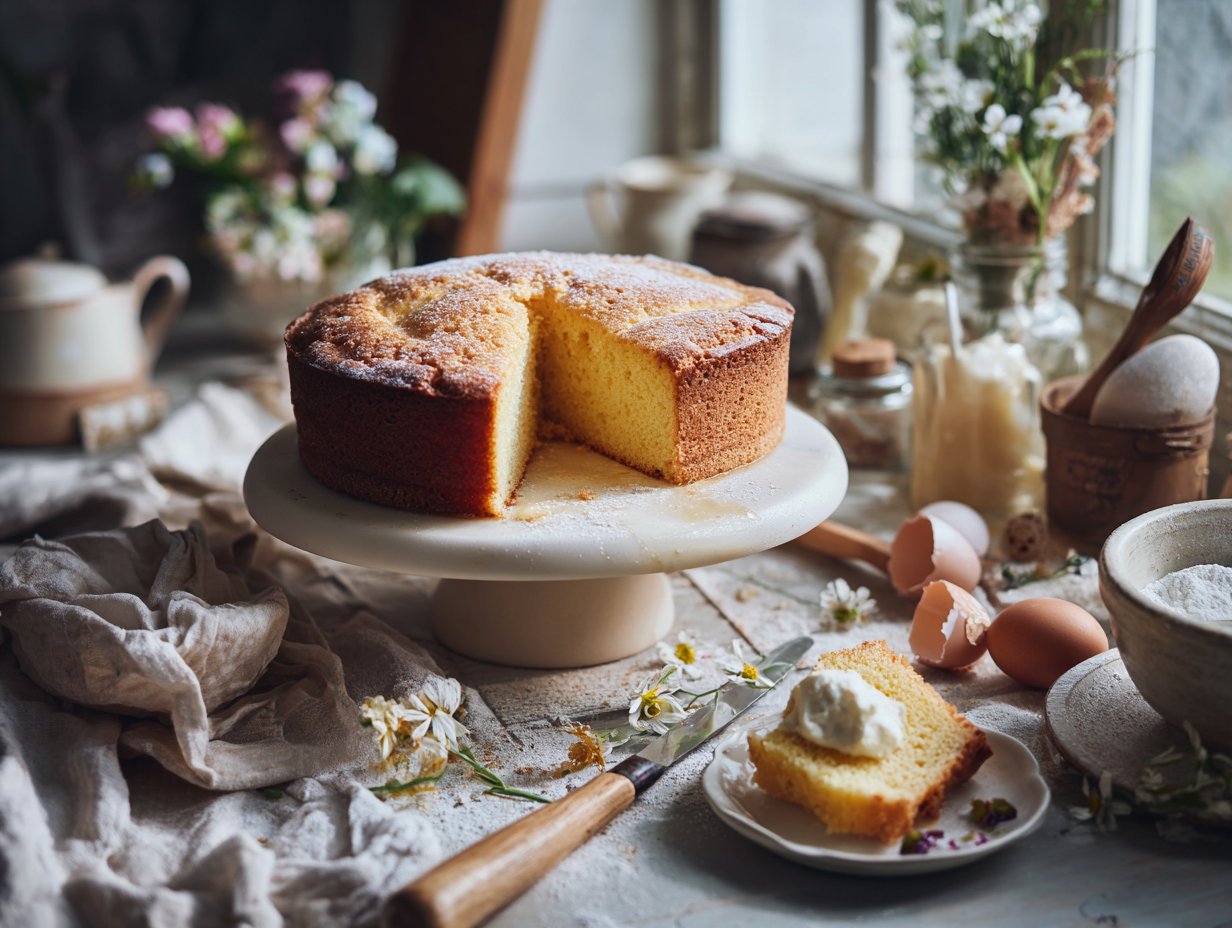
This is a straightforward butter cake — one bowl of pantry staples, a 9-inch pan, and about 55 minutes total. The crumb is tender and close, the flavor is clean vanilla-butter, and it needs no frosting to be worth eating. It’s the kind of cake you can put together on a weeknight without a special trip to the store.
Why this recipe works
Two things drive the result here. First, creaming the butter and sugar for a full 3–4 minutes — not just until combined — builds in tiny air pockets that keep the crumb tender despite the high butter ratio. Rushing this step gives you a denser, greasier slice. Second, alternating the flour mixture and milk in stages (starting and ending with flour) keeps the batter from breaking into a greasy mess. Adding all the milk at once can cause the emulsion to split, which shows up as a slightly gummy or uneven texture after baking. Both steps take maybe 5 extra minutes and they genuinely matter.
Common problems and fixes
- Cake sinks in the center: The oven was opened too early, or the batter was overmixed after the flour went in. Keep the oven door closed until at least the 28-minute mark, and stop mixing the moment the flour disappears.
- Crust is too dark before the center is set: Oven runs hot. Tent the pan loosely with foil at the 25-minute mark and keep baking. A toothpick in the center — not the edge — is your real doneness check.
- Cake sticks even with greasing: Butter alone on the pan sides can brown and grip. Grease the sides, then dust lightly with flour and tap out the excess. The parchment on the base handles the bottom.
- Batter looks curdled after adding eggs: The eggs were too cold. If it happens, keep mixing — it usually comes back together once the flour goes in. Next time, set the eggs out with the butter.
- Flat, tight crumb with no lift: Old baking powder. Test it by dropping a teaspoon into hot water — if it doesn’t bubble actively, buy a new can before baking.
Substitutions that actually work
- Salted butter instead of unsalted: It works fine — just leave out the added salt in the recipe. The flavor difference is minimal.
- 2% milk instead of full-fat: The cake will still bake up well. Full-fat gives a slightly richer crumb, but 2% is not a meaningful downgrade.
- No milk at all: In a pinch, plain yogurt thinned with a little water (about 1 part water to 3 parts yogurt) substitutes well and adds a faint tang that’s actually pleasant.
- Cake flour instead of all-purpose: Use the same weight or swap cup-for-cup — it produces a slightly softer crumb. Skip the garnish of powdered sugar if you’re serving this plain; it adds nothing to the flavor and just makes an extra dish to wash.
- Vanilla paste instead of extract: A 1:1 swap. You’ll see small flecks in the crumb, which looks nice but changes nothing about the taste.
Storage and freezing
At room temperature under a cake dome or wrapped in plastic, this cake keeps well for 3 days — the butter content actually helps it stay moist. In the fridge it lasts up to 5 days, but cold butter cake goes firm; let slices sit at room temperature for 20–30 minutes before eating. For freezing, wrap the fully cooled cake (whole or in slices) tightly in plastic wrap, then a layer of foil, and freeze for up to 2 months. Thaw overnight at room temperature still wrapped. You can also bake and cool the cake a day ahead and store it wrapped at room temperature — it slices more cleanly the next day than it does warm from the oven.
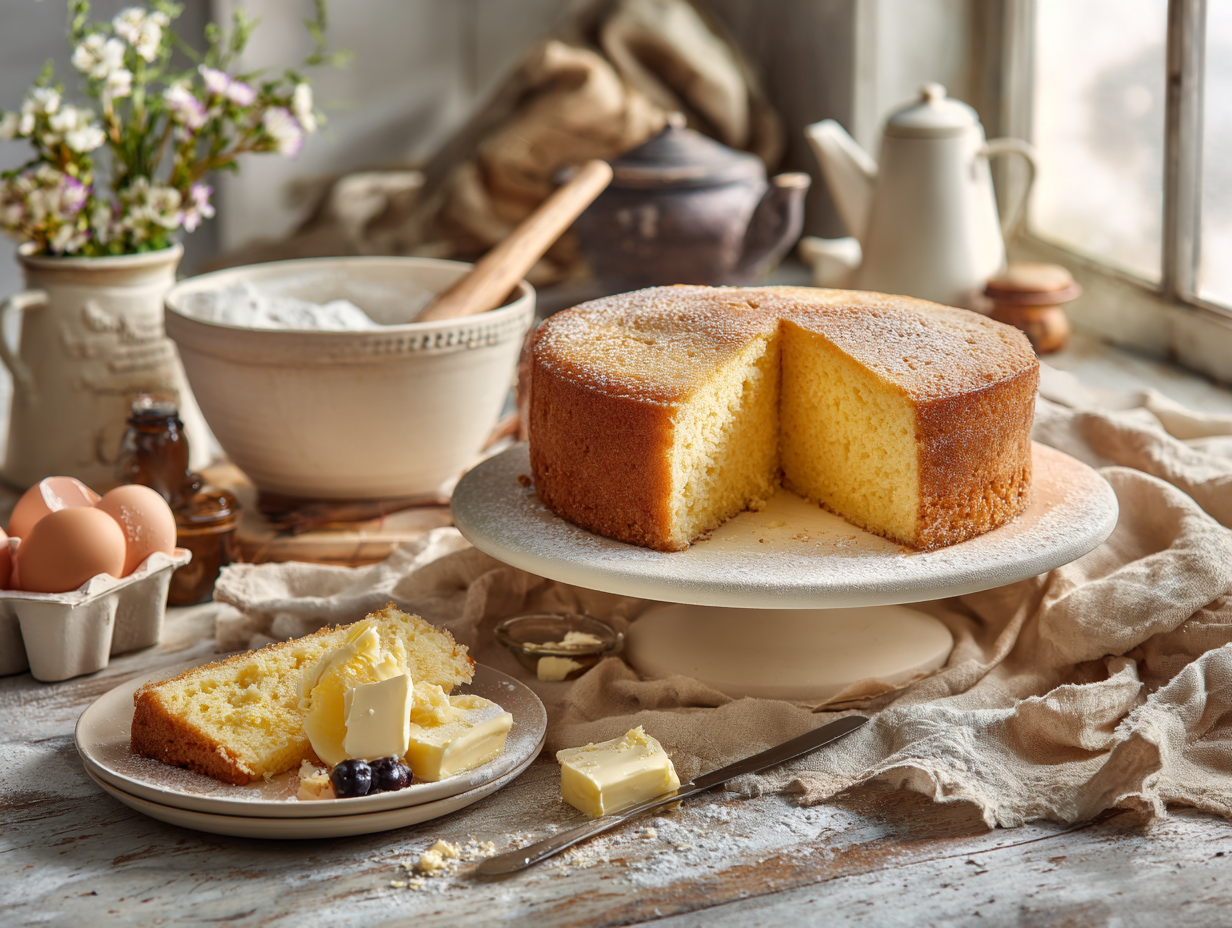
Classic Butter Cake

Equipment
- 9-inch round cake pan
- Electric Mixer
- Mixing Bowl
- Rubber spatula
- Oven
Ingredients
- 1 cup unsalted butter, softened preferably organic
- 1 cup granulated sugar
- 2 large eggs room temperature
- 1 teaspoon vanilla extract pure
- 2 cups all-purpose flour sifted
- 1 teaspoon baking powder
- ½ teaspoon salt
- ½ cup milk full-fat preferred
Instructions
- Preheat your oven to 350°F (175°C). Grease a 9-inch round cake pan with butter and line the base with parchment paper for easy release.
- In a mixing bowl, use an electric mixer to cream the softened butter and granulated sugar until light and fluffy, about 3-4 minutes.
- Add the eggs one at a time, beating well after each addition. Stir in the pure vanilla extract.
- In a separate bowl, combine the sifted all-purpose flour, baking powder, and salt. Gradually add this to the butter mixture, alternating with milk, beginning and ending with the flour mixture. Mix just until combined.
- Pour the batter into the prepared cake pan, smoothing the top with a spatula. Bake in the preheated oven for about 30-35 minutes, or until a toothpick inserted into the center comes out clean.
- Allow the cake to cool in the pan for 10 minutes, then transfer to a wire rack to cool completely.
Notes
- Tip 1: For a citrusy twist, add the zest of 1 lemon to the batter.
- Tip 2: Substitute half the all-purpose flour with almond flour for a nutty flavor.
Nutrition
Frequently asked questions
Can I use melted butter instead of softened butter?
No — melted butter will not cream with the sugar, so you lose the aeration that gives this cake its tender crumb. The result will be denser and greasier. Take the butter out of the fridge 45–60 minutes before you start; it should dent easily when pressed but not feel greasy or shiny.
Can I bake this in a different pan — like a loaf pan or an 8-inch square?
Yes, but adjust your bake time. A standard 9×5 loaf pan will need roughly 50–60 minutes at the same temperature; an 8-inch square pan will be close to the original 30–35 minutes. In either case, start checking with a toothpick 5 minutes early.
Do I really need to sift the flour?
Not strictly, but it helps. If your flour has been sitting in the bag for a while it can compact, and sifting prevents small dry lumps in the finished batter. If you skip it, whisk the flour, baking powder, and salt together in the bowl for about 20 seconds — that does most of the same work.
My butter was too cold and now the batter looks lumpy — can I save it?
Usually yes. Scrape the batter into a heatproof bowl and set it over a pot of warm (not simmering) water for 2–3 minutes, stirring gently, until the lumps smooth out. Then proceed with the recipe. Going forward, if you forget to soften the butter, cut it into small cubes and microwave in 5-second bursts, checking after each, until it gives when pressed.
Try these next
- Nutty Brown Butter Vanilla Bean Cupcakes
- Autumn Pear and Almond Cake
- French Brown Butter Chocolate Tart
- Luxurious Almond Croissant Bread Pudding