

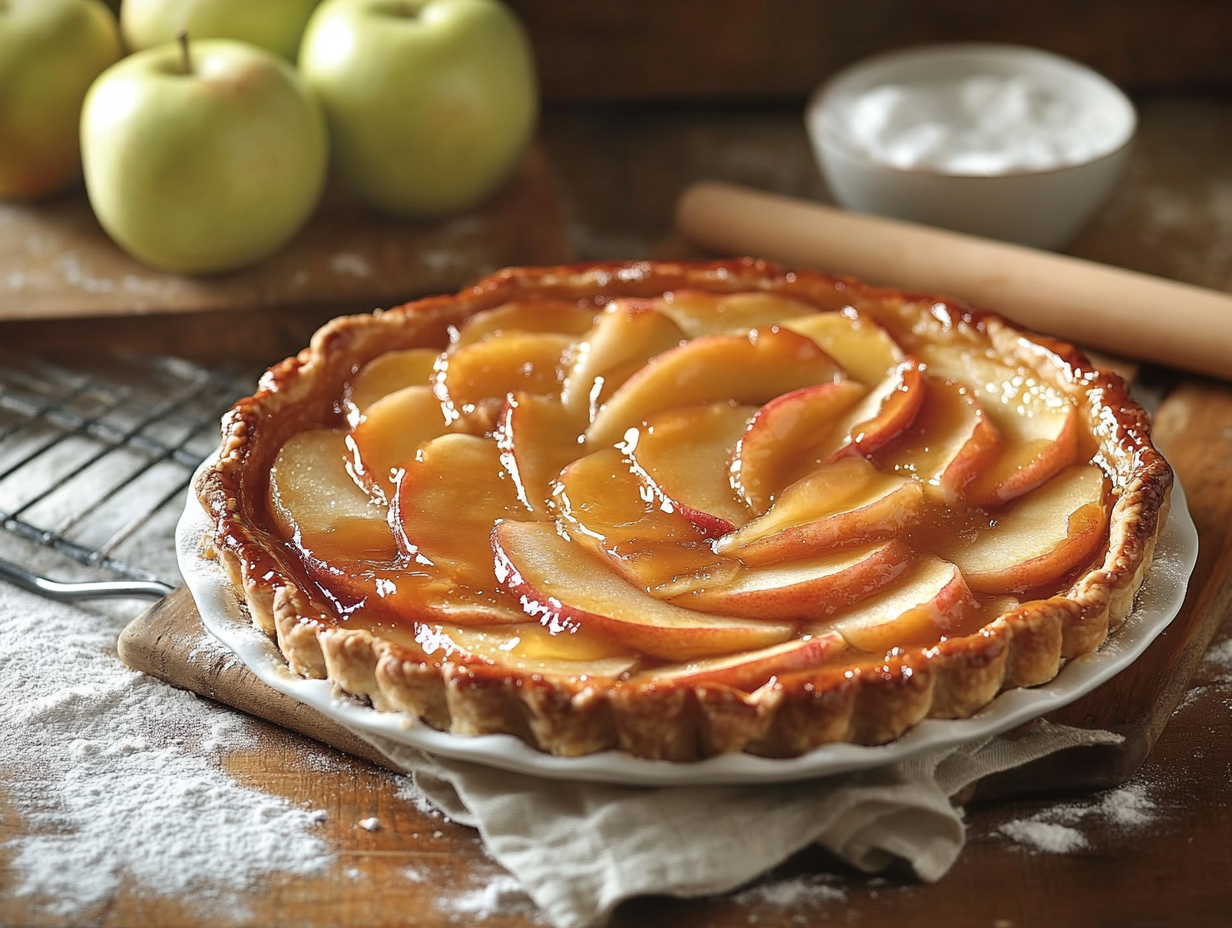
The Origins and History of Tarte Tatin
Tarte Tatin, the renowned French upside-down caramelized apple tart, boasts a fascinating history steeped in culinary legend. This delectable dessert dates back to the late 19th century and is widely attributed to the Tatin sisters, Stéphanie and Caroline, who owned the Hôtel Tatin in Lamotte-Beuvron, a small town in the Loire Valley of France.
The most popular version of the story suggests that Stéphanie Tatin, in the midst of a busy kitchen service, accidentally left apples cooking in a pan with butter and sugar for too long. In an effort to salvage the dish, she quickly placed a pastry dough over the caramelized apples and baked the concoction in the oven. Upon flipping the tart to serve, she discovered the beautifully caramelized apples atop the flaky pastry, delighting the hotel’s guests with the unexpected creation.
Although this charming tale adds a magical touch to Tarte Tatin’s fame, upside-down fruit tarts already existed in French culinary tradition prior to the Tatin sisters’ accidental masterpiece. Versions of similar preparations have been noted in French country kitchens, where cooks would bake fruits under a layer of dough to enhance caramelization. Regardless of whether the sisters invented or popularized it, their hotel’s version of the dish caught on and was later championed by famous French chefs, including Auguste Escoffier, ensuring its place in the pantheon of classical French desserts.
The Appeal of Tarte Tatin
What makes Tarte Tatin such an enduring favorite is its simplicity paired with its depth of flavor. Traditional recipes stick to a few essential ingredients—apples, sugar, butter, and pastry—demonstrating the beauty of minimalism in French baking. The delight lies in the balance between the crisp, caramelized apples and the buttery, flaky pastry.
Granny Smith apples, commonly used today, provide a tart contrast to the rich caramel, resulting in a well-balanced sweetness. However, other varieties such as Golden Delicious and Honeycrisp are also excellent choices, each bringing a unique flavor profile to the tart. Some chefs add a pinch of cinnamon or a splash of Calvados (apple brandy) to enhance the depth of flavor.
Tarte Tatin in French Patisserie
Tarte Tatin holds a distinguished position in French patisserie. Served warm, often with a dollop of crème fraîche, vanilla ice cream, or a drizzle of heavy cream, it is a favorite at both casual and elegant dining establishments. The upside-down method of baking allows the fruit to caramelize naturally, producing a glossy, deeply flavorful topping that is as visually stunning as it is delicious.
Beyond the classic apple version, variations of Tarte Tatin have emerged over time, featuring fruits like pears, peaches, pineapple, or even savory adaptations with tomatoes or onions. However, the apple variety remains the most cherished and widely recognized.
Tarte Tatin endures as a testament to the ingenuity of French cuisine—proof that even a fortunate accident can create an iconic dish. Whether enjoyed in a Parisian café or baked at home, this caramelized apple tart continues to captivate dessert lovers worldwide, making it a must-try for any aspiring pastry enthusiast.
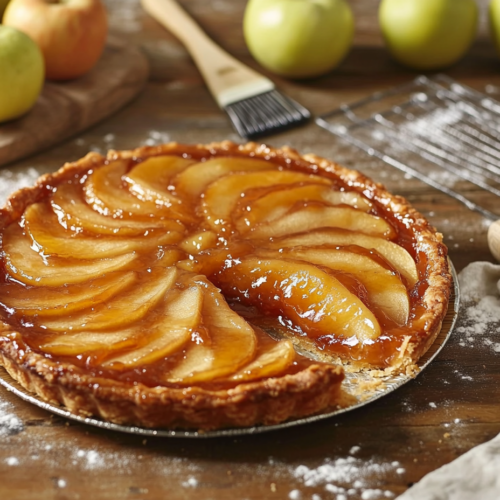
Tarte Tatin

Equipment
- 1 Oven-safe skillet (10-inch)
- 1 Rolling pin
- 1 Pastry brush
- 1 Cooling Rack
Ingredients
Ingredients
- 6 medium-sized Granny Smith apples peeled, cored, and quartered
- ½ cup granulated sugar
- ¼ cup unsalted butter cut into pieces
- 1 sheet puff pastry thawed
Instructions
- Preheat your oven to 375°F (190°C).In an oven-safe skillet, sprinkle granulated sugar evenly over the bottom. Place it over medium heat, shaking occasionally, until the sugar melts and turns a golden caramel, about 7-10 minutes.
- Remove from heat and add the butter, swirling the pan gently to combine it with the caramel.
- Arrange the apple quarters in a tight circle over the caramel, rounded sides down.
- Roll out the puff pastry to 1/8 inch thickness using the rolling pin. Drape it over the apples, tucking the edges down around them.
- Bake in the preheated oven for 35-40 minutes until the pastry is puffed and golden brown.
- Allow to cool for 5 minutes before inverting onto a serving plate using a cooling rack.
Notes
- Using firm, tart apples like Granny Smith helps maintain structure and balance sweetness. Consider adding a pinch of ground cinnamon for an aromatic twist.
- For a gluten-free version, a gluten-free pastry sheet can be used.