

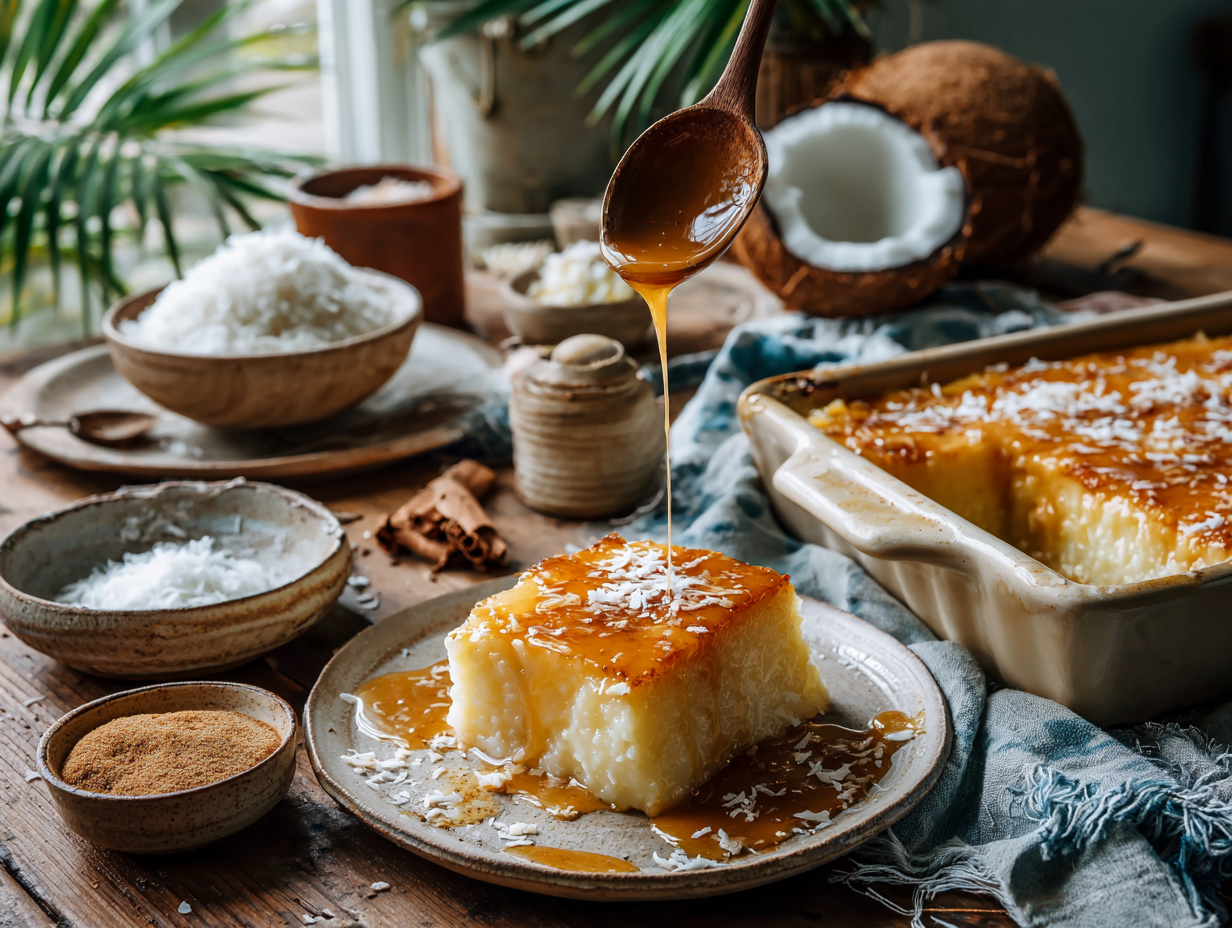
This is a baked cassava dessert — dense, slightly chewy, and finished with a poured caramel glaze made from brown sugar and butter. It comes together with one saucepan, one mixing bowl, and a baking dish, and the ingredient list is short enough to shop for in a single stop. If you want something genuinely different from the usual flour-based bakes, this is worth your afternoon.
Before you start
The single technique that determines whether this dessert sets properly is the stovetop pre-cook. You stir the grated cassava with the coconut milk, sugar, vanilla, and salt over medium heat for a full 10 minutes, until the mixture visibly thickens and the raw cassava softens. Don’t rush this step or pull it early — underdone cassava going into the oven means a wet, unset center that no amount of extra baking time will fully fix. Use full-fat coconut milk, not the thin drinking variety; the fat content is what gives the finished dessert its body. A whisk works fine for the initial combining, but switch to a wooden spoon or silicone spatula once the mixture starts to thicken so you can feel the resistance and scrape the bottom of the pan evenly.
Substitutions that actually work
- Cassava: Fresh, peeled, and grated cassava is the right choice here. Frozen grated cassava (thawed and squeezed of excess moisture) works well if fresh is hard to find. Cassava flour is not a substitute — it behaves completely differently and will not produce the same texture.
- Coconut milk: Full-fat canned coconut milk is what the recipe is built around. Reduced-fat versions produce a noticeably drier, less cohesive result. A can of coconut cream thinned slightly with water is a reasonable stand-in if that’s what you have.
- Sugar in the base: White granulated sugar keeps the cassava layer pale and lets the caramel glaze stand out visually. You can use raw cane sugar without any other changes.
- Butter in the glaze: Salted butter works fine and actually improves the glaze slightly — skip the added salt if you make that swap.
Keeping it fresh
Once cooled completely, cover the baking dish tightly with plastic wrap or transfer slices to an airtight container. It keeps well in the refrigerator for up to 4 days; the texture firms up when cold, which many people prefer. To serve it closer to room temperature, pull it out 20–30 minutes before eating. For longer storage, cut it into portions, wrap each one individually, and freeze for up to 6 weeks — thaw overnight in the fridge. The caramel glaze softens back to its original consistency once the dessert returns to room temperature, so there’s no need to re-glaze after freezing. You can also bake the cassava base a day ahead, refrigerate it uncovered, and pour the warm glaze over it the next day just before serving; skip the garnish — not worth the extra dish.
Mistakes to avoid
- Not greasing the baking dish thoroughly: The cassava mixture is sticky. A light swipe of butter or cooking spray isn’t enough — coat the bottom and all sides well, or the set dessert will tear when you try to serve it.
- Pouring the glaze onto a fully cold dessert: The brown sugar and butter glaze sets quickly. If the baked cassava has cooled completely, the glaze firms into a hard shell rather than soaking in slightly at the edges. Pour it while the baked base is still warm.
- Grating the cassava too coarsely: Large shreds don’t soften evenly during the stovetop cook and leave fibrous pockets in the finished dessert. Use the fine or medium side of a box grater.
- Letting the glaze cook too long: The butter and brown sugar only need to melt together until smooth — this takes about 2 minutes over low heat. Cooking it longer starts a true caramelization that makes the glaze grainy or too thick to pour evenly.
- Skipping the cooling time before slicing: The dessert needs at least 15–20 minutes after glazing before you cut it. Slice too soon and the interior is still too soft to hold a clean edge.
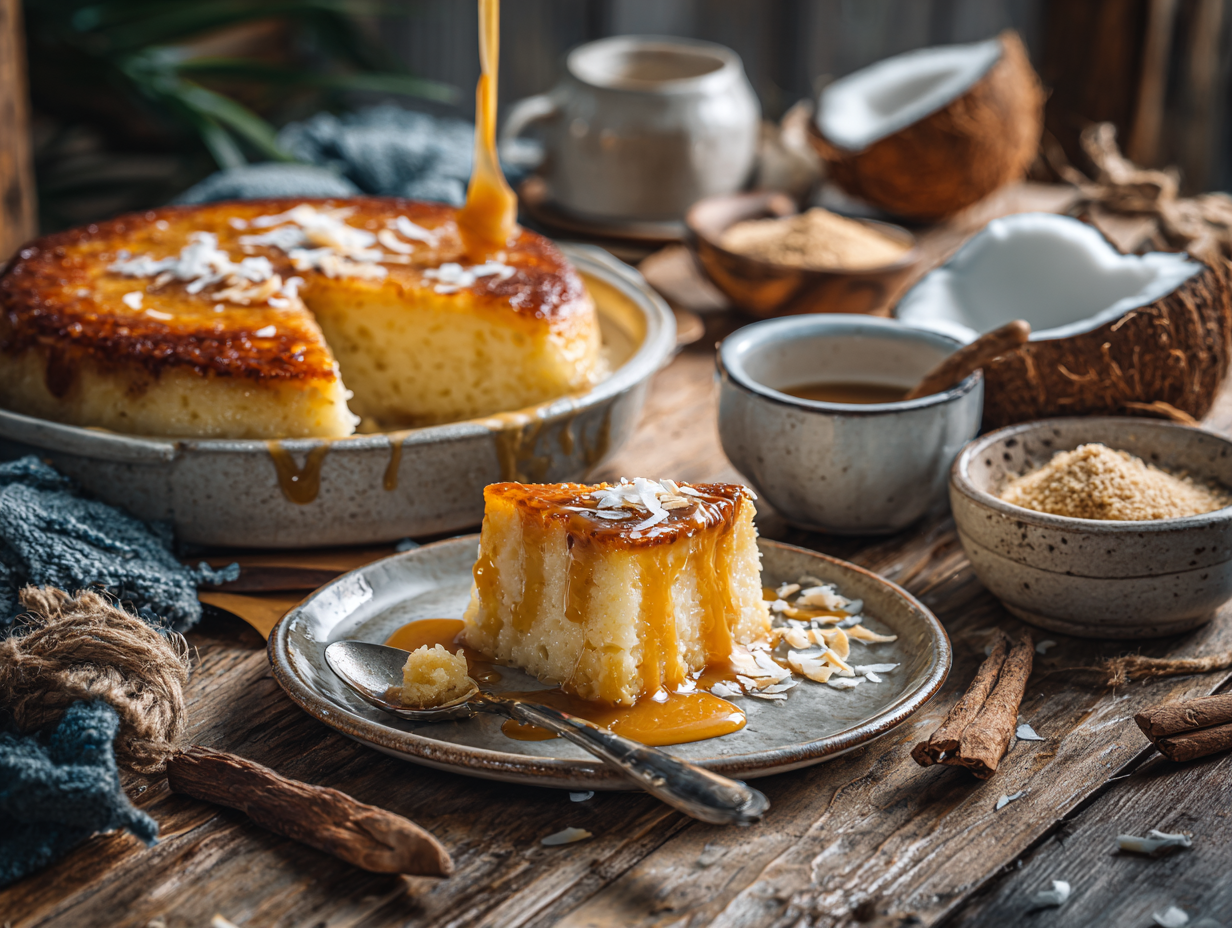
Cassava Delight

Equipment
- Medium saucepan
- Mixing Bowl
- Whisk
- Baking dish
- Oven
Ingredients
For the Cassava Dessert:
- 3 cups cassava peeled and grated
- 1 cup coconut milk preferably full-fat
- 1 cup sugar
- 1 teaspoon vanilla extract
- ¼ teaspoon salt
For the Caramel Glaze:
- ½ cup brown sugar
- 2 tablespoons butter
Instructions
- Preheat your oven to 350°F (175°C) to ensure it's ready when the mixture is prepared.
- In a medium saucepan, combine the grated cassava, coconut milk, sugar, vanilla extract, and salt. Stir thoroughly to ensure the cassava is evenly coated with the mixture.
- Cook the mixture over medium heat, stirring continuously for about 10 minutes, or until it thickens, and the cassava becomes tender.
- Pour the cassava mixture into a greased baking dish and spread it evenly.
- Bake in the preheated oven for 40-45 minutes, or until the top is lightly golden.
- In a separate small pan, melt the butter over low heat and add the brown sugar. Stir until the sugar dissolves completely and the mixture is smooth.
- Once the dessert is baked, pour the caramel glaze evenly over the top. Allow it to cool slightly before serving.
Notes
- For a different flavor profile, consider adding a pinch of cinnamon or nutmeg to the cassava mixture.
- Lemon zest can also add a refreshing note when sprinkled over the caramel glaze.
Nutrition
Common questions
Can I use a food processor to grate the cassava instead of doing it by hand?
Yes, a food processor with a grating disc works well and saves time. Just check the shred size — if the pieces come out very thick, run them through once more or finish with a box grater, since coarse shreds won’t soften evenly on the stovetop.
How do I know when the cassava mixture is thick enough before it goes into the oven?
When you drag a spoon through the mixture and the line holds for a second or two before filling back in, it’s ready. It should look like a thick, cohesive porridge rather than a loose liquid — roughly the consistency of stiff oatmeal.
Is this dessert gluten-free?
Yes. Cassava is naturally gluten-free and grain-free, and none of the other ingredients in this recipe contain gluten. If cross-contamination is a concern, check that your coconut milk and vanilla extract are certified gluten-free.
My caramel glaze hardened before I could spread it — what went wrong?
It cooled too quickly, which happens if the pan is removed from the heat and left to sit before pouring. Make the glaze right before you need it and pour it immediately while it’s still fluid and hot.
Can I double the recipe for a larger crowd?
Yes, doubling works without any technique changes. Use a larger baking dish — a 9×13-inch pan is the right size for a double batch — and check for doneness at the 40-minute mark since a thicker layer may need the full 45 minutes.
More sweet things to bake
- Tropical Lime Bars with Toasted Coconut Crunch
- Tropical Coconut Cardamom Ice Cream
- Caramelized Banana Tart
- Tropical Mango Sago Dessert