


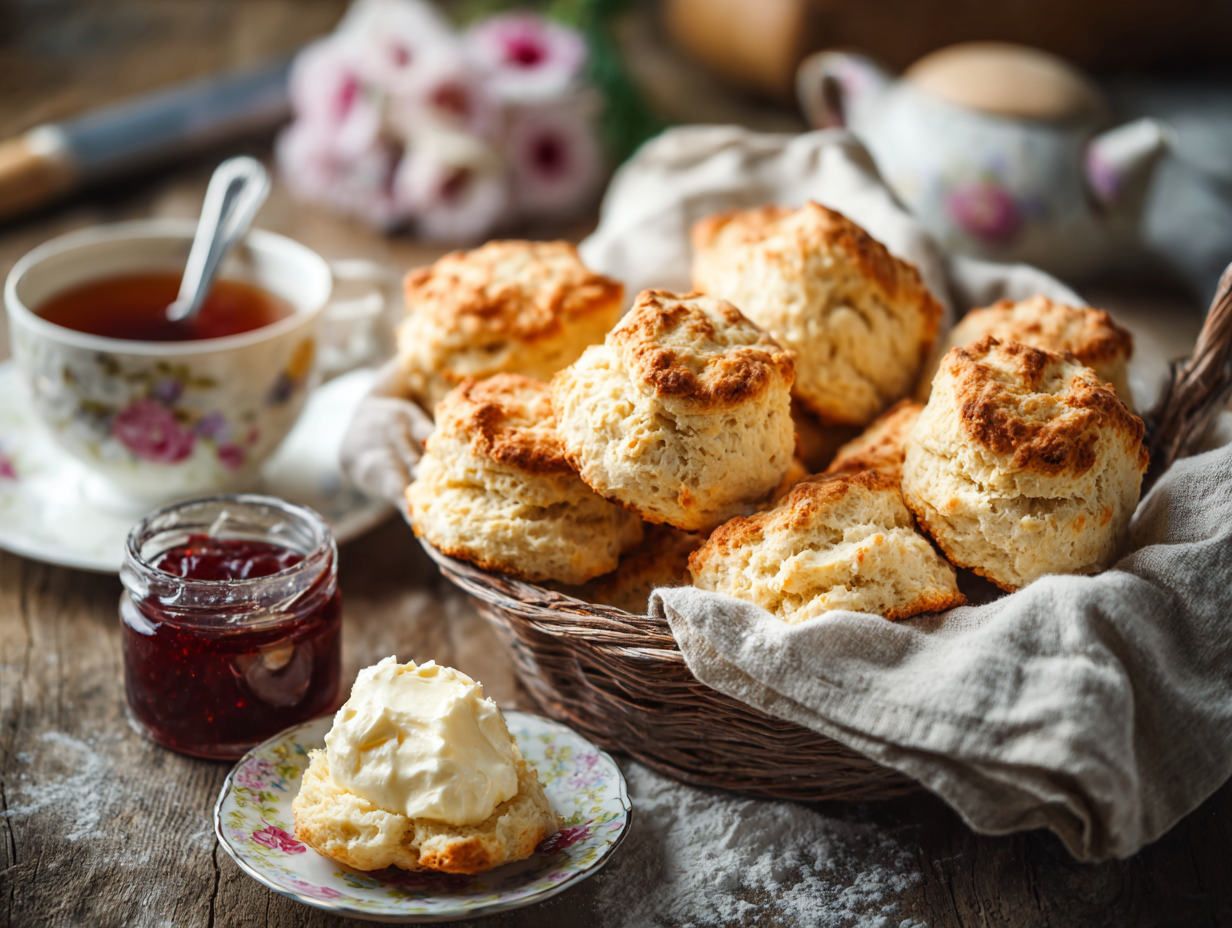
These are straightforward butter scones — lightly sweet, tender inside, with a golden crust — ready in about 30 minutes from a single bowl. The recipe makes 8 scones, scales cleanly to 16 or 24, and holds up well at room temperature, which makes it genuinely useful when you need a crowd-pleasing bake without a lot of fuss. Serve them warm with clotted cream and jam, or just butter.
What makes this version work
Two things drive the result here. First, the butter must be cold — not cool, actually cold — when it goes into the flour. Cold butter creates small pockets of steam in the oven, which is what gives scones their lift and their slightly flaky interior. If the butter softens during mixing, you lose that. Work quickly, or chill the cubed butter in the freezer for 10 minutes before you start. Second, the dough is intentionally under-mixed. Once the milk goes in, you stir until the flour is just absorbed and stop. A shaggy, rough dough that barely holds together will bake up lighter than a smooth one. That feels wrong the first time, but trust it.
Mistakes to avoid
- Pressing the cutter and twisting it: Twisting the cutter seals the edges and stops the scones from rising straight. Push straight down and lift straight up, every time.
- Flouring the surface too heavily: Extra flour worked into the dough during rolling tightens the texture. Use just enough to prevent sticking — a light dusting, not a coating.
- Placing scones too far apart on the tray: Scones baked close together (sides almost touching) support each other and rise taller. Leave a gap and they tend to spread and lean. This matters even more when you’re baking a double or triple batch across multiple trays.
- Re-rolling scraps more than once: Each re-roll develops more gluten. The second-cut scones will be slightly tougher than the first. A third roll produces noticeably dense results — skip it and bake the scraps as a rough shape instead.
- Skipping the rest before baking: After cutting, letting the scones sit on the tray for 10 minutes before they go in the oven relaxes the gluten and gives a more even rise. It costs almost nothing in time and makes a visible difference.
About the ingredients
Most of what’s in this recipe is pantry standard, but a couple of things are worth flagging. Aluminum-free baking powder is called out in the recipe card and it’s a real difference — standard baking powder can leave a faint metallic aftertaste in a plain dough like this where there’s nothing to mask it. Bob’s Red Mill and Rumford are easy to find. Whole milk matters for texture; lower-fat milk produces a slightly drier crumb. If you’re making a large batch for a bake sale and need a dairy-free version, full-fat oat milk is a closer match to whole milk than almond milk in terms of fat content, and it behaves more predictably in the dough. Skip the raw sugar sprinkle on top if you’re baking in bulk — not worth the extra step or the uneven coverage across dozens of scones.
Keeping it fresh
Scones are best the day they’re baked, ideally within a few hours of coming out of the oven. If you need to get ahead, the dough can be cut into rounds and frozen solid on a tray, then transferred to a bag and kept frozen for up to 6 weeks — bake straight from frozen at 400°F for 18 to 20 minutes. Baked scones keep at room temperature in an airtight container for 2 days; after that they go stale fast. Refrigerating baked scones actually speeds up staling, so skip the fridge and freeze instead if you’re not eating them the same day. To refresh day-old scones, wrap in foil and warm at 325°F for 8 minutes.
Classic English Scones

Equipment
- Baking sheet
- Mixing Bowl
- Pastry Cutter
- Baking Paper
- Rolling pin
- Round cookie cutter
Ingredients
- 2 cups all-purpose flour ensure it's sifted for a lighter scone
- ¼ cup granulated sugar
- 1 tablespoon baking powder fresh and aluminum-free preferred
- ½ teaspoon salt
- ½ cup unsalted butter cold and cubed for best results
- ⅔ cup whole milk plus more for brushing
- 1 teaspoon vanilla extract pure vanilla extract preferred
- 1 large egg for egg wash
Instructions
- Preheat your oven to 400°F (200°C) and line a baking sheet with baking paper.
- In a large mixing bowl, whisk together the flour, sugar, baking powder, and salt.
- Add the cold cubed butter into the flour mixture. Using a pastry cutter, cut the butter into the flour until the mixture resembles coarse breadcrumbs.
- In a separate bowl, mix together the milk and vanilla extract. Form a well in the middle of the flour mixture and pour the milk mixture into it. Stir until just combined. Do not overmix to keep the scones tender.
- Turn the dough out onto a lightly floured surface and gently knead it a couple of times to bring it together. Roll the dough out to about 1-inch thickness.
- Use a 2-inch round cookie cutter to cut out scones and place them onto the prepared baking sheet. Gather the leftover dough, gently re-roll, and cut out additional scones.
- Beat the egg with a little milk to create an egg wash. Brush the tops of the scones with the egg wash for a lovely golden finish.
- Bake in the preheated oven for 12-15 minutes or until the scones are golden and risen.
- Allow the scones to cool slightly on a wire rack before serving warm with clotted cream and jam.
Notes
- For an orange zest twist, add 1 tablespoon of fresh grated orange zest to the flour mixture.
- For dietary adaptations, substitute the milk with almond milk for a dairy-free version.
- A sprinkle of raw sugar on top before baking can add a sweet crunch to the scones.
Nutrition
FAQ
Can I make the dough the night before?
Yes, but freeze the cut rounds rather than refrigerating the dough. Unbaked dough left in the fridge overnight tends to go slack and the baking powder loses some of its lift, so the scones come out flatter. Cut them, freeze on a tray until solid, then bake from frozen the next morning.
Why did my scones come out flat?
The most common cause is butter that was too warm when it went into the flour, followed by overmixing. Check your baking powder too — if it’s been open for more than 6 months it may be underperforming. Test it by dropping a teaspoon into hot water; it should bubble vigorously.
How do I double or triple the recipe without the dough getting overworked?
Mix each batch separately rather than scaling everything into one giant bowl. A very large dough mass is harder to handle without overworking, and the butter warms up faster. Two separate batches take only a few extra minutes and produce consistently better results than one oversized batch.
If you liked this one
- Raspberry White Chocolate Scones
- Espresso Walnut Biscotti
- Elegant Black Tea Panna Cotta
- Strawberry Elderflower Fool