

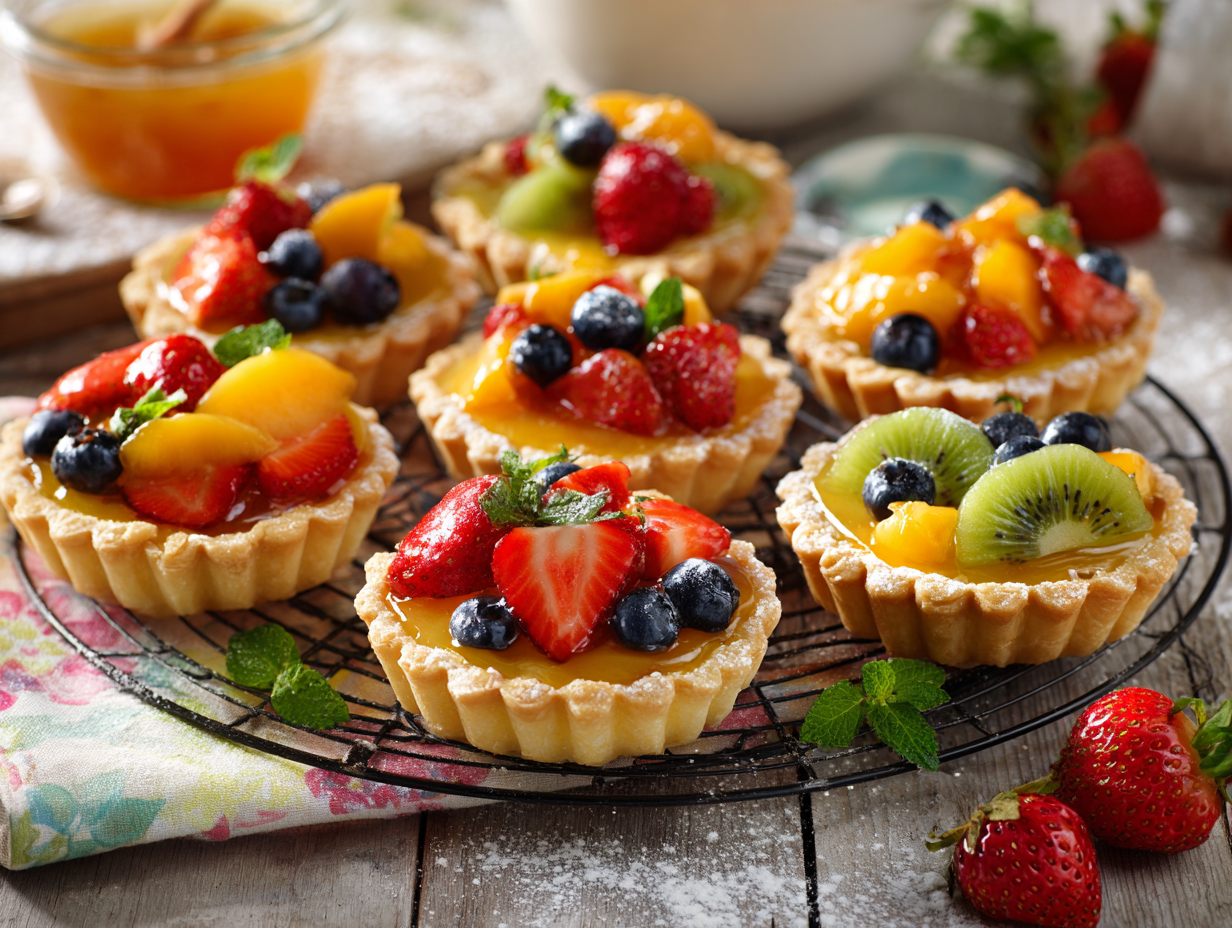
These are individual fruit tarts with a crisp shortcrust shell, a vanilla custard filling, and fresh fruit on top — finished with a thin apricot glaze. The real reason to make them is that the shell and custard can both be done a day ahead, so assembly takes about ten minutes when you need them.
Substitutions that actually work
- Butter: Salted butter works fine — just skip any added salt elsewhere. The pastry is forgiving.
- Whole milk: 2% milk produces a slightly thinner custard but still sets well once chilled. Avoid skim; it won’t thicken properly with the cornstarch.
- Cornstarch: All-purpose flour can stand in at a 1:1 ratio — the custard will be a little less glossy but perfectly good.
- Apricot jam: Any smooth, light-colored jam works — peach, orange marmalade (strained), or even honey thinned with a drop of water. Skip dark jams like strawberry; they muddy the color of the fruit.
- Tart tins: A standard muffin pan lined with pastry rounds is a reasonable substitute if you don’t own 4-inch tart tins. The shells will be deeper and slightly less crisp on the sides, but they hold together.
- Fruit: Use whatever is ripe and affordable. Frozen fruit does not work here — it releases too much water and softens the custard.
The short version of why this works
Two things actually matter in this recipe. First, the pastry must be cold going into the oven — warm butter means the shell shrinks and slumps, which is why the 30-minute chill and the blind-bake weights are both non-negotiable. Second, tempering the egg yolks before they go back into the hot milk is what keeps the custard smooth. If you pour hot liquid straight onto cold yolks without warming them gradually first, you get sweet scrambled eggs. Take thirty seconds to stir a spoonful of the warm milk mixture into the yolks before combining everything, and the custard comes together cleanly every time. The sieve step at the end catches any small lumps and is worth doing — skip the garnish of extra powdered sugar on the rim, though, not worth the extra dish.
If something goes sideways
- Pastry shrinks badly during baking: The dough wasn’t chilled long enough, or it was stretched to fit the tin rather than pressed in gently. Next time, let it rest the full 30 minutes and drape it loosely into the tin without pulling.
- Custard is lumpy even after sieving: The heat was too high and the yolks curdled before the starch could stabilize them. Push what you can through the sieve and use it anyway — the texture is slightly grainy but the flavor is fine. For a smoother result, keep the heat at medium-low and whisk constantly once the yolks go in.
- Custard won’t set firm enough to slice: It needed more chilling time — at least two hours in the fridge, not just until it feels cool. If it’s still loose after two hours, the milk-to-cornstarch ratio may have been off; measure cornstarch level, not heaped.
- Shell is soggy on the bottom: The custard was spooned in while still warm. Always make sure both the shell and the custard are fully cold before assembly.
- Glaze is pulling fruit off when you brush it: The jam is too hot or too thick. Let it cool to just warm and thin it with a teaspoon of water. Use a very light hand with the brush — one pass is enough.
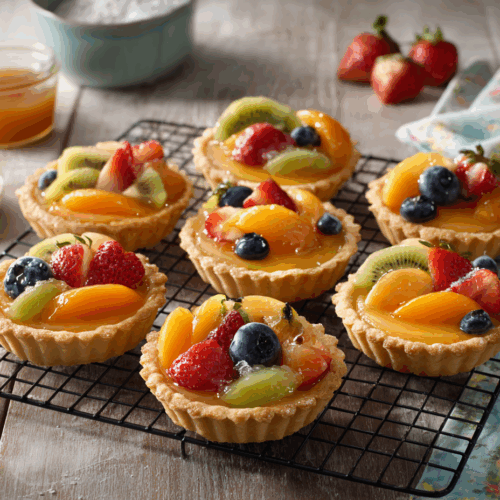
Exquisite Fruit Tarts

Equipment
- Medium mixing bowl
- Rolling pin
- Tart tins
- Whisk
- Oven
- Pastry brush
Ingredients
For the Pastry:
- 2 cups all-purpose flour preferably unbleached
- ½ cup unsalted butter cold and cubed
- ¼ cup granulated sugar
- 1 large egg beaten
- 1 tablespoon cold water adjust as needed
For the Custard:
- 2 cups whole milk
- ¼ cup granulated sugar
- 3 tablespoons cornstarch
- 4 pieces egg yolks
- 1 teaspoon vanilla extract pure
For the Topping:
- 2 cups mixed fruits sliced (berries, kiwi, peaches, etc.)
- 2 tablespoons apricot jam for glazing, warmed
Instructions
Prepare the Pastry:
- In a medium mixing bowl, combine flour and granulated sugar. Add cold, cubed butter and rub in with fingertips until the mixture resembles fine breadcrumbs.
- Add beaten egg and cold water, mixing with a fork until the dough forms. Shape into a disc, wrap in plastic wrap, and chill for 30 minutes.
Blind Bake the Tart Shells:
- Preheat oven to 375°F (190°C). Roll out the pastry on a lightly floured surface to about 1/8-inch thickness. Line 4-inch tart tins with pastry, trim edges, and prick bases with a fork. Line with parchment paper and fill with beans or rice. Bake for 15 minutes, remove parchment and weights, then bake for another 5 minutes or until golden. Cool.
Make the Custard:
- In a saucepan over medium heat, combine milk, sugar, and cornstarch, whisking continuously until it begins to thicken. Remove from heat, stir a little warm mixture into the egg yolks, then return to the pan, whisking briskly. Cook until a thick custard forms. Add vanilla extract.
- Pass the custard through a sieve to remove lumps, pour into a bowl, cover with plastic wrap touching the surface, and chill.
Assemble the Tarts:
- Spoon chilled custard into each tart shell, smoothing the top with a spatula. Arrange mixed fruits decoratively on top. Brush with warm apricot jam for a glossy finish.
Notes
- Dream of adding a citrus twist? Consider blending in a few teaspoons of lemon zest to the custard for a refreshing zing.
Nutrition
Common questions
Can I make these tarts the night before?
Yes — and it’s actually the better approach. Bake the shells and make the custard the day before, storing each separately in the fridge. Assemble with fruit and glaze within an hour or two of serving so the shells stay crisp.
Can I make one large tart instead of eight individual ones?
Yes. Use a 9-inch tart tin and increase the blind-bake time by about 5 minutes. Everything else in the recipe stays the same.
My custard has a skin on top even though I covered it. What did I do wrong?
The plastic wrap needs to sit directly on the surface of the custard, not just over the bowl. Any air gap lets a skin form. Press the wrap flat against the custard before refrigerating.
How long will assembled tarts keep in the fridge?
They’re best within 4 hours of assembly. After that the pastry softens noticeably from the custard moisture. If you need to store them longer, keep the components separate and assemble just before serving.
Do I need tart weights, or can I use something from the pantry?
Dried beans or uncooked rice work perfectly and can be reused for blind baking indefinitely — just store them in a labeled jar after they cool. The only thing that doesn’t work well is anything too light, like popcorn kernels, which don’t hold the pastry down evenly.
Try these next
- Blackberry Mascarpone Tart
- Caramelized Banana Tart
- Toasted Coconut Custard Pie
- French Brown Butter Chocolate Tart