

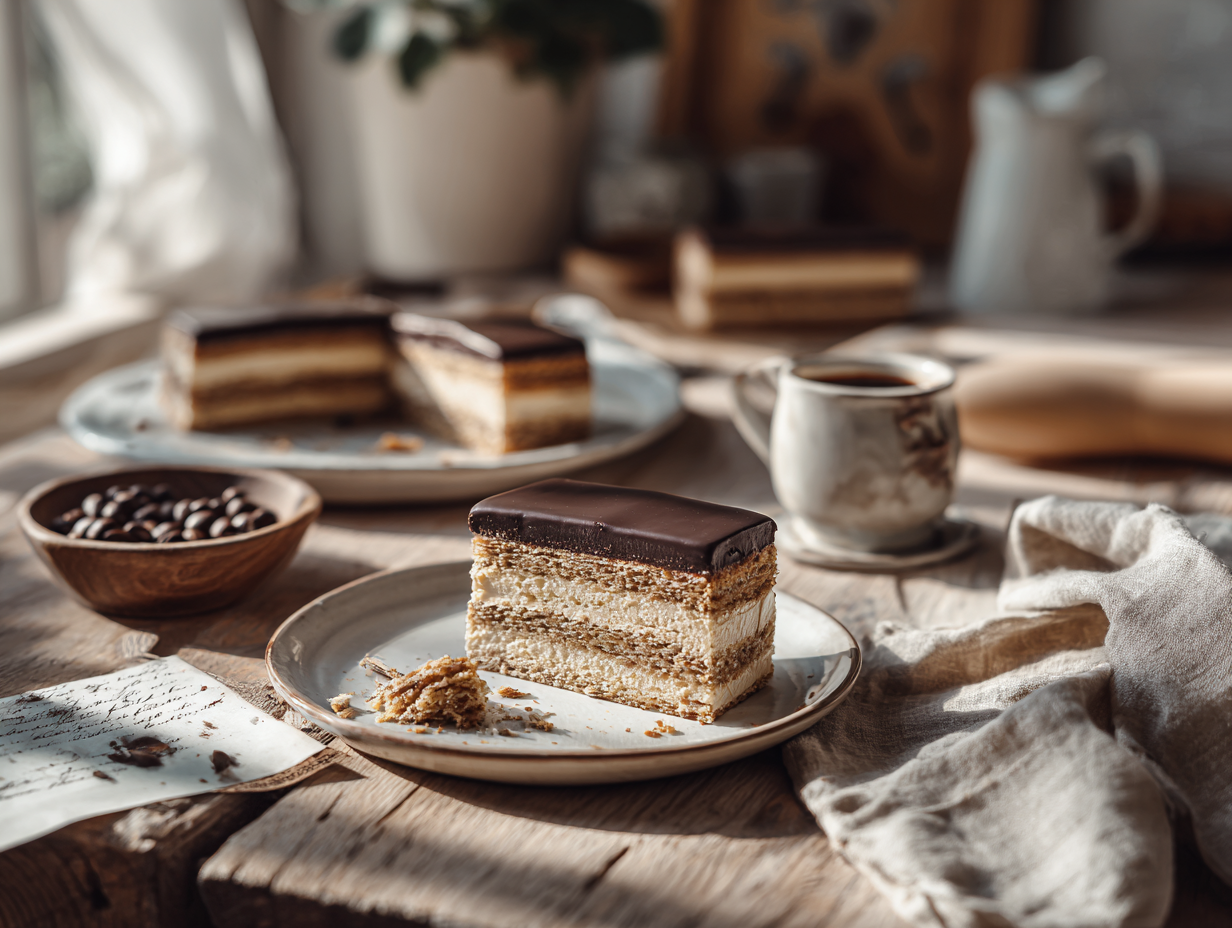
Opera cake is a French layered cake built from thin almond sponge sheets soaked in coffee syrup, spread with coffee buttercream and chocolate ganache, then finished with a smooth chocolate glaze. The whole thing slices into clean, striped rectangles — which is exactly why it works so well when you need to feed a crowd and want something that looks like you tried very hard. Plan on 2.5 to 3 hours of active work, but most of that can happen the day before serving.
What makes this version work
Two things matter most here. First, the joconde sponge must be spread thin and even across the baking sheet — thick patches stay spongy and won’t absorb the coffee syrup properly, while thin spots dry out and crack when you try to cut the layers. Use an offset spatula and take your time spreading. Second, chill the cake firmly between each layer of buttercream and ganache before adding the next. If the buttercream is soft when you spread the ganache over it, the two layers blend together and you lose the clean stripes that make every slice look sharp. Fifteen minutes in the fridge between layers is enough.
Smart swaps
- Almond flour: Use finely ground blanched almond flour, not almond meal. Almond meal is coarser and makes the sponge dense. If you only have almond meal, pulse it in a food processor for 30 seconds before measuring.
- Dark chocolate (70% cocoa): This applies to both the ganache and the glaze. Lower-percentage chocolate makes the glaze taste sweet rather than balanced against the coffee. Stick to 70% or go slightly higher.
- Instant coffee: Any instant coffee or espresso powder works. Espresso powder gives a sharper coffee flavor if you want more intensity in the buttercream and syrup.
- Vegetable oil in the glaze: This keeps the glaze pourable and gives it a smooth finish once set. Do not substitute butter — it makes the glaze dull and harder to cut cleanly. Skip any gold leaf garnish; it adds cost and fuss for no real payoff.
Storage and freezing
Once fully assembled and glazed, the cake keeps well in the refrigerator for up to 3 days — cover it loosely with plastic wrap after the glaze has fully set, about 1 hour at room temperature. For make-ahead baking, the joconde layers can be baked, wrapped tightly in plastic, and refrigerated up to 2 days ahead, or frozen for up to 1 month. The buttercream and ganache can also be made 2 days ahead and stored separately in the fridge; bring both to room temperature and re-whip the buttercream briefly before using. The fully assembled cake also freezes well: freeze it uncovered until the glaze is solid, then wrap tightly and freeze for up to 3 weeks. Thaw overnight in the refrigerator and slice cold for the cleanest cuts.
Common problems and fixes
- Glaze sets with a dull or streaky finish: The chocolate was too hot when the oil was added, or the cake surface was too cold. Let the ganache cool to about 95°F before pouring, and make sure the assembled cake has come up slightly from fridge temperature — 10 minutes on the counter is enough.
- Buttercream looks greasy or curdled: The butter was too warm. Chill the bowl in the fridge for 5 minutes, then beat again. It will come back together.
- Layers slide when cutting: The cake wasn’t cold enough when sliced. Return it to the fridge for at least 30 minutes after glazing before cutting. Use a sharp knife wiped clean between each cut.
- Joconde cracks when you try to lift or cut the rectangles: It was overbaked. At 425°F the sponge goes from done to dry very fast — pull it at the first sign of golden color and check at 6 minutes. A slightly underdone joconde is far easier to work with than an overbaked one.
- Coffee flavor is weak in the finished cake: The syrup was applied too lightly. Each sponge layer should feel visibly damp, not just brushed. If your brush strokes are leaving dry patches, go over each layer twice.

Gâteau Opéra (Opera Cake)

Equipment
- Baking sheet
- Parchment Paper
- Electric Mixer
- Double boiler
- Offset spatula
Ingredients
For the Joconde Biscuit Layer:
- 6 large eggs separated
- 1 cup almond flour finely ground
- 1 cup powdered sugar
- ½ cup all-purpose flour sifted
- 2 tablespoons melted butter unsalted
For the Coffee Syrup:
- ½ cup water
- ⅓ cup sugar
- 2 tablespoons instant coffee dissolved
For the Coffee Buttercream:
- ⅔ cup unsalted butter softened
- 1 cup powdered sugar sifted
- 1 tablespoon instant coffee dissolved in 1 tablespoon hot water
For the Chocolate Ganache:
- 4 ounces dark chocolate 70% cocoa
- ½ cup heavy cream
For the Chocolate Glaze:
- 6 ounces dark chocolate melted
- 2 tablespoons vegetable oil
Instructions
- For the Joconde Biscuit Layers: Preheat your oven to 425°F (220°C). Line a baking sheet with parchment paper. Whip the egg whites to soft peaks, gradually adding in a third of the sugar. In another bowl, mix almond flour, remaining powdered sugar, and sifted flour. Gently fold egg yolks and melted butter into flour mix, then incorporate meringue. Spread on the baking sheet. Bake for about 6-8 minutes or until lightly golden.
- For the Coffee Syrup: In a small saucepan, combine water, sugar, and coffee. Bring to a boil until sugar has dissolved. Set aside to cool.
- For the Coffee Buttercream: Beat the softened butter until creamy. Gradually add powdered sugar and beat until fluffy. Pour in dissolved coffee and mix until smooth and combined.
- For the Chocolate Ganache: Heat the cream in a double boiler, then pour over chopped chocolate. Stir until glossy and smooth.
- For the Chocolate Glaze: Combine melted chocolate with vegetable oil in a bowl. Stir until smooth and satiny.
- Assembly: Cut the Joconde into three equal rectangles. Brush each layer with coffee syrup. Spread half the buttercream over the first layer, then add the second biscuit and cover with ganache. Place a third layer, cover with remaining buttercream. Finish with the final biscuit layer and top with chocolate glaze. Refrigerate for at least an hour before serving.
Notes
Tammy’s Tips:
- Ensure your butter is at room temperature for maximum creaminess in the buttercream.
- For a twist, consider adding a splash of your favorite liqueur to the coffee syrup for an extra layer of flavor.
Nutrition
Your questions, answered
Can I make the whole cake the day before serving?
Yes — and it actually slices better after an overnight rest in the fridge. The layers firm up, the syrup distributes evenly through the sponge, and the glaze sets completely, so every cut is clean.
How do I scale this up to serve a larger group?
Double the recipe and bake the joconde in two batches on the same baking sheet, or use two sheets side by side if your oven fits them. Assemble two separate cakes rather than trying to build one taller cake — more layers means more instability and uneven slices.
Do I need a thermometer for the ganache or glaze?
Not strictly, but it helps. The ganache should be warm enough to pour but not hot enough to melt the buttercream layer beneath it — around 95°F is the target. If you don’t have a thermometer, let it cool until it coats the back of a spoon thickly and feels just warm to the touch.
What to bake next
- French Brown Butter Chocolate Tart
- Espresso Walnut Biscotti
- Espresso Chocolate Semifreddo
- Luxurious Almond Croissant Bread Pudding