

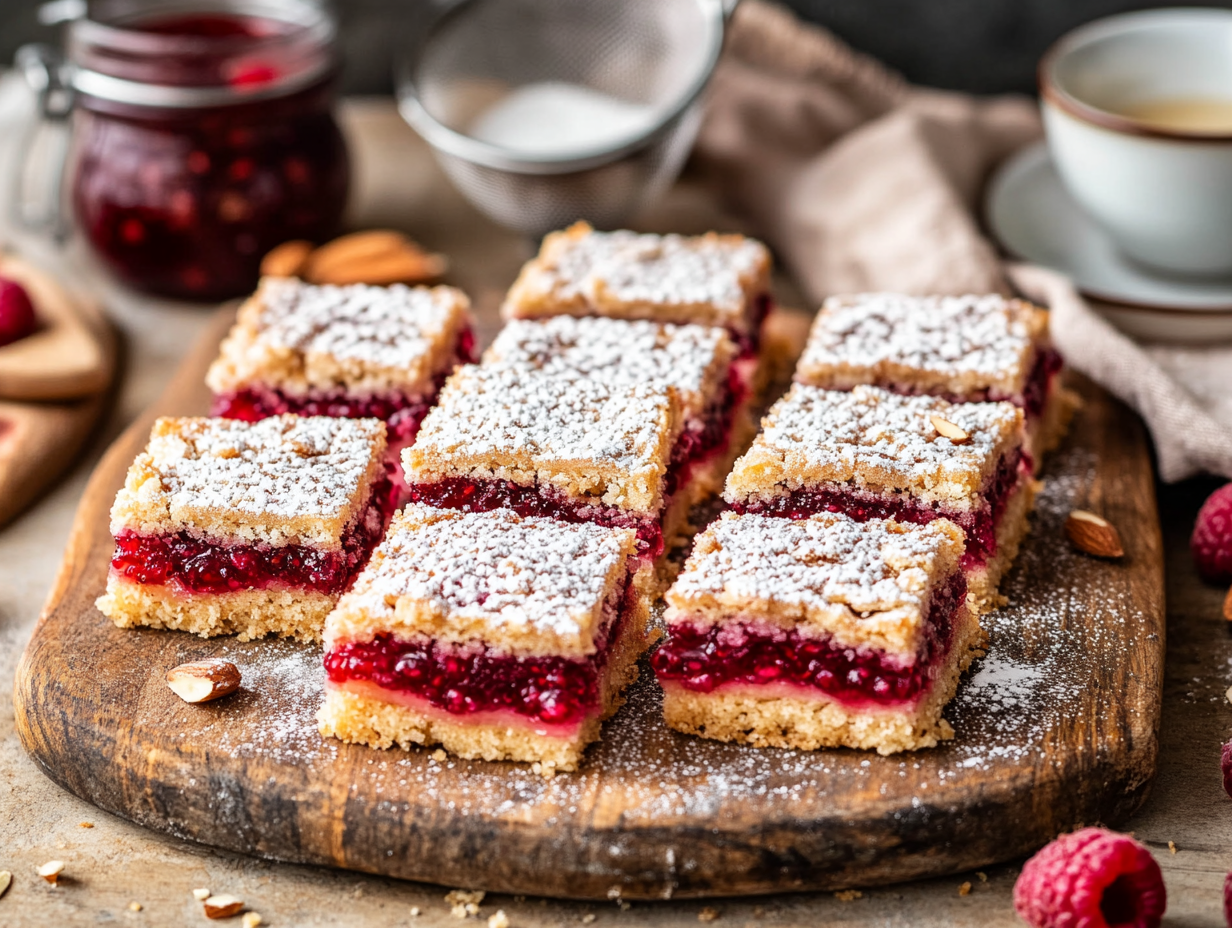
These bars use one buttery almond shortbread dough for both the base and the crumbled top, with a layer of raspberry preserves and ground toasted almonds in between. The whole thing bakes in an 8×8 pan in about 35–40 minutes and cuts into 12 clean bars once fully cooled. The honest reason to make them: the method is genuinely simple, the result looks far more impressive than the effort, and the dough is forgiving enough that you can involve small helpers without the whole project falling apart.
The technique that matters
The single technique worth paying attention to is how you divide and handle the dough. You press two-thirds of it firmly and evenly into the pan — use the flat bottom of a measuring cup if fingers leave uneven patches — because a loose or thin base will absorb the preserves and turn soggy underneath. The remaining third gets scattered over the top as rough, pea-sized crumbles, not pressed down. Keeping those pieces irregular and loose is what gives you a golden, crunchy topping rather than a second dense layer. Don’t overwork the dough at any stage; once the flour is just combined, stop mixing. Overworked shortbread dough tightens up and loses that tender, crumbly texture that makes these bars worth eating.
Shopping notes
- Raspberry preserves: Seedless is specified for good reason — seeds under the almond layer create an uneven, gritty texture. Spend a little more here; a preserve with real fruit flavor makes a noticeable difference in the finished bar. Avoid anything labeled “spread” or “fruit butter,” which can be too wet and make the base soggy.
- Toasted almonds: Buy them raw and toast them yourself in a dry skillet over medium heat for 4–5 minutes, stirring constantly. Pre-toasted almonds from the store are often uneven and can taste stale. Let them cool completely before grinding, or the heat will turn them into almond paste rather than a fine crumble.
- Hazelnut swap: The recipe card notes hazelnuts work as a substitute. If you go that route, rub the skins off after toasting using a clean kitchen towel — the skins are bitter and will affect the flavor.
If something goes sideways
- The base is soggy in the middle after baking: The preserves layer was likely too thick or spread too close to the edges, allowing it to bubble under the crumble and saturate the base. Measure the ¾ cup carefully and keep a small border around the edges when spreading.
- The crumble topping browns too fast before the base is cooked through: Tent the pan loosely with foil after the first 20 minutes and continue baking. An oven running hot is usually the culprit — check yours with an oven thermometer.
- The bars crumble when you slice them: They weren’t fully cooled. Shortbread-style bars need to set completely — at least 1–2 hours at room temperature, or 30 minutes in the fridge — before you cut them. A warm bar will fall apart no matter how carefully you slice.
- The dough is too crumbly to press into the pan: The butter may have been too cold. Shortbread dough needs fully softened butter — it should leave an indent when you press it with a finger. Work the dough briefly with your hands to warm it slightly, then try pressing again.
- The powdered sugar disappears quickly: It absorbs into the surface within a few hours, especially if there’s any moisture in the air. Dust right before serving rather than right after baking — skip the garnish entirely if you’re packing these to travel, it’s not worth the extra dish.
Make-ahead notes
The baked, uncut bars keep well at room temperature in an airtight container for up to 3 days. For longer storage, refrigerate them for up to a week — the texture actually firms up nicely in the fridge, which makes slicing cleaner. To freeze, cut into bars first, layer between sheets of parchment, and freeze in an airtight container for up to 2 months; thaw at room temperature for about an hour. You can also make the dough up to 48 hours ahead, wrap it tightly in plastic, and refrigerate it; let it sit at room temperature for 15–20 minutes before pressing it into the pan, since cold dough will crack rather than spread smoothly.
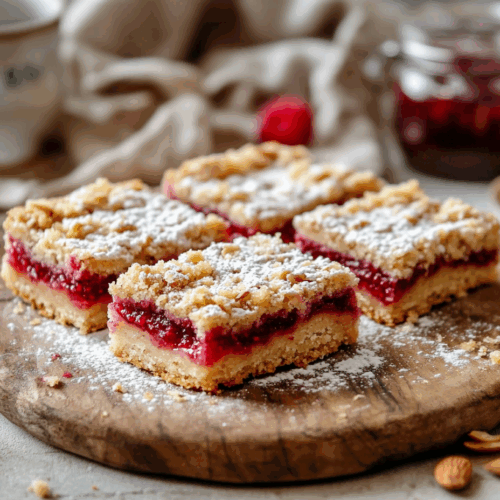
Raspberry Linzer Bars

Equipment
- Mixing Bowls
- Electric Mixer
- 8x8-inch baking pan
- Parchment Paper
- Offset spatula
Ingredients
For the Shortbread Base:
- 1 cup unsalted butter softened to room temperature
- ½ cup granulated sugar
- 1 teaspoon vanilla extract
- 2 cups all-purpose flour sifted
- ¼ teaspoon salt preferably sea salt
For the Filling:
- ¾ cup raspberry preserves high-quality, seedless
- 1 cup toasted almonds ground finely
For the Topping:
- ¼ cup powdered sugar for dusting
Instructions
- Preheat your oven to 350°F (175°C). Line the 8x8 inch baking pan with parchment paper, leaving an overhang on both sides for easy lifting.
- In a mixing bowl, cream together the softened butter and granulated sugar using an electric mixer on medium speed until light and fluffy, about 2-3 minutes.
- Beat in the vanilla extract. Gradually add the sifted all-purpose flour and salt to the mixture, blending just until combined. The dough should be soft.
- Press two-thirds of the dough evenly into the bottom of the prepared baking pan using your fingers or an offset spatula to smooth it out.
- Spread the raspberry preserves over the dough base in an even layer. Sprinkle finely ground toasted almonds on top of the preserves.
- Break the remaining dough into small pieces, scattering them over the raspberry and almond layer to form a crumb-like top.
- Bake for 30-40 minutes or until the top is a light golden brown.
- Allow the bars to cool completely in the pan before lifting them out using the parchment paper. Dust with powdered sugar before slicing into bars.
Notes
- For a nutty twist, try substituting toasted hazelnuts instead of almonds.
- To serve warm, gently reheat in a low oven for 5 minutes before serving.
Nutrition
Common questions
Can I use jam instead of preserves?
You can, but the result will be wetter and the base is more likely to go soft. Preserves have a thicker, firmer consistency that holds up better between the two dough layers during baking — jam tends to bubble and spread more aggressively.
Do the almonds need to be ground very fine, or is a coarser texture okay?
Finely ground works best here — think the texture of coarse sand rather than chunky bits. Larger almond pieces don’t bind into the filling as well and can make the bars harder to slice cleanly without the layers separating.
My oven runs hot. Should I adjust the temperature or just check early?
Check early and tent with foil if the top is browning before 30 minutes. Dropping the temperature by 10–15°F from the start is also a reasonable adjustment if you know your oven runs consistently hot — it gives the base more time to cook through before the topping over-browns.
Can I double the recipe for a larger batch?
Yes — double all ingredients and use a 9×13-inch pan. Keep an eye on baking time; the larger pan may need an extra 5–8 minutes, and the base will be slightly thinner, so check for doneness by color rather than strictly by time.
If you liked this one
- Zesty Lemon Thyme Shortbread Bars
- Pistachio Raspberry Loaf Cake
- Pear and Almond Cake
- Tropical Lime Bars with Toasted Coconut Crunch