

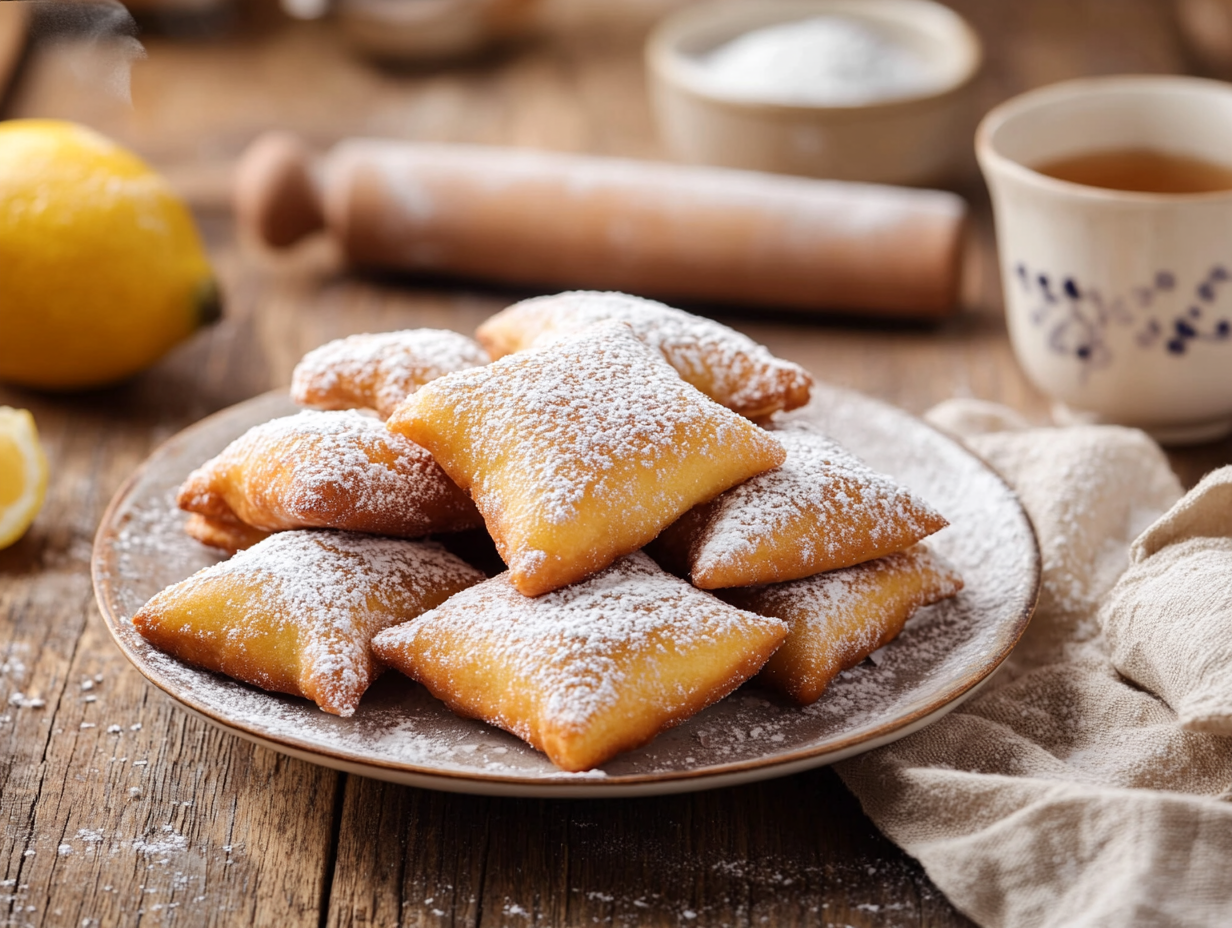
Bugnes are thin, crispy fried pastries from Lyon, made from a simple enriched dough of flour, eggs, butter, and lemon zest, then dusted with powdered sugar. The whole batch comes together in under two hours with ingredients most bakers already have on hand. If you want a fried treat that isn’t greasy, isn’t fussy, and disappears fast, this is it.
What makes this version work
Two things matter here. First, the one-hour rest. Letting the dough sit firms it up just enough so it rolls thin without snapping back — skip the rest and you’ll fight the dough the whole time. Second, oil temperature. At 350°F the bugnes puff slightly, cook through in about a minute per side, and come out pale gold rather than dark and heavy. Drop below that temperature and they absorb oil instead of crisping up. A kitchen thermometer takes the guesswork out completely.
Substitutions that actually work
- Butter: Margarine works in a pinch and produces a slightly crisper result. Coconut oil (refined, so it’s neutral) also works but makes the dough a little stiffer — add an extra egg yolk if it feels dry.
- Vegetable oil for frying: Any neutral high-smoke-point oil works — sunflower, canola, or corn oil are all fine. Avoid olive oil; the flavor is too strong and the smoke point too low.
- Lemon zest: Orange zest is a direct swap and gives a slightly sweeter, rounder flavor. No fresh citrus at all? A half-teaspoon of orange extract stirred into the dough does the job.
- Granulated sugar: Light brown sugar can replace it one-for-one and adds a faint caramel note without changing the texture.
What can go wrong
- Bugnes come out greasy: The oil wasn’t hot enough when you added the dough. Let the oil come fully back to 350°F between batches — it drops every time you add cold dough pieces.
- Dough tears when rolling: It hasn’t rested long enough, or it warmed up too much while you were working. Put it back in a cool spot for 15 minutes and try again.
- Pieces puff up and stay doughy inside: They were cut too thick. Aim for closer to ⅛ inch rather than ¼ inch if you want the crispiest result — the recipe maximum gives a slightly softer bite.
- Powdered sugar melts into the surface immediately: The bugnes were still too hot or slightly oily when you dusted them. Drain on paper towels for at least two minutes, then dust right before serving rather than right after frying.
- Dough sticks to the rolling surface: Flour the surface generously and flip the dough once or twice while rolling. Chilling the dough for 10 minutes before rolling also helps.
Storage and make-ahead
Bugnes are best eaten the day they’re fried — the crispness fades noticeably by the next morning. If you need to get ahead, make and rest the dough, then wrap it tightly in plastic and refrigerate it for up to 24 hours before rolling and frying. You can also freeze the uncooked cut pieces in a single layer on a baking sheet, then transfer to a zip bag once solid; fry straight from frozen, adding about 30 seconds per side. Skip storing already-fried bugnes in an airtight container — the trapped moisture turns them soft fast. A loose covering at room temperature is better if you must hold them a few hours.

Bugnes (Lyonnaise Beignets)

Equipment
- Mixing Bowl
- Rolling pin
- Frying pan or deep fryer
- Slotted spoon
- Paper towels
Ingredients
For the Bugnes Dough:
- 2 cups all-purpose flour preferably organic
- ¼ cup granulated sugar
- 3 large eggs preferably free-range
- ½ cup unsalted butter softened
- 1 teaspoon vanilla extract
- 1 medium zest of a lemon preferably organic
- 1 pinch salt
For Frying:
- 2 cups vegetable oil for frying
For topping:
- ¼ cup powdered sugar for dusting
Instructions
- In a large mixing bowl, combine the all-purpose flour, granulated sugar, and a pinch of salt.
- Add in the softened butter and eggs. Mix until a uniform, smooth dough forms.
- Incorporate the vanilla extract and lemon zest, kneading briefly to distribute.
- Cover the dough with a clean cloth and let it rest for about 1 hour in a cool place, allowing it to firm slightly.
- On a floured surface, roll out the dough to a 1/4 inch thickness.
- Cut the dough into diamond shapes, roughly 2 inches long, using a knife or pastry wheel.
- Heat vegetable oil in a deep frying pan to 350°F (175°C).
- Fry the dough pieces in batches, ensuring not to overcrowd the pan, until they turn golden brown, around 1-2 minutes per side.
- Remove with a slotted spoon and drain on paper towels to absorb excess oil.
- Dust generously with powdered sugar before serving.
Notes
Tammy’s Tips:
- For an extra citrus kick, add orange zest along with the lemon zest.
- If you prefer a softer texture, fold a little whipped cream into the dough before rolling it out.
- For a deeper flavor, try using a mix of half milk and half dark chocolate chips scattered on top before serving.
Nutrition
Frequently asked questions
Can I make bugnes without a deep fryer?
Yes — a wide, heavy skillet with about two inches of oil works perfectly well. A cast iron pan holds heat especially steadily, which helps keep the oil temperature consistent between batches.
Do I really need to rest the dough for a full hour?
The rest is worth it. Without it the gluten is too tight and the dough springs back when you try to roll it thin, which means thicker bugnes that don’t crisp up properly. Thirty minutes is the minimum if you’re short on time, but a full hour gives noticeably better results.
My dough feels very soft and sticky — is that normal?
A little tackiness right after mixing is normal because of the butter and eggs. Dust your hands and the work surface lightly with flour, but don’t add a lot of extra flour to the dough itself or the bugnes will turn out tough. The rest period firms the dough up considerably.
Can I bake these instead of frying them?
Baking won’t give you the same result — the texture will be closer to a dry cracker than a crispy pastry, and the characteristic light puff won’t happen. If frying at home feels like a lot, the good news is that this recipe uses only two cups of oil, which is a manageable amount and can be strained and reused once cooled.
If you liked this one
- French Brown Butter Chocolate Tart
- Luxurious French Chocolate Truffles
- Mediterranean Sunshine Lemon Crumble Bars
- Luxurious Almond Croissant Bread Pudding