

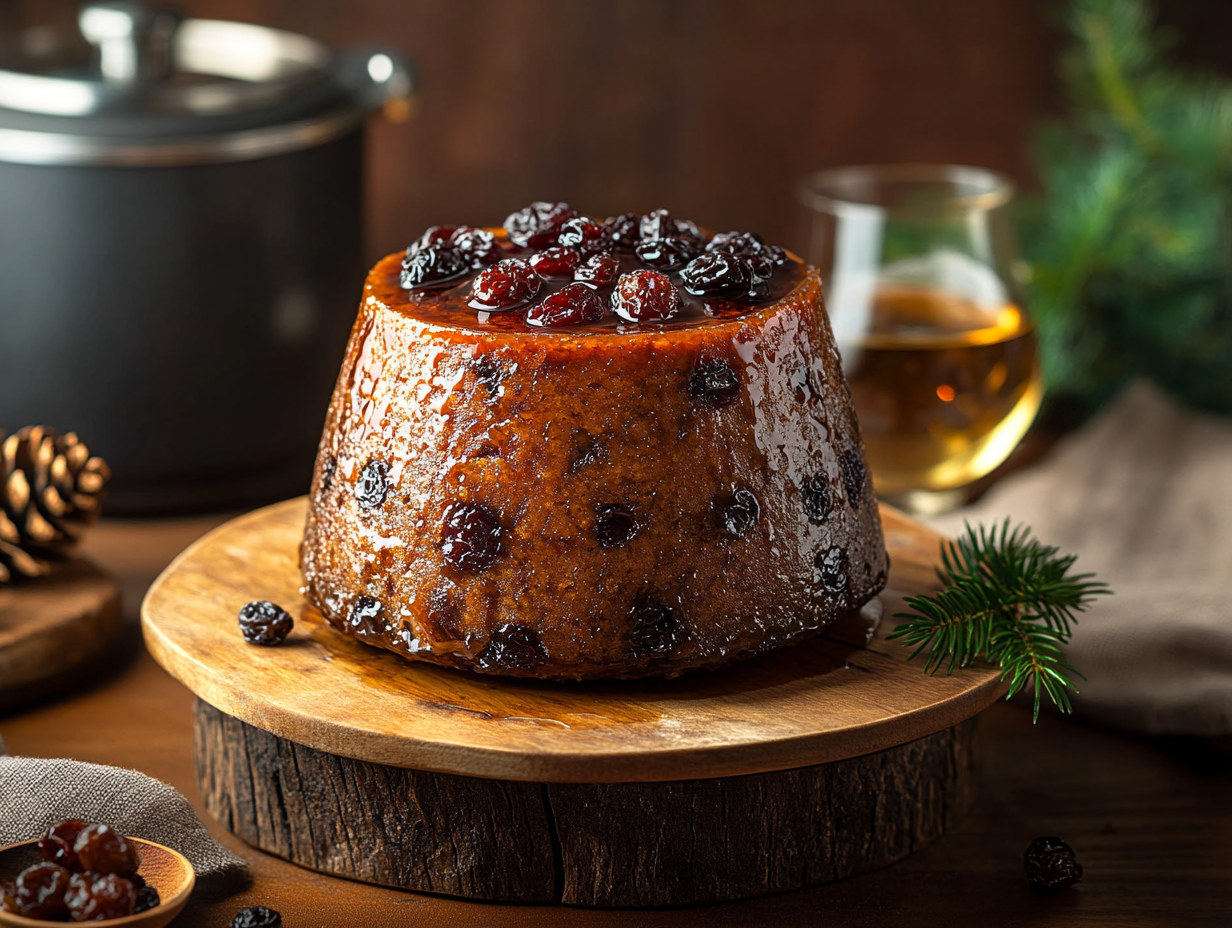
Plum duff is a dense, fruit-packed British steamed pudding — no fresh plums involved, despite the name. It takes about 3 hours of mostly hands-off steaming time, which makes it a genuinely good make-ahead dessert for Thanksgiving, Christmas, or any cold-weather gathering where you want something warm and a little different. The brandy-soaked currants and mixed spice do most of the flavor work, so the result is richer than the short ingredient list suggests.
Before you start
The one technique that determines whether this pudding works is getting the steaming setup right before the basin goes in. You need a pot deep enough that the lid can sit on fully, a heatproof rack or folded cloth on the bottom so the basin doesn’t sit directly on the heat, and enough boiling water to come about halfway up the sides of the basin. The water level drops over 3 hours — plan to check it every 45 minutes and top it up with boiling water, not cold, so the temperature stays steady. The second thing worth doing before you mix anything: soak the currants overnight. The recipe flags this, but it genuinely changes the texture of the finished pudding. Dry currants stay tough and chewy; soaked ones plump up and become part of the crumb.
Mistakes to avoid
- Filling the basin too full. The pudding expands as it steams. Fill the basin no more than three-quarters full, or the top will push through the paper covering and cook unevenly.
- Loose or wet paper covering. If steam gets in through a gap, the top of the pudding turns waterlogged and dense in the wrong way. Press the greaseproof paper directly onto the surface of the batter, then add the foil layer over that, and tie the twine tightly enough that it won’t slip.
- Turning it out too soon. Let the pudding rest in the basin for at least 10 minutes after steaming before inverting. Turning it out while it’s still very hot increases the chance it cracks or breaks apart on the plate.
- Using cold butter instead of suet without adjusting. If you substitute butter for suet, it needs to be very cold and cut into small pieces before mixing in. Soft or melted butter makes the batter greasy and the finished pudding heavy in a flat way rather than rich.
- Skipping the greasing step on the basin. A well-greased basin is what lets the pudding release cleanly. Use butter and coat the sides and base thoroughly, including any rim or lip at the top.
Smart swaps
- Suet: Vegetable suet works as a direct swap if you want to keep the recipe dairy-free or can’t find beef suet. Cold unsalted butter, finely chopped, also works — see the note above about keeping it cold.
- Mixed spice: This is a British spice blend, not the same as American pumpkin pie spice or allspice. If you can’t find it, a rough substitute is ½ tsp cinnamon, a small pinch each of ground nutmeg, ground cloves, and ground allspice. Skip the garnish of powdered sugar if you’re serving with custard or brandy sauce — not worth the extra dish.
- Brandy: The recipe marks it optional, and it genuinely is. Apple juice or cold black tea work as non-alcoholic soaking liquids for the currants and can replace the brandy in the batter too without significantly changing the texture.
Make-ahead notes
Plum duff is one of the better desserts to make ahead because it actually improves with a day or two of rest. Once steamed and cooled completely, leave it in the basin, cover it tightly with fresh greaseproof paper and foil, and refrigerate for up to 5 days. To reheat, re-steam it in the covered basin for 1 hour — the texture comes back almost exactly as it was when freshly made. For longer storage, wrap the cooled, unmoulded pudding tightly in cling film and then foil and freeze for up to 3 months. Thaw overnight in the fridge, then re-steam for 1 hour before serving. Do not microwave it to reheat — it dries out the outside before the centre warms through.
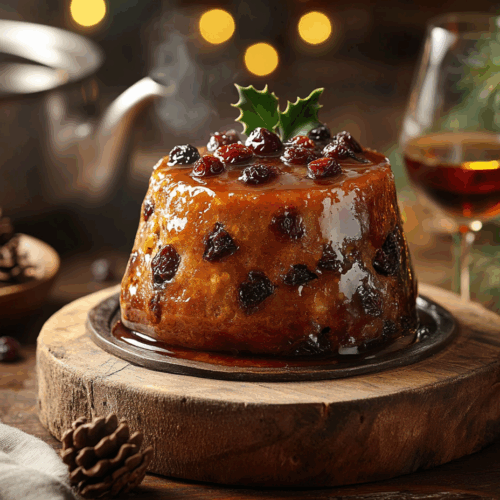
Plum Duff

Equipment
- Steaming pot
- Mixing Bowls
- Wooden spoon
- Pudding basin
- Greaseproof paper
- Kitchen twine
Ingredients
For Dry Components:
- 1 cup all-purpose flour sifted
- 1 tsp baking powder
- ½ tsp mixed spice preferably homemade
For the Fruit Mixture:
- 1 cup currants soaked overnight in brandy
- 1 cup raisins
- ½ cup suet or unsalted butter, finely chopped
- ½ cup brown sugar lightly packed
For Wet Components:
- 2 large eggs beaten
- ¼ cup brandy optional
Instructions
- Mix all the dry ingredients in a large bowl, ensuring they are thoroughly combined.
- Add in the suet or finely chopped butter, currants, and raisins to the dry mixture, coating them well to evenly distribute.
- In a separate bowl, whisk together the beaten eggs and brandy (if using). Pour this mixture into the dry ingredients, mixing until you achieve a sticky and cohesive dough.
- Grease the pudding basin and transfer the mixture into it, lightly pressing down to avoid any air pockets.
- Cover with a layer of greaseproof paper and then foil, securing with a kitchen twine to keep it watertight.
- Steam the pudding in a pot for about 3 hours. Ensure the water level is maintained and does not touch the basin.
- Remove from heat and let cool slightly in the basin before turning out onto a plate.
Notes
- Ensure the steaming pot is not left unattended to prevent the water level from falling too low.
- Soaking fruits overnight amplifies their natural sweetness and adds depth to the flavors.
Nutrition
FAQ
Do I really need a pudding basin, or can I use something else?
A pudding basin is the most reliable option, but a heatproof glass or ceramic bowl of similar size works fine. What matters is that the container is completely heatproof, has straight or slightly inward-sloping sides, and fits inside your steaming pot with the lid on.
How do I know when the pudding is done?
After 3 hours of steaming, insert a skewer into the centre — it should come out clean with no wet batter clinging to it. The top of the pudding will feel firm and set when you press it gently through the paper.
Can I make this without alcohol?
Yes, completely. Soak the currants in apple juice or cold black tea overnight instead of brandy, and simply leave the brandy out of the wet mixture. The pudding will be slightly less rich but still full of flavour from the spices and dried fruit.
My pudding came out very dense and heavy — what went wrong?
The most common cause is overmixing the batter once the wet ingredients go in — stir just until combined. Using soft or melted butter instead of cold chopped butter or suet can also make the texture heavier than it should be.
More sweet things to bake
- Almond Croissant Bread Pudding
- Southern Maple Bourbon Bread Pudding
- Strawberry Elderflower Fool
- Spiced Pear and Almond Cake