

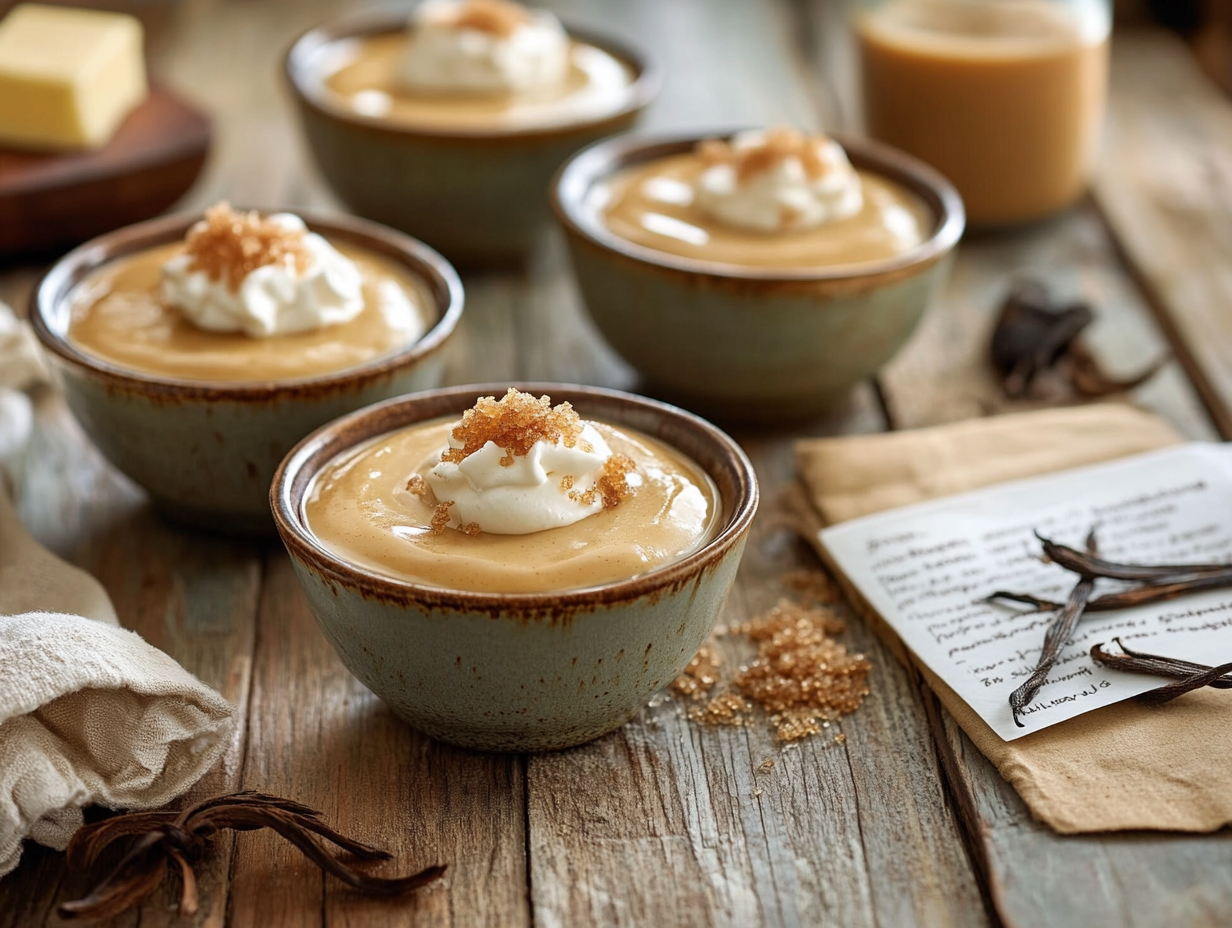
Butterscotch pudding is a stovetop pudding made from dark brown sugar, butter, whole milk, and heavy cream, thickened with cornstarch. It sets up smooth and spoonable in about two hours, and the ingredient list is short enough that you probably have everything on hand right now. At 516 calories a bowl, it earns its place as an occasional treat — and it costs a fraction of anything comparable from a store.
The technique that matters
The only step that separates a flat-tasting pudding from a genuinely rich one is how you combine the dry and wet ingredients. Whisking the brown sugar, cornstarch, and salt together before any liquid goes in distributes the cornstarch evenly through the sugar, which prevents it from clumping when the milk and cream hit it. From there, keep the heat at medium and stir constantly — not occasionally. Cornstarch needs steady, even heat to activate properly; if you walk away, the bottom scorches before the center thickens. The pudding is ready when it holds a slow bubble and coats the back of a spoon. Pull it off the heat immediately at that point, because it continues to thicken as it cools.
Common problems and fixes
- Lumpy pudding: Lumps almost always come from adding cold liquid too fast. Pour the milk and cream in a slow, steady stream while whisking, not all at once. If lumps still form during cooking, press the finished pudding through a fine-mesh strainer before pouring into bowls.
- Pudding too thin after chilling: It didn’t cook long enough. The mixture needs to reach a full, slow bubble — not just steam or a simmer — for the cornstarch to fully thicken. Next time, hold it at that bubble for a full 60 seconds while stirring.
- Skin forming on top: Press a piece of plastic wrap directly onto the surface of the pudding before refrigerating. No gap, no skin.
- Grainy or gritty texture: This usually means the brown sugar wasn’t fully dissolved. Make sure you whisk the dry ingredients thoroughly and don’t rush the early stages of heating — give the sugar time to melt into the liquid before the mixture starts to thicken.
- Pudding tastes flat or one-dimensional: The salt is doing more work here than it looks like. If your pudding tastes bland, you likely under-measured it. Taste before pouring into bowls and add a small pinch more if needed — skip the garnish, not worth the extra dish — the salt stirred in at the end does more for flavor than toffee bits on top.
Storage and make-ahead
This pudding is genuinely better made ahead. After pouring into serving bowls, press plastic wrap directly onto each surface and refrigerate for at least 2 hours; overnight is ideal because the flavor deepens as it sits. It keeps well in the fridge for up to 4 days, covered. Freezing is possible but not recommended — the cornstarch-thickened base tends to weep and turn watery once thawed. If you want to make a larger batch for the week, it scales up cleanly using the 2x option on the recipe card, and individual portions in small mason jars store and travel well.
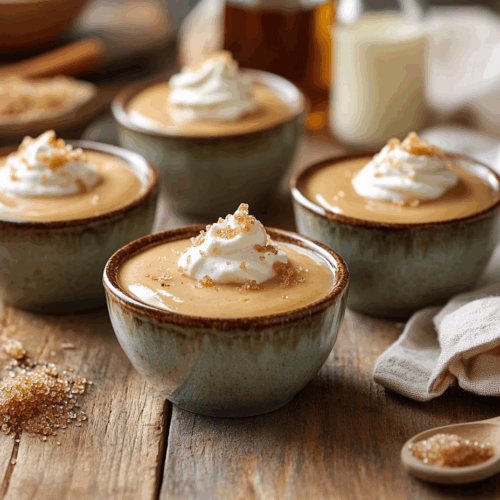
Butterscotch Pudding

Equipment
- Saucepan
- Whisk
- Measuring cups
- Measuring spoons
- Mixing Bowl
- Serving bowls
Ingredients
- 1 cup dark brown sugar packed
- 2 tablespoons cornstarch organic if possible
- 1 cup whole milk or substitute with plant-based milk
- 1 cup heavy cream for richness
- 2 tablespoons unsalted butter preferably European style
- 1 teaspoon vanilla extract
- ¼ teaspoon salt to taste
Instructions
- In a saucepan, whisk together the brown sugar, cornstarch, and salt until evenly blended.
- Slowly add the milk and cream, whisking continuously to prevent lumps.
- Place the saucepan over medium heat and continue stirring until the mixture thickens and begins to bubble, approximately 10-12 minutes.
- Once thickened, remove the saucepan from heat and stir in the butter and vanilla extract, until the butter is fully melted and combined.
- Allow the pudding to cool slightly before transferring it to individual serving bowls.
Notes
Tammy’s Tips:
- For a smokier flavor, consider using smoked sea salt instead of regular salt.
- To create a plant-based version, substitute dairy milk and cream with almond or coconut milk.
Nutrition
Frequently asked questions
Can I use light brown sugar instead of dark brown sugar?
Yes, the pudding will still set and taste good, but it will be noticeably milder. Dark brown sugar has more molasses, which is where most of the deep, toffee-like flavor comes from — light brown sugar produces a softer, less complex result.
Can I use 2% milk instead of whole milk?
You can, and the pudding will still thicken correctly since cornstarch is doing the structural work. The texture will be slightly less rich and the pudding may feel a little looser; keeping the full cup of heavy cream helps compensate for the lower fat in the milk.
Why does my pudding have a starchy taste?
The cornstarch didn’t cook long enough to lose its raw flavor. The mixture needs to reach a full boil and hold it briefly — a gentle simmer isn’t enough. Make sure you’re cooking over medium heat and stirring constantly until you see slow, steady bubbles breaking the surface.
What to bake next
- Chocolate Cream Pie
- Creamy Cardamom Pistachio Rice Pudding
- Toasted Coconut Custard Pie
- Brown Butter Vanilla Bean Cupcakes