

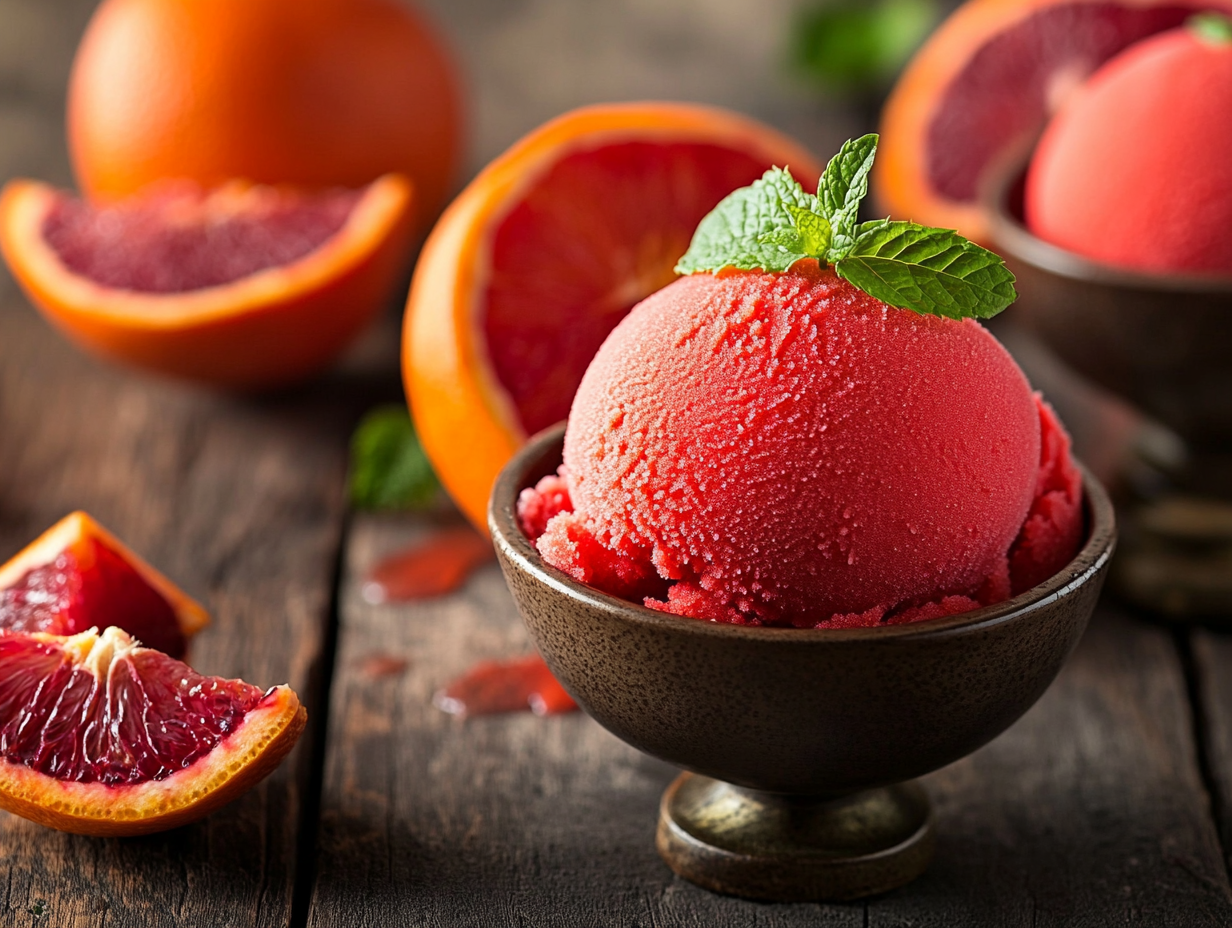
Blood orange sorbet is four ingredients, one saucepan, and an ice cream maker standing between you and a dairy-free frozen dessert with a deep ruby color and a flavor that’s genuinely tart and bright — not just sweet. Blood oranges have a short season, so this is worth making when you spot them. The recipe is straightforward enough that it’s also a good first project if you’ve never used an ice cream maker before.
What makes this version work
Two things matter here. First, the simple syrup is made and cooled before it meets the juice — combining hot syrup with fresh juice dulls the flavor and can make the color go muddy. Second, the mixture goes into the fridge until it’s genuinely cold, not just room temperature, before churning. A warm base takes much longer to freeze in the machine, and that extra churning time works air into the sorbet unevenly, giving you a grainy result. Both steps cost you nothing except a little patience.
What can go wrong
- Icy, hard texture after freezing: This usually means the sugar-to-juice ratio was off. If your blood oranges were very tart, the juice may have been diluted with water to make it drinkable before you measured it — use straight-squeezed juice only.
- Pale or brownish color: Exposure to air oxidizes the anthocyanins that give blood oranges their color. Press a piece of plastic wrap directly onto the surface of the sorbet before sealing the container.
- Sorbet won’t firm up after churning: If your freezer runs warm or the base wasn’t cold enough going in, the churned sorbet may look more like a slush. Transfer it to the coldest part of your freezer — usually the back — and give it the full two hours before judging it.
- Bitter aftertaste: This comes from pith getting into the juice. Juice the oranges with moderate pressure; aggressive squeezing crushes the white pith. Straining through a fine mesh sieve catches most of it, but the juicing technique matters too.
Smart swaps
- No blood oranges available: Regular navel oranges work and taste good, but the color will be pale yellow-orange rather than red. A mix of navel orange juice and a small amount of pomegranate juice (about 2 tablespoons) gets you closer to the original color without changing the flavor much.
- No lemon on hand: A small splash of white wine vinegar — about half a teaspoon — does the same job of sharpening the flavor. It sounds odd but disappears completely in the finished sorbet.
- No ice cream maker: Pour the chilled base into a shallow metal baking pan and freeze it. Every 30 minutes for about 3 hours, scrape and stir it vigorously with a fork. The texture will be more granita-style than smooth sorbet, but it’s perfectly good — skip the garnish, not worth the extra dish.
Make-ahead notes
The simple syrup can be made up to two weeks ahead and kept in a sealed jar in the fridge, which makes the actual prep time on sorbet day very short. Once churned and frozen, the sorbet is best within two weeks — after that it starts to develop ice crystals and the color fades. If it freezes rock-solid (common in chest freezers), move it to the fridge for 10 to 15 minutes before serving rather than leaving it on the counter, where the outside melts before the center softens.
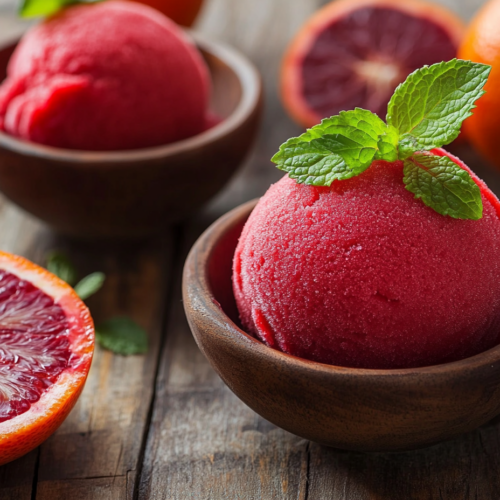
Blood Orange Sorbet

Equipment
- 1 Citrus juicer
- 1 Medium saucepan
- 1 Fine Mesh Sieve
- 1 Ice Cream Maker
Ingredients
- 1 cup freshly squeezed blood orange juice approximately 4-5 blood oranges, depending on size
- ½ cup granulated sugar
- ¼ cup water
- 1 tbsp lemon juice freshly squeezed
Instructions
- Begin by juicing the blood oranges to extract 1 cup (240 ml) of juice. Strain the juice through a fine mesh sieve to remove any pulp and seeds.
- In a medium saucepan over medium heat, combine the sugar and water. Stir until the sugar completely dissolves, creating a simple syrup.
- Remove the saucepan from the heat and stir the blood orange juice and lemon juice into the syrup.
- Transfer the mixture to the refrigerator and chill thoroughly, until the mixture is cold, about 1 hour.
- Once chilled, pour the mixture into an ice cream maker and churn according to the manufacturer's instructions. This typically takes 20–25 minutes.
- Transfer the sorbet to an airtight container and freeze for at least 2 hours to firm up before serving.
Notes
Nutrition
FAQ
Can I make this without an ice cream maker?
Yes — pour the chilled base into a shallow metal pan and freeze it, stirring and scraping with a fork every 30 minutes for about 3 hours. The result is closer to a granita in texture, but the flavor is identical and it requires no special equipment.
How many blood oranges do I actually need to buy?
Plan on 5 to 6 medium blood oranges to be safe, since you need a full cup of juice and yields vary. Smaller or drier oranges can give you as little as 3 tablespoons each, so having an extra one or two on hand avoids a last-minute problem.
Can I reduce the sugar to make it less sweet?
You can reduce it slightly — try cutting it to 6 tablespoons instead of half a cup — but don’t go further than that. Sugar lowers the freezing point of the mixture, and too little will give you a sorbet that freezes into a solid block rather than staying scoopable.
My blood oranges aren’t very red inside — will the sorbet still look good?
The color of the finished sorbet depends entirely on the fruit, and blood orange color varies a lot by variety and season. If your oranges are more pink than deep red, the sorbet will be a lighter rose color — it still looks attractive, just different from the photos.
If you liked this one
- Elegant Strawberry Champagne Sorbet
- Mediterranean Sunshine Olive Oil Orange Polenta Cake
- Tropical Coconut Cardamom Ice Cream
- Sunshine on a Plate: Zesty Mediterranean Orange Cake