

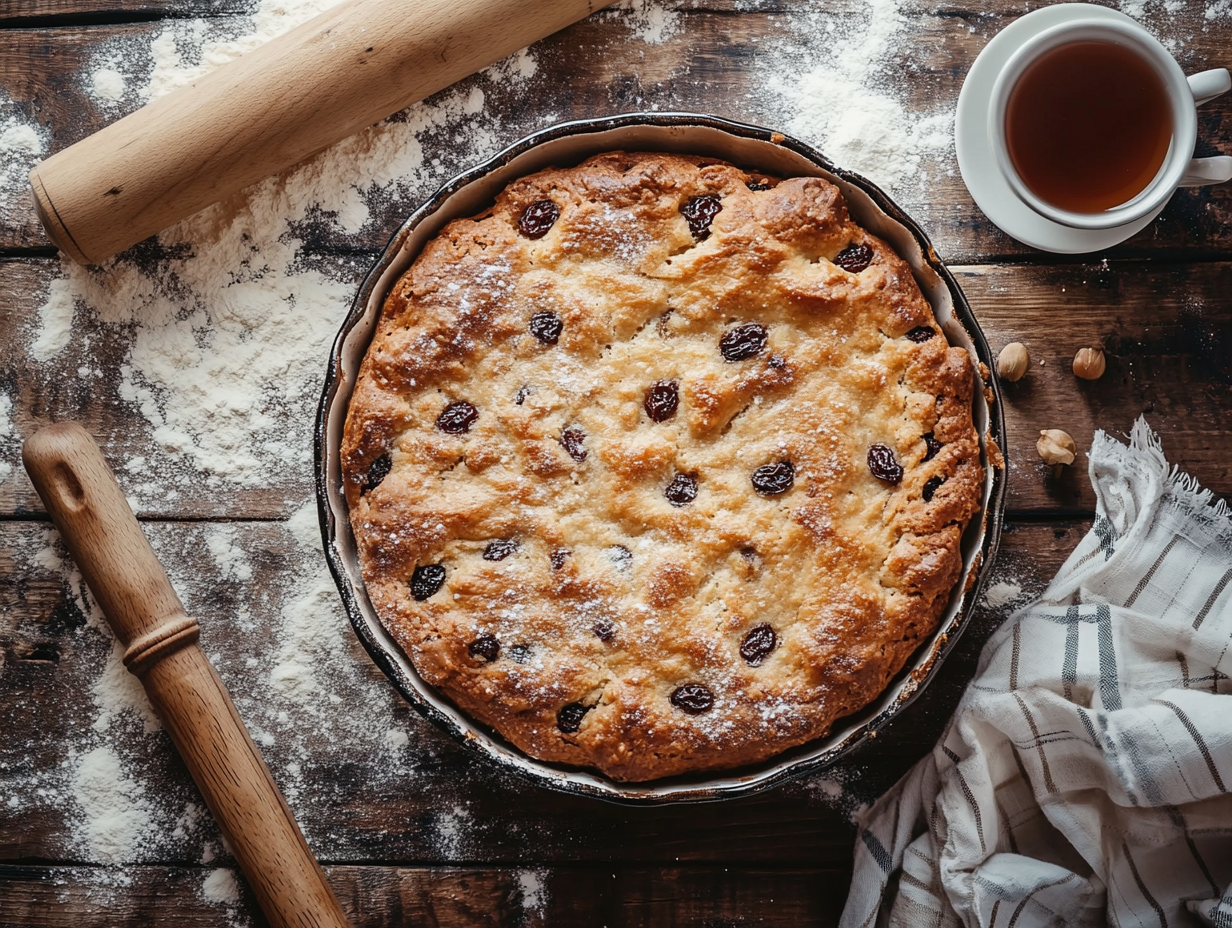
Lardy cake is a yeasted, layered sweet bread from southern England — closer to a sticky bun than a cake — built from folds of dough, lard, dried fruit, and spice. It comes out of the oven with a caramelized, slightly crunchy base and a soft, fruit-studded crumb that holds together well when sliced. If you want something genuinely different to wrap up and give away, this is it.
Why this recipe works
Two things make this bake succeed. First, the folding-and-rolling process — done twice — distributes the lard, brown sugar, and fruit in thin layers throughout the dough rather than clumping them in one seam. That layering is what creates the pull-apart texture and the sticky, caramelized bottom as the sugar melts down during baking. Second, the second rise after shaping is not optional. Skipping it means the dough goes into the oven tight and dense; giving it that full 30 minutes lets the gluten relax and the yeast recover, so the finished loaf is tender rather than chewy.
Mistakes to avoid
- Rolling too thin: If you press the dough down to less than half an inch during the layering steps, the filling breaks through the surface and burns on the pan before the interior is cooked. Keep it at half an inch or slightly thicker.
- Using cold lard straight from the fridge: Cold lard tears the dough instead of spreading. Pull it out at least 30 minutes before you start so it smears smoothly — skip the milk glaze if you forget this step and the dough looks ragged, it won’t fix the texture underneath.
- Underbaking: The milk glaze browns quickly and can make the top look done 10 minutes early. Trust the 45-minute time and check the base — it should be deep golden and feel firm when you tip the loaf slightly in the pan. A pale, soft base means the sugar layers inside are still wet.
- Cutting it hot: The caramelized sugar needs 20 minutes to set after it comes out of the oven. Cut it too soon and the slices collapse and stick together — fine for eating at home, a problem if you’re wrapping pieces to give away.
- Overpacking the filling: More fruit sounds better but it weighs the dough down and prevents a proper rise. Stick to the amounts in the recipe card; the balance is already generous.
Make-ahead notes
Lardy cake is genuinely better on day two — the sugar redistributes overnight and the crumb firms up enough to slice cleanly, which makes it ideal for wrapping in parchment and tying with string as a gift. Once fully cooled, wrap tightly in parchment or beeswax wrap (not cling film, which traps steam and softens the base) and store at room temperature for up to three days. For longer storage, freeze individual slices wrapped in parchment and then foil for up to six weeks; thaw at room temperature for two hours or warm in a 300°F oven for eight minutes. You can also complete the first rise, shape and fill the dough, then refrigerate it covered overnight before the second rise — take it straight from the fridge, let it sit at room temperature for 45 minutes to an hour until noticeably puffed, then glaze and bake as normal.
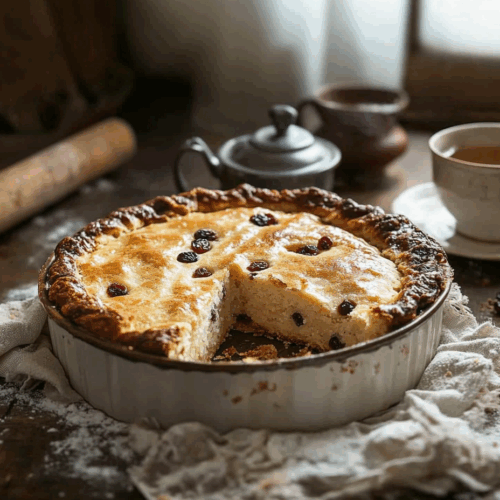
Lardy Cake

Equipment
- Mixing Bowl
- Rolling pin
- Baking dish
- Pastry brush
Ingredients
Dough
- 3 cups All-purpose flour for best results, use unbleached flour
- 1 teaspoon Salt
- 0.5 cup Granulated sugar
- 2.25 teaspoons Active dry yeast ensure it's fresh for best rise
- 1 cup Warm water (around 110°F or 43°C)
- 0.25 cup Lard plus extra for greasing
Filling and Topping
- 0.5 cup Currants
- 0.5 cup Raisins use a mix of golden and dark for variety
- 0.25 cup Brown sugar
- 0.5 teaspoon Ground cinnamon
- 1 tablespoon Milk for glazing
Instructions
- Prepare the Dough: In a mixing bowl, combine the flour, salt, and sugar. Dissolve the yeast in warm water, let it sit for 5 minutes, then add to the dry ingredients. Knead to form a smooth, elastic dough, about 10-15 minutes.
- First Rise: Lightly grease a bowl with lard, place the dough inside, and cover. Let it rise in a warm place for about 1 hour, or until doubled in size.
- Roll and Layer: Roll out the dough on a floured surface into a rectangle about 1/2 inch thick. Spread a portion of lard over the surface, sprinkle with currants, raisins, brown sugar, and cinnamon.
- Fold and Second Rise: Fold over the edges to enclose the filling, re-roll, and fold again. Place back in the greased baking dish, cover, and let rise for another 30 minutes.
- Bake: Preheat your oven to 375°F (190°C). Brush the top of the dough with milk, then bake for 45 minutes or until golden brown. A skewer should come out clean when it's ready.
Notes
- Ensure the lard is at room temperature for easy spreading.
- You can substitute with butter for a lighter version. Add a touch of orange zest for an aromatic twist.
Nutrition
FAQ
Can I use butter instead of lard?
Yes, unsalted butter works as a direct swap and produces a slightly lighter, less rich result. The caramelized base will still form, but it won’t be quite as sticky or pronounced — lard has a higher fat content and lower water content than butter, which is what drives that deep, toffee-like crust.
How do I know my yeast is active enough before I start?
After dissolving the yeast in the warm water, wait the full five minutes and look for a foamy, slightly domed surface — if it’s flat and the water looks clear, the yeast is dead and the dough won’t rise. Water above 120°F kills active dry yeast, so use a thermometer if you’re unsure; 110°F is the safe target.
Will it travel well if I’m taking it somewhere or packaging it as a gift?
It travels well once fully cooled and rested — the sugar sets firm enough that slices hold their shape wrapped in parchment. Wrap each slice individually rather than wrapping the whole loaf cut, which keeps the exposed crumb from drying out and makes it easy for the recipient to open one piece at a time.
Try these next
- Chocolate Babka
- Luxurious Almond Croissant Bread Pudding
- Raspberry White Chocolate Scones
- Strawberry Elderflower Fool