

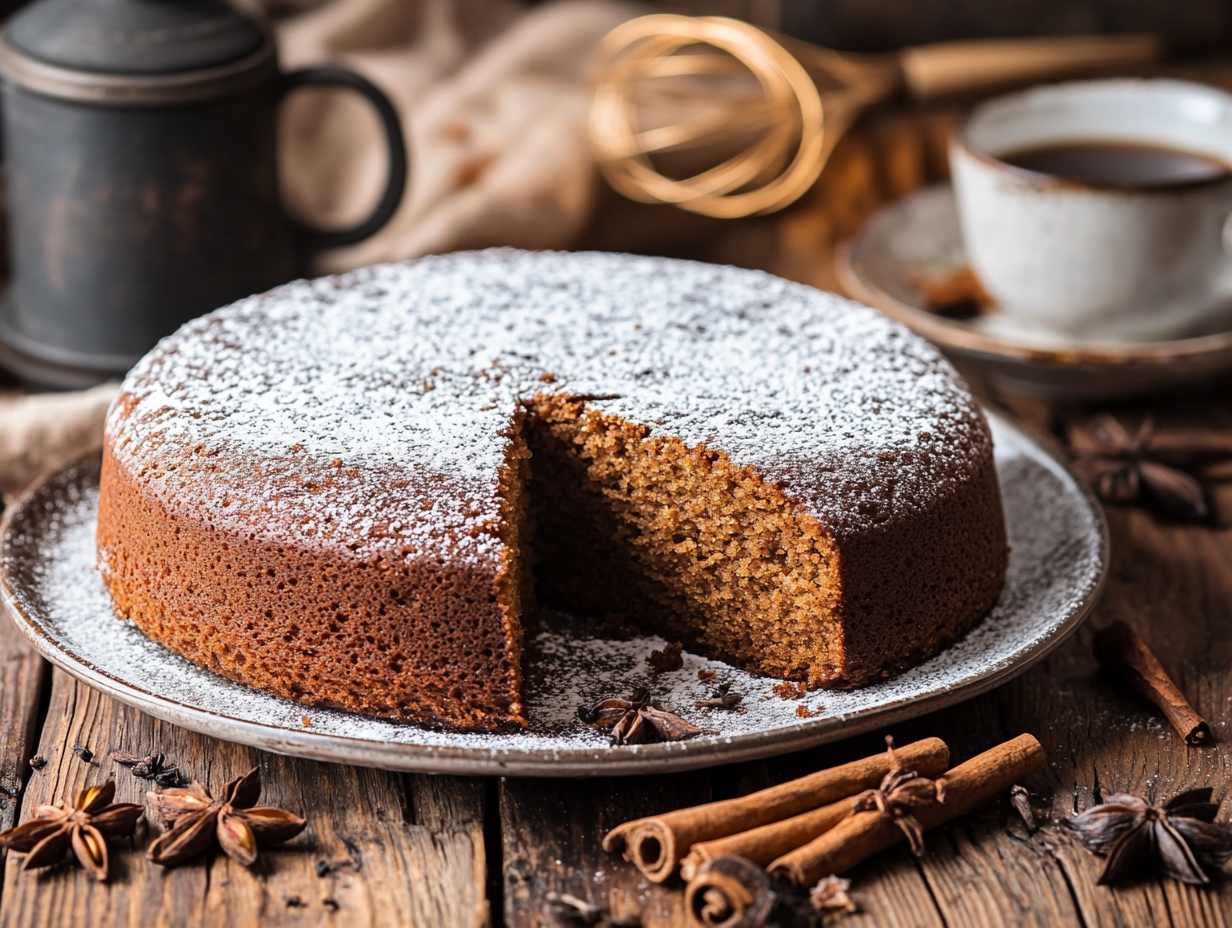
This is a single-layer gingerbread cake built on molasses, dark brown sugar, and three ground spices. It bakes in one pan in about 45 minutes and comes out moist and deeply flavored without requiring any special equipment or advanced technique. If you want a reliable cool-weather cake that doesn’t demand much from you, this is it.
Why this recipe works
Two things make this cake work. First, creaming the butter and brown sugar properly — a full 2 to 3 minutes — builds a base that keeps the crumb tender even after the molasses and hot water go in. Cut that step short and the texture suffers. Second, the hot water is doing real work here: it loosens the batter so the spices distribute evenly and the cake bakes up light rather than dense. The batter will look alarmingly thin when it’s ready to pour, but that’s exactly right. Don’t add more flour to compensate — that’s the most common way this cake goes wrong before it even hits the oven.
Common problems and fixes
- Cake sinks in the center: This usually means the oven was opened too early or the batter was overmixed after the flour went in. Keep the oven closed for at least the first 35 minutes and stir only until the flour disappears.
- Cake sticks to the pan: Parchment on the bottom helps, but also grease the sides of the pan well — molasses-heavy batters cling. Run a thin knife around the edge before inverting.
- Top cracks heavily: A little cracking is normal. Deep cracking usually means the oven runs hot. Use an oven thermometer to check; if yours runs 25°F high, drop the set temperature accordingly.
- Cake tastes flat or one-dimensional: Unsulfured molasses is specified for a reason — sulfured molasses has a sharp, chemical edge that fights the spices. Check the label before you buy.
- Gummy texture the next day: Gingerbread holds moisture well, which is mostly a good thing, but if you wrap it while still warm the steam gets trapped and the top turns tacky. Let it cool completely on the rack before covering. Skip the powdered sugar garnish if you’re storing it — it dissolves overnight and isn’t worth the extra dish anyway.
Gingerbread Cake

Equipment
- 9-inch round cake pan
- Mixing Bowls
- Whisk
- Rubber spatula
- Cooling Rack
Ingredients
- 1 ½ cups all-purpose flour Use unbleached for best flavor.
- 1 teaspoon baking soda
- 1 teaspoon ground ginger
- 1 teaspoon ground cinnamon
- ¼ teaspoon ground cloves
- ¼ teaspoon salt Fine sea salt preferred.
- ½ cup unsalted butter Softened
- ½ cup dark brown sugar Packed
- ⅔ cup molasses Unsulfured
- 1 large egg Room temperature
- 1 cup hot water
Instructions
- Preheat your oven to 350°F (175°C). Grease a 9-inch round cake pan and line the bottom with parchment paper to ensure easy removal after baking.
- In a medium mixing bowl, whisk together the flour, baking soda, ginger, cinnamon, cloves, and salt. The goal is a homogeneous mixture with no clumps. Set aside.
- In a separate larger bowl, cream the softened butter and dark brown sugar together until light and fluffy. This will take about 2-3 minutes with a handheld mixer.
- Add the molasses to the butter mixture and beat until fully combined. The mixture should have a deep amber color and glossy appearance.
- Beat in the egg until well incorporated into the molasses mixture. The texture will become smooth and slightly airy.
- Slowly incorporate the dry ingredients into the wet mixture. Mix gently to prevent flour spillage and overmixing, which can lead to a dense cake.
- Gradually add the hot water and mix until the batter is smooth. The batter will be thin, and that's perfectly normal for gingerbread cakes.
- Pour the batter into the prepared cake pan and smooth the top with a spatula. Tap the pan gently on the counter to release any air bubbles.
- Bake in the preheated oven for 45 minutes or until a toothpick inserted into the center of the cake comes out clean.
- Allow the cake to cool in the pan for about 10 minutes, then turn it out onto a cooling rack to cool completely before serving.
Notes
- For a modern twist, consider topping the cake with a zesty lemon glaze or a dollop of whipped cream for a delightful contrast to the rich spices.
Nutrition
FAQ
Can I use light brown sugar instead of dark brown sugar?
You can, but the flavor will be noticeably milder. Dark brown sugar has more molasses in it, which reinforces the depth you’re already getting from the molasses in the recipe — light brown sugar produces a paler, less complex result.
How hot does the water need to be?
Hot from the tap or just off the boil both work. The goal is water hot enough to keep the batter fluid and help the baking soda activate evenly — lukewarm water won’t do the same job.
My butter isn’t softened — can I melt it instead?
No. Melted butter won’t cream with the sugar, so you lose the structure that keeps the crumb tender. Leave the butter out at room temperature for 45 to 60 minutes, or cut it into small cubes to speed things up.
Can I make this in a square or rectangular pan instead of a round one?
Yes. An 8-inch square pan works well and gives you easy-to-cut portions. Start checking for doneness around 40 minutes since pan shape can affect bake time slightly.
How do I know when the cake is actually done?
A toothpick inserted in the center should come out clean or with just a couple of dry crumbs. If it comes out with wet batter, give it another 3 to 5 minutes and test again — don’t rely on color alone since the dark batter makes visual cues unreliable.
Can I make this a day ahead?
Yes, and it actually tastes better the next day once the spices have had time to settle. Store it tightly wrapped at room temperature and it will keep well for up to three days.
Try these next
- Pear and Almond Cake
- Chocolate Chai Pots de Crème
- Maple Cream Sandwich Cookies
- Southern Maple Bourbon Bread Pudding