

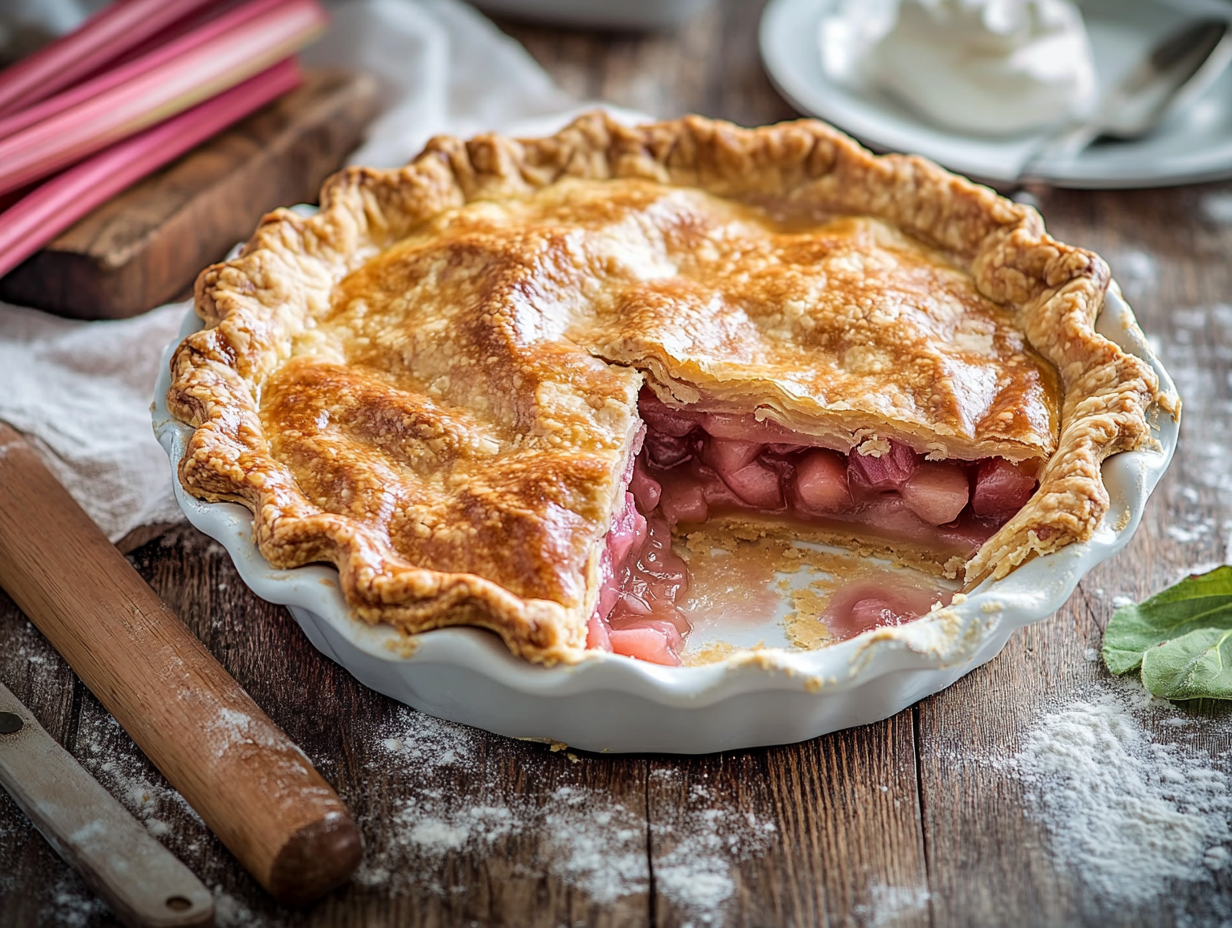
Rhubarb pie is a double-crust pie with a filling of chopped rhubarb, sugar, and flour — sharp, jammy, and nothing like the berry pies that crowd the spring dessert table. The honest reason to make it from scratch is the crust: a butter-based homemade pastry holds its structure and flavor in a way store-bought shells simply don’t, and that matters especially when you’re wrapping a slice to give away.
Why this recipe works
Two things carry this pie. First, the filling uses flour rather than cornstarch to thicken the rhubarb juices. Flour produces a slightly opaque, cohesive filling that slices cleanly once cooled — important if the pie is traveling anywhere. Second, the crust relies on cold diced butter worked in by hand until the mixture looks like coarse crumbs. That uneven fat distribution creates distinct layers as the butter steams during baking, giving you a crust that’s flaky rather than crumbly. Both techniques reward patience: chilling the dough for a full hour and letting the finished pie cool completely before cutting are the two steps most worth protecting.
Common problems and fixes
- Soggy bottom crust: Place the pie on the lowest oven rack for the first 20 minutes of baking. Direct bottom heat sets the crust before the filling has a chance to soak through.
- Filling too runny after cooling: Rhubarb releases a lot of liquid. If your stalks look especially watery, toss the chopped rhubarb with the sugar and let it sit for 15 minutes, then drain off the excess liquid before adding the flour and filling the crust.
- Top crust splits or tears during rolling: The dough is too cold. Let the disk sit at room temperature for 5 minutes before you roll — it should bend slightly without cracking at the edges.
- Filling bubbles out and burns on the pan: Set the pie dish on a foil-lined baking sheet before it goes in the oven. Cleanup is easy and the sheet catches any overflow before it smokes.
- Crust shrinks away from the dish edges: Don’t stretch the dough to fit — drape it loosely and press it in. Stretched dough contracts in the oven. Skip the garnish of extra pastry cutouts on top; not worth the extra dish and the scraps dry out faster than the main crust anyway.
Storage and make-ahead
The baked pie keeps at room temperature, loosely covered, for up to two days — the crust stays crisper than it does in the fridge. Refrigerate after that and eat within four days total; the bottom crust softens noticeably by day three. For gifting, wrap individual slices in parchment, then foil; they hold their shape well and the filling doesn’t weep through the wrapping. To freeze, cool the pie completely, wrap the whole thing tightly in two layers of plastic wrap followed by foil, and freeze for up to three months — thaw overnight in the refrigerator. If you want to get ahead, the pie dough disks can be made up to three days in advance and kept wrapped in the fridge, or frozen for up to a month.
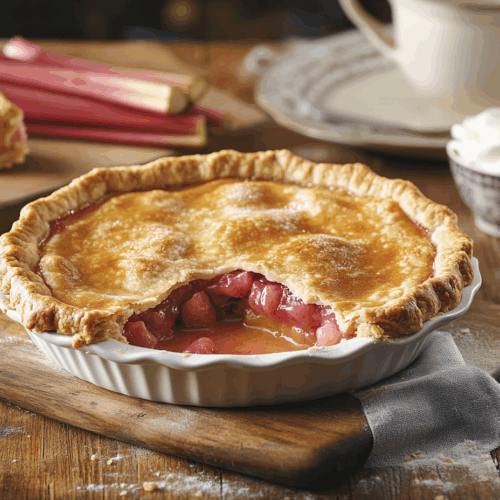
Classic Rhubarb Pie

Equipment
- Pie dish
- Mixing Bowls
- Rolling pin
- Pastry brush
- Aluminum foil
Ingredients
Pie Crust
- 2 cups all-purpose flour preferably organic
- 1 teaspoon salt
- ¾ cup unsalted butter chilled and diced
- 6 tablespoons ice water
Filling
- 5 cups rhubarb chopped into 1/2 inch pieces
- 1 ¼ cups sugar
- ¼ cup all-purpose flour
- 1 tablespoon butter cut into small pieces
- 1 whole egg beaten, for egg wash
Instructions
- To make the pie crust, combine the flour and salt in a bowl. Add the chilled butter, and use a pastry cutter or your fingertips to blend the butter into the flour until the mixture resembles coarse crumbs.
- Drizzle the ice water into the flour mixture, stirring with a fork until the dough can be gathered into a ball. Divide in half, shape into disks, and wrap in plastic. Chill for at least 1 hour.
- Preheat your oven to 400°F (204°C). Roll out one dough disk on a floured surface to fit a 9-inch pie dish. Drape the crust over the pie dish, and press it gently into the corners.
- In a large bowl, combine rhubarb, sugar, and flour. Mix until rhubarb is evenly coated, then pour into the prepared crust. Dot with butter pieces.
- Roll out the second dough disk for the top crust. After placing it over the filling, trim and crimp the edges. Cut small slits into the top to allow steam to escape.
- Brush the crust with beaten egg for a glossy finish. Protect the crust edges with aluminum foil to prevent over-browning.
- Bake in the preheated oven for about 50-60 minutes, or until the crust is golden and the filling is bubbling through the slits. Allow the pie to cool before serving.
Notes
- For a twist, try adding a teaspoon of vanilla extract to the filling or substituting a portion of the rhubarb with strawberries for a sweeter profile.
- If you've got a short amount of time, you can prepare the dough a day ahead.
- Leaving the pie to cool properly is key to letting the juices set up nicely.
Nutrition
Frequently asked questions
Can I use frozen rhubarb instead of fresh?
Yes, but thaw it completely and drain off the liquid before mixing with the sugar and flour. Frozen rhubarb releases significantly more water than fresh, and skipping the draining step is the most common reason the filling turns out soupy.
How do I know when the pie is actually done?
The filling needs to be actively bubbling through the steam vents — not just the edges, but the center. A golden crust alone isn’t enough; if the center isn’t bubbling, the flour in the filling hasn’t fully cooked out and the pie will be gluey when sliced.
Do I have to use a 9-inch pie dish, or will another size work?
A standard 9-inch dish is the right fit for this quantity of filling. A smaller dish will overflow; a larger one will leave the filling too shallow and it may dry out before the crust is done.
Can I reduce the sugar if I want it more tart?
You can drop it to 1 cup without affecting the texture of the filling. Going much lower than that risks a very sharp result that most people find unpleasant rather than pleasantly tart, especially once the pie cools.
Will the pie hold up if I need to transport it?
It travels well once fully cooled and set — at least two hours at room temperature after baking. A pie that hasn’t cooled completely will have a loose filling that shifts in transit; cooling is the single most important step before moving it anywhere.
My pie crust came out tough, not flaky. What went wrong?
Overworking the dough is almost always the cause. Once the ice water goes in, mix only until the dough just comes together — a few dry-looking patches are fine. Mixing past that point develops gluten and the result is a firm, bread-like crust instead of a tender one.
Try these next
- Zesty Key Lime Pie
- Southern Classic Pecan Pie
- Mediterranean Sunshine Lemon Crumble Bars
- Southern-Style Lemon Pie with Condensed Milk Filling