


Malvern Pudding is a baked British dessert built on two layers: cooked apples and blackberries on the bottom, poured custard on top, finished with buttered breadcrumbs that go golden in the oven. It takes about an hour start to finish and uses nothing more than a bowl, a whisk, and a saucepan. If you want a fruit-and-custard pudding that actually sets properly and doesn’t require any special equipment, this is a reliable one to have in your back pocket.
Why this recipe works
Two things make this pudding work. First, you cook the fruit before it goes into the dish. Raw apple releases a lot of water as it bakes, which would thin the custard and leave you with a soggy bottom layer. Ten minutes on the stovetop drives off that excess moisture and concentrates the fruit flavor. Second, the custard ratio here — three eggs to two cups of milk — gives you enough protein to set firmly without turning rubbery. Pour it over the warm fruit while it’s still liquid and it seeps into the gaps, so every spoonful has both fruit and custard rather than two separate layers sitting on top of each other.
If something goes sideways
- The custard is still liquid in the center after 30 minutes: Ovens vary. Give it another 5–10 minutes and check by gently shaking the dish — the center should have only a slight wobble, not a slosh. Covering loosely with foil prevents the breadcrumbs from over-browning while the custard catches up.
- The breadcrumb topping is pale and soft: Your oven may run cool, or the crumbs were packed too thick. Move the dish to the upper third of the oven for the last 5 minutes. Skip the foil at this stage so the surface can dry out and crisp.
- The custard has curdled or turned grainy: The oven was too hot, or the dish sat too close to the heating element. Custard baked above 325°F tends to curdle. Next time, drop the temperature slightly and use the middle rack.
- The fruit layer is watery after baking: The fruit wasn’t cooked down enough before going into the dish, or frozen blackberries weren’t drained after thawing. Press a spoon into the fruit layer before pouring the custard — if liquid pools, return it to the heat for another few minutes.
- The pudding is difficult to serve cleanly: Let it rest for 10 minutes out of the oven before scooping. Serving it straight from the oven means the custard is still loose and will run. A short rest firms it up enough to hold its shape on the spoon — skip the garnish at this point, not worth the extra dish.
Make-ahead notes
You can cook the fruit layer up to two days ahead and keep it covered in the fridge. When you’re ready to bake, let it come to room temperature for about 20 minutes before adding the custard — pouring cold custard over cold fruit can affect how evenly it sets. The assembled, unbaked pudding doesn’t hold well, so don’t mix the custard in advance and leave it sitting; eggs and milk separate if left too long. Once baked, leftovers keep in the fridge for up to three days. Reheat individual portions in the microwave in 30-second bursts, or cover the whole dish with foil and warm it in a 300°F oven for about 15 minutes. The breadcrumb topping softens on reheating, which is worth knowing if texture matters to you.
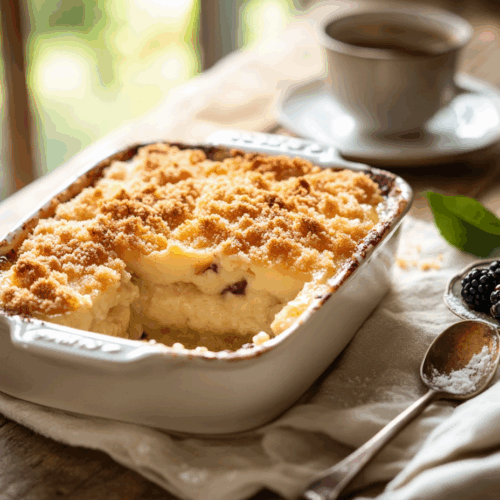
Malvern Pudding

Equipment
- 1 Oven
- 1 Mixing Bowl
- 1 Whisk
- 1 Baking dish
- 1 Saucepan
Ingredients
Fruit Layer
- 2 cups apples peeled, cored, and sliced
- 1 cup blackberries fresh or frozen
- ¼ cup sugar granulated
Custard Layer
- 2 cups milk preferably whole
- 3 large eggs
- 1 tsp vanilla extract
- ½ cup sugar granulated
Topping
- ½ cup breadcrumbs fresh
- 2 tbsp butter melted
Instructions
- Preheat the oven to 350°F (175°C). Grease a baking dish with some butter.
- In a saucepan, combine the apple slices, blackberries, and 1/4 cup of sugar. Cook over medium heat until the apples become tender and the mixture is slightly thick, about 10 minutes.
- Spoon the fruit mixture evenly into the prepared baking dish.
- In a mixing bowl, whisk together the milk, eggs, vanilla extract, and 1/2 cup of sugar until well combined. Pour this custard mixture over the fruit layer in the dish.
- In a separate bowl, mix the fresh breadcrumbs with melted butter and sprinkle evenly over the top of the custard and fruit layers.
- Bake in the preheated oven for 30 minutes, or until the top is golden brown and the custard is set.
Notes
Tammy’s Tips
- For added flavor, consider adding a sprinkle of cinnamon to the fruit mix or substituting some brown sugar for granulated sugar for a deeper caramel-like flavor.
- If fresh blackberries are unavailable, frozen varieties work well after being thawed.
- To make it gluten-free, replace the breadcrumbs with gluten-free alternatives.
Nutrition
FAQ
Can I use store-bought breadcrumbs instead of fresh?
Fresh breadcrumbs give a better result here. Dried store-bought crumbs absorb the butter differently and tend to stay hard rather than forming a soft-but-golden crust — if fresh bread is what you have, blitz a slice or two in a food processor or grate it on a box grater.
What kind of apples work best?
A cooking apple like Bramley or Granny Smith holds up better during the stovetop step than sweeter eating apples, which can turn to mush quickly. If you only have a sweeter variety, reduce the stovetop cooking time by a couple of minutes and watch the texture.
Do I need to use whole milk, or will a lower-fat milk work?
Whole milk gives the custard a richer set and better flavor. Reduced-fat milk will still work, but the custard will be slightly thinner and less creamy — if that’s what you have, it’s fine, just don’t expect quite the same texture.
How do I know when the custard is fully set?
Give the dish a gentle shake — the custard should move as one piece with only a small wobble in the very center, similar to a just-set jelly. If it sloshes or ripples in waves, it needs more time.
Can I make this in individual ramekins instead of one large dish?
Yes, and it actually bakes more evenly that way. Use six standard ramekins and reduce the baking time to roughly 20–22 minutes, checking for the same set wobble described above.
Is there a way to make this less sweet if the fruit is already quite ripe?
Cut the sugar in the fruit layer from a quarter cup down to one tablespoon — the blackberries and apples will provide enough natural sweetness if they’re ripe. The custard sugar is harder to reduce without affecting the set, so leave that as written.
More sweet things to bake
- Rustic Blackberry Almond Cake
- Toasted Coconut Custard Pie
- Strawberry Elderflower Fool
- Provence-Inspired Blackberry Lavender Crumble