

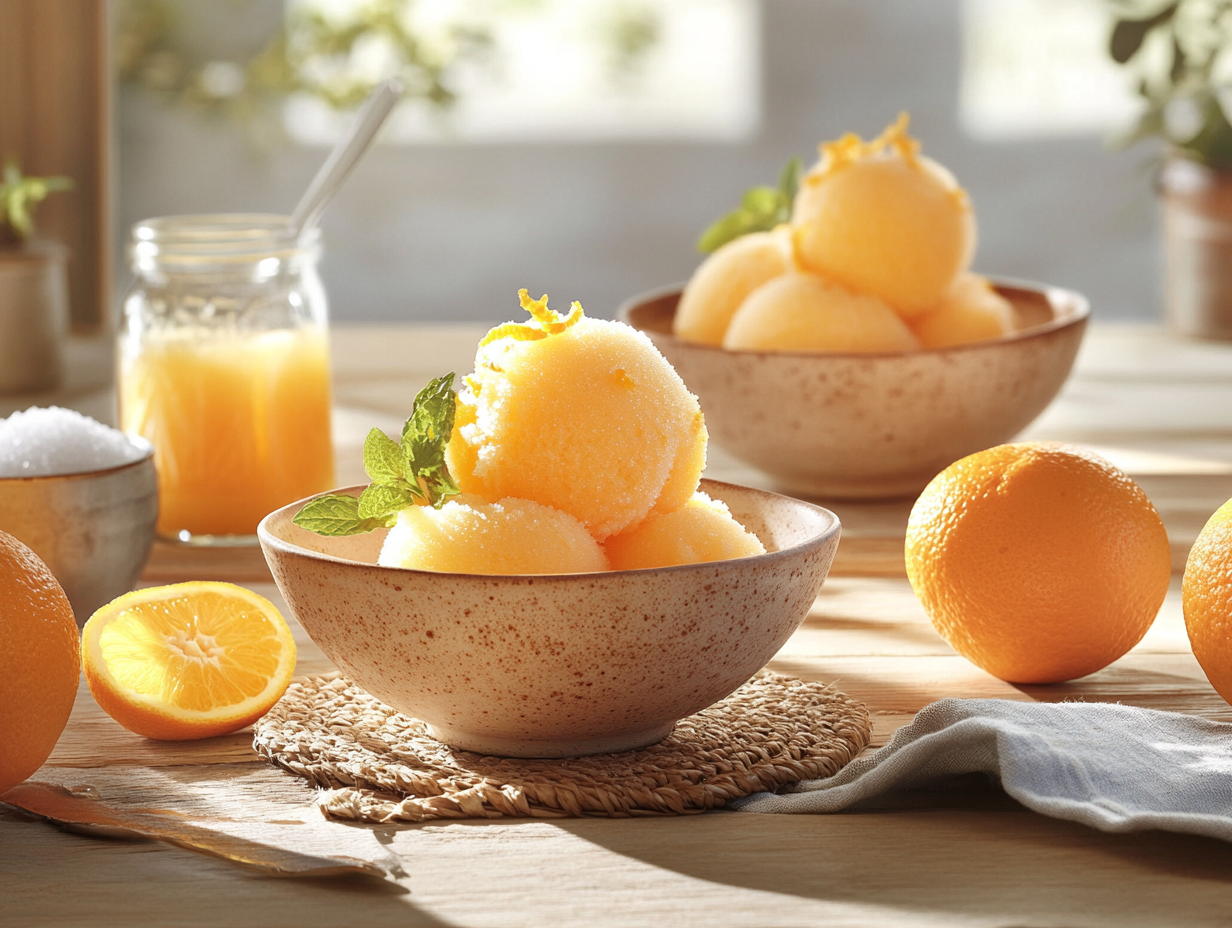
This orange sorbet is five ingredients, one saucepan, and an ice cream maker — that’s the whole operation. It’s dairy-free, genuinely refreshing, and the kind of dessert that tastes more impressive than the effort it requires. If you have good oranges and about 30 minutes of active time, you can have this in the freezer today.
The technique that matters
The two things that actually affect the final texture are how well you cool the syrup before combining it with the juice, and how long you let the sorbet firm up after churning. Add warm syrup to fresh orange juice and you’ll cook off the bright top notes you’re trying to preserve — cool the syrup completely first, even if that means a quick ice bath. After churning, the sorbet comes out of the machine at a soft, almost slushy consistency. That’s normal. It needs a full two hours in the freezer, minimum, to set to a scoopable texture. Cutting that time short is the most common reason homemade sorbet ends up soupy in the bowl.
What can go wrong
- Sorbet freezes rock solid: This usually means the sugar ratio was off — too little sugar lowers the freezing point less, so the sorbet freezes harder. Measure the sugar carefully. If it’s already frozen solid, let it sit at room temperature for 8–10 minutes before scooping.
- Grainy or icy texture: This happens when the mixture isn’t strained well enough before churning, or when the sorbet is churned in a machine with a bowl that wasn’t fully frozen. Make sure the ice cream maker bowl has been in the freezer for at least 24 hours beforehand.
- Flat, dull flavor after freezing: Cold dulls sweetness and acidity. Taste the liquid mixture before churning — it should taste slightly too sweet and slightly too tart at room temperature. That balance corrects itself once frozen.
- Sorbet melts almost instantly when served: The freezer temperature is likely too warm, or the serving bowls are warm. Chill your bowls in the freezer for 10 minutes before scooping. Sorbet has no fat to slow melting, so this step actually matters.
Ingredient notes
Valencia oranges are worth seeking out if you can find them — they have a higher juice yield and a cleaner sweetness than navel oranges, which can turn slightly bitter when zested. Navel oranges will still work, but taste the mixture and adjust the lemon juice accordingly. The lemon juice isn’t just for flavor; its acidity helps keep the color bright after freezing. If you’re adding orange liqueur (Cointreau or Grand Marnier both work), keep it to no more than 2 tablespoons — alcohol lowers the freezing point, and too much will prevent the sorbet from setting properly. Skip the garnish — not worth the extra dish.
Storage and freezing
Stored in a sealed, freezer-safe container with a piece of plastic wrap pressed directly against the surface of the sorbet, this keeps well for up to two weeks. Beyond that, ice crystals start to form and the texture gets noticeably coarser. There’s no need to thaw it in the fridge — just move it from the freezer to the counter about 8 minutes before you want to serve it. This sorbet doesn’t refreeze well after it’s fully melted, so scoop what you need and return the rest to the freezer promptly.
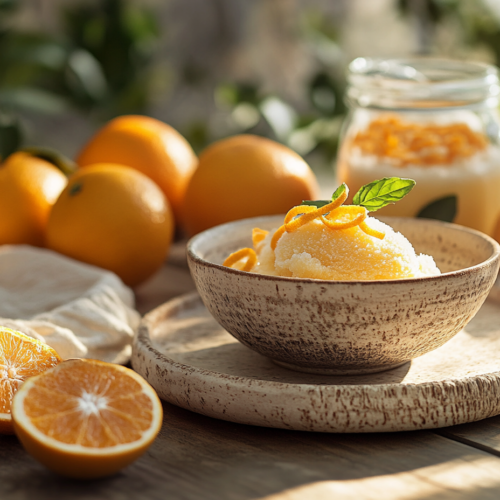
Refreshing Orange Sorbet

Equipment
- 1 Juicer
- 1 Saucepan
- 1 Ice Cream Maker
- 1 Fine mesh strainer
- 1 Freezer-safe container
Ingredients
- 1 cup freshly squeezed orange juice preferably from Valencia oranges for their sweetness
- 1 cup water
- ¾ cup sugar
- 1 tablespoon fresh lemon juice to enhance citrus notes
- 1 teaspoon grated orange zest for added depth
Instructions
- In a saucepan over medium heat, combine the water and sugar. Stir until the sugar dissolves completely, creating a simple syrup. This should take about 5 minutes.
- Remove the syrup from heat and let it cool to room temperature.
- Add the freshly squeezed orange juice, lemon juice, and grated orange zest to the cooled syrup. Mix well and strain through a fine mesh strainer to remove any pulp or zest pieces for a smooth texture.
- Pour the mixture into your ice cream maker and process according to the manufacturer’s instructions until it reaches a soft-serve consistency, about 20–25 minutes.
- Transfer the sorbet into a freezer-safe container and freeze for at least 2 hours to firm up.
Notes
Tammy’s Tips
- For an extra burst of flavor, consider adding a splash of orange liqueur to the mixture before freezing.
- You can also substitute the sugar with honey or agave for a different sweetness profile.
- To make this sorbet vegan, ensure the sweetener used is plant-based.
Nutrition
Your questions, answered
Do I need an ice cream maker for this recipe?
Yes, this recipe is written for an ice cream maker and relies on churning for its smooth texture. Without one, you’d need to pour the mixture into a shallow pan, freeze it, and scrape it with a fork every 30 minutes for 3–4 hours — the result will be more granita-style than sorbet.
Can I use store-bought orange juice instead of fresh?
You can, but the flavor will be noticeably flatter. Fresh juice has volatile aromatics that pasteurized, shelf-stable juice loses during processing. If fresh oranges aren’t available, refrigerated not-from-concentrate juice is a better substitute than shelf-stable.
How do I know when the sorbet is done churning?
It’s ready when it holds its shape like soft-serve ice cream and has turned from translucent to opaque. Most machines take 20–25 minutes, but stop going by the clock and start going by what you see — over-churning can introduce too much air and affect the texture.
Can I make this without refined sugar?
Honey or agave can replace the sugar in equal amounts by weight, though both will add their own flavor to the finished sorbet. Keep in mind that the syrup step is still necessary — you need to dissolve the sweetener fully in the warm water before combining it with the juice.
Why does my sorbet taste fine from the machine but bland after freezing?
Freezing suppresses both sweetness and acidity, so a mixture that tastes well-balanced at room temperature will taste muted once frozen solid. Before churning, the liquid should taste a little brighter and sweeter than you’d want in the final dessert — that intensity is exactly right.
Try these next
- Elegant Strawberry Champagne Sorbet
- Mediterranean Sunshine Olive Oil Orange Polenta Cake
- Zesty Mediterranean Lemon Yogurt Loaf with Syrup
- Tropical Coconut Cardamom Ice Cream