

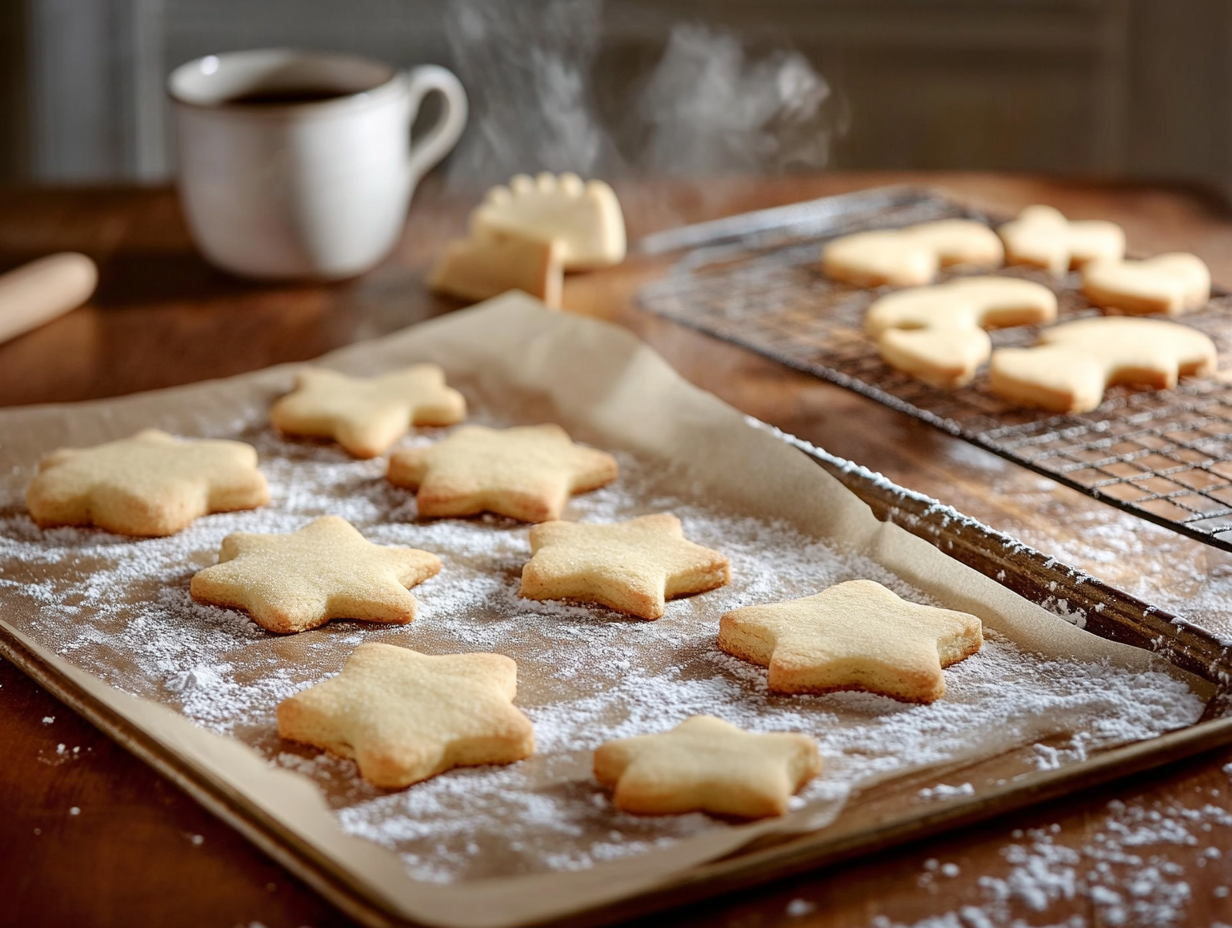
These are straightforward cut-out sugar cookies — crisp at the edges, just barely soft in the center, and built from ingredients you almost certainly have on hand. The dough rolls out cleanly, holds its shape through baking, and produces a full 24 cookies per batch. That last point is the real reason to reach for this recipe when you need a lot of cookies fast.
What makes this version work
Two things matter most here. First, creaming the butter and sugar for a full three minutes — not just until combined — builds enough air into the base that the cookies stay tender rather than dense. Second, rolling to a consistent quarter-inch thickness is what keeps every cookie in the batch done at the same time. Thicker spots stay doughy while thinner ones overbrown, and with 24 cookies on multiple sheets, uneven thickness compounds fast. Use a ruler or thickness guides on your rolling pin if you have them. Both steps take an extra minute or two and make a real difference in the finished batch.
Mistakes to avoid
- Using cold butter: Cold butter won’t cream properly, and you’ll end up with a dense, slightly greasy dough. Pull butter out at least an hour before you start, or cut it into cubes and let it sit 30 minutes in a warm kitchen.
- Skipping the flour on your work surface: Sugar cookie dough sticks. A well-floured surface — and a lightly floured cutter — prevents torn shapes and wasted dough. Re-flour between rounds of cutting.
- Re-rolling scraps too many times: The first roll gives you the best cookies. Each re-roll works more gluten into the dough, making those cookies tougher. Combine all scraps, roll once more, and stop there.
- Crowding the baking sheet: The recipe says two inches apart — that’s the minimum. Crowded cookies trap steam and soften each other’s edges, which matters if you’re decorating later and want clean lines.
- Pulling them too early because they look underdone: These cookies firm up as they cool. If the edges are just lightly golden and the centers look barely set, they’re done. Leave them in longer and the centers will be hard by the time they’re cool.
Storage and make-ahead
Baked, undecorated cookies keep well in an airtight container at room temperature for up to five days — layer them with parchment so they don’t stick together. If you’re decorating with icing, wait until the day before or the day of serving; icing locks in moisture and the cookies can soften slightly underneath it over time. For larger quantities, the unbaked dough is your best friend: wrap it tightly in plastic and refrigerate for up to three days, or freeze it for up to two months. Frozen dough should thaw overnight in the fridge before rolling. You can also freeze baked, undecorated cookies for up to two months — thaw at room temperature for an hour and they’re ready to decorate. Skip freezing already-decorated cookies; the icing doesn’t hold up well to the temperature change.
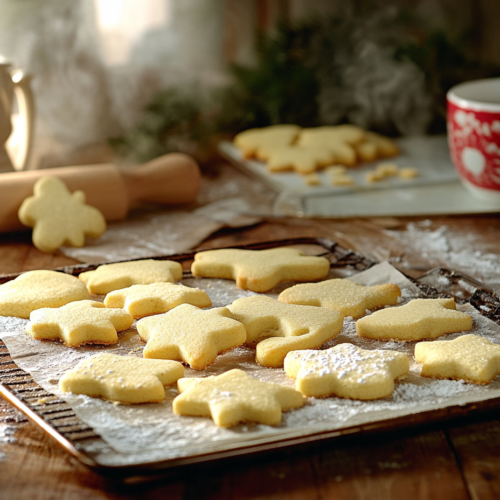
Classic Sugar Cookies

Equipment
- 1 Mixing Bowls
- 1 Electric mixer or hand mixer
- 1 Rolling pin
- 1 Cookie cutters
- 1 Baking Sheets
- 1 Parchment Paper
- 1 Cooling Rack
Ingredients
- 2 ¾ cup all-purpose flour Quality flour ensures perfect texture
- 1 teaspoon baking soda
- ½ teaspoon baking powder
- 1 cup unsalted butter Softened to room temperature
- 1 ½ cup sugar Granulated white sugar
- 1 large egg Room temperature
- 1 teaspoon vanilla extract Pure for best flavor
- ½ teaspoon salt
Instructions
- Preheat your oven to 375°F (190°C). Line several baking sheets with parchment paper.
- In a medium bowl, whisk together the flour, baking soda, and baking powder. Set aside.
- Using an electric or hand mixer, cream together the softened butter and sugar until light and fluffy, about 3 minutes.
- Beat in the egg and vanilla extract, mixing thoroughly until combined.
- Gradually add the dry ingredients to the wet ingredients, mixing on low speed until just combined. Avoid overmixing to ensure tender cookies.
- Roll the dough onto a floured surface to about 1/4-inch thick. Use cookie cutters to cut out desired shapes, placing them on the prepared sheets about 2 inches apart.
- Bake for 8 to 10 minutes, until the edges are just lightly golden. Remove and cool on wire racks.
Notes
- For a festive twist, sprinkle colored sugar or add delicate frosting designs.
Nutrition
FAQ
Do I need to chill the dough before rolling it out?
You don’t have to, but chilling for 30 minutes makes the dough easier to handle and helps cut shapes hold their edges more cleanly during baking. If your kitchen is warm or you’re working with a large batch across multiple rounds of cutting, a short rest in the fridge between rolls keeps the dough from getting sticky and misshapen.
Can I double or triple this recipe for a bake sale or party?
Yes — this dough scales up reliably. Mix in separate batches rather than one enormous bowl if you’re going beyond a double batch, since most home mixers struggle to cream butter and sugar properly when overloaded. Wrap each batch separately and refrigerate while you work through them one at a time.
What’s the best way to decorate these if I want clean, neat results?
Royal icing gives the sharpest finish and dries hard enough that decorated cookies can be stacked without smearing — our royal icing recipe works well here and skips the meringue powder. Colored sanding sugar pressed on before baking is the faster option and honestly looks great with no extra effort; skip the sprinkle-after-baking approach — they don’t stick without something wet underneath.
More sweet things to bake
- Classic Royal Icing (no meringue powder needed)
- Sweet Canadian Maple Cream Sandwich Cookies
- Delicate Pistachio Rose Shortbread
- Zesty Lemon Thyme Shortbread Bars