

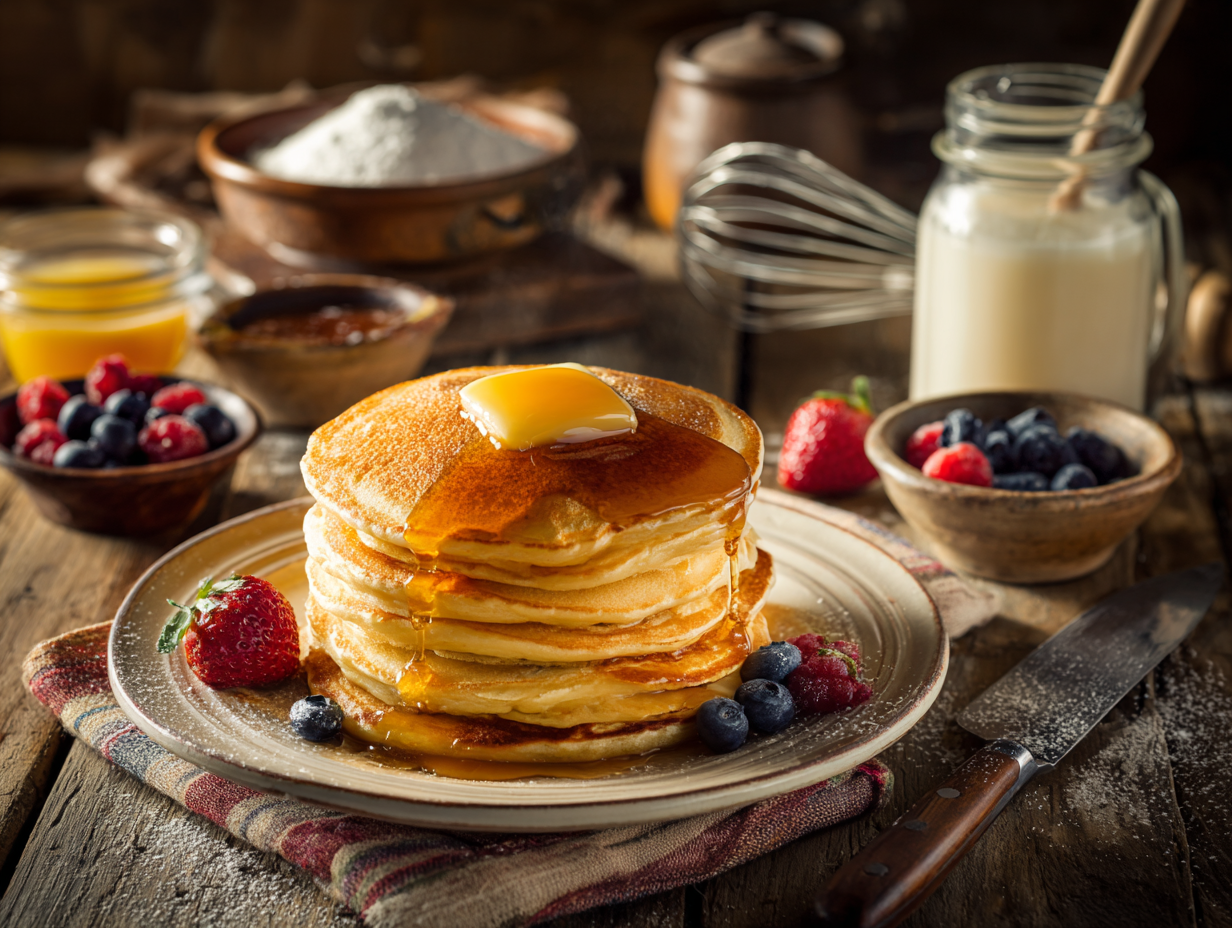
These are straightforward buttermilk pancakes — eight ingredients, one bowl for dry and one for wet, done in 30 minutes. The batter uses both baking powder and baking soda together, which gives you a reliable rise without any fuss. If you want a dependable stack that comes out right the first time, this is the recipe to keep.
Ingredient notes
- Buttermilk: This is the one ingredient worth buying specifically. It reacts with the baking soda to create lift and adds a mild tang that plain milk won’t replicate as well. The lemon juice substitute works in a pinch but produces a slightly thinner batter.
- Baking powder and baking soda together: Not a mistake — they do different jobs. The baking powder provides steady rise; the baking soda reacts with the buttermilk’s acidity for extra lift and helps with browning.
- Melted butter: Make sure it’s cooled slightly before you add it to the egg and buttermilk. Hot butter can scramble the egg.
What makes this version work
Two things matter most here. First, mixing only until just combined — a lumpy batter is correct. Overworking it develops gluten and produces tough, flat pancakes instead of tender ones. Second, heat control on the skillet. Medium heat (around 350°F) lets the pancake cook through before the outside burns. Too high and you get a dark exterior with raw batter in the middle; too low and the pancakes spread thin and turn rubbery. Give the pan a full minute to preheat before you pour the first round, and adjust between batches if needed — pans heat up as you go.
Mistakes to avoid
- Flipping too early: Wait until bubbles form across most of the surface and the edges look matte, not shiny. Flipping before that point tears the pancake and leaves the center undercooked.
- Cold egg straight from the fridge: A cold egg mixed with melted butter can cause the butter to seize into small solid bits. Pull the egg out 15 minutes before you start, or set it in a bowl of warm water for a few minutes.
- Greasing the pan too heavily: A thin wipe of butter or a brief spray is enough. Too much fat causes uneven browning and a slightly greasy edge.
- Pressing down on the pancake after flipping: Skip the spatula press — it pushes out the air you just built in and makes the pancake dense.
- Pouring batter onto a cold spot: If your skillet has hot and cool zones, test with a few drops of water first. They should skitter and evaporate within two seconds. Move the pan around to even out the heat if needed.
Keeping it fresh
Leftover pancakes keep well in the fridge for up to 3 days — stack them with a small square of parchment between each one so they don’t stick, then seal in an airtight container. To reheat, 30 seconds per pancake in the microwave works fine; a dry skillet over low heat for about a minute per side keeps the edges slightly crisp if that matters to you. For longer storage, freeze them the same way for up to 2 months. Reheat straight from frozen in a toaster on a medium setting — skip the microwave for frozen ones, since it tends to make them rubbery. You can also mix the dry ingredients the night before and store them covered on the counter, then add the wet ingredients in the morning to cut down on prep time.
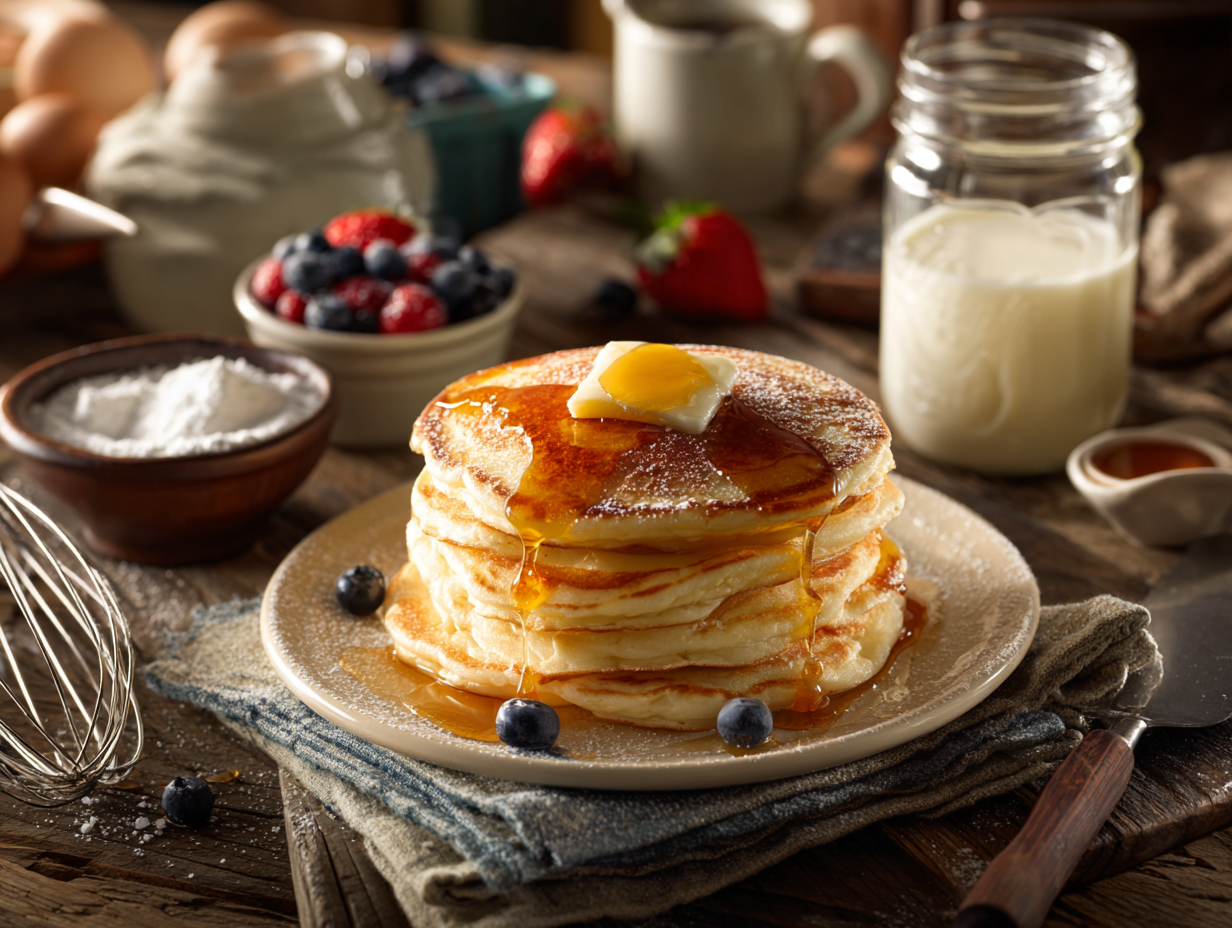
Simple Pancake Recipe

Equipment
- Mixing Bowl
- Whisk
- Non-stick skillet
- Spatula
Ingredients
- 1 cup all-purpose flour preferably unbleached
- 2 tablespoons granulated sugar white
- 1 teaspoon baking powder
- ½ teaspoon baking soda
- ¼ teaspoon salt fine
- 1 cup buttermilk
- 1 large egg room temperature
- 2 tablespoons unsalted butter melted
Instructions
- In a large mixing bowl, whisk together the flour, sugar, baking powder, baking soda, and salt.
- In another bowl, combine the buttermilk, egg, and melted butter. Whisk until smooth and fully incorporated.
- Gradually add the wet ingredients to the dry ingredients, gently whisking until just combined. Be careful not to over-mix; a few small lumps are fine.
- Heat a non-stick skillet over medium heat (about 350°F/175°C). Grease lightly with butter or cooking spray.
- Pour 1/4 cup of the batter onto the skillet for each pancake. Cook until small bubbles appear on the surface and the edges look set, about 2–3 minutes.
- Flip the pancakes and cook on the other side for an additional 2–3 minutes, until golden brown. Repeat with remaining batter.
Notes
Tammy’s Tips:
- For extra fluffiness, allow the batter to rest for 5 minutes before cooking.
- If buttermilk is unavailable, mix 1 tablespoon of lemon juice with 1 cup of milk as a substitute.
- For a richer flavor, add a dash of vanilla extract to the wet ingredients.
- These pancakes are versatile; consider adding ingredients like blueberries, chocolate chips, or a sprinkle of cinnamon to the batter.
Nutrition
Frequently asked questions
Can I make the batter ahead of time?
It’s better to mix it fresh. Once the wet ingredients hit the dry, the leavening starts working, and batter that sits for more than about 30 minutes loses some of its lift. If you want to save time, measure and combine the dry ingredients the night before — that’s the step worth doing ahead.
Why are my pancakes coming out flat?
The most common cause is old baking powder or baking soda. Check the dates — both lose potency over time, and expired leavening means no rise no matter what else you do right. Overmixing the batter is the second most likely culprit, so stir only until the dry streaks disappear.
Do I need a non-stick skillet, or will a regular pan work?
A regular stainless or cast iron pan works fine as long as you preheat it properly and use enough fat to coat the surface. Non-stick is more forgiving for beginners because it reduces sticking without precise heat management, but it’s not required.
If you liked this one
- Wholesome Mountain Pancakes with Berry Compote
- Gourmet Homemade Pop-Tarts
- Sweet and Tart Raspberry White Chocolate Scones
- Crispy Cornmeal Johnny Cakes