

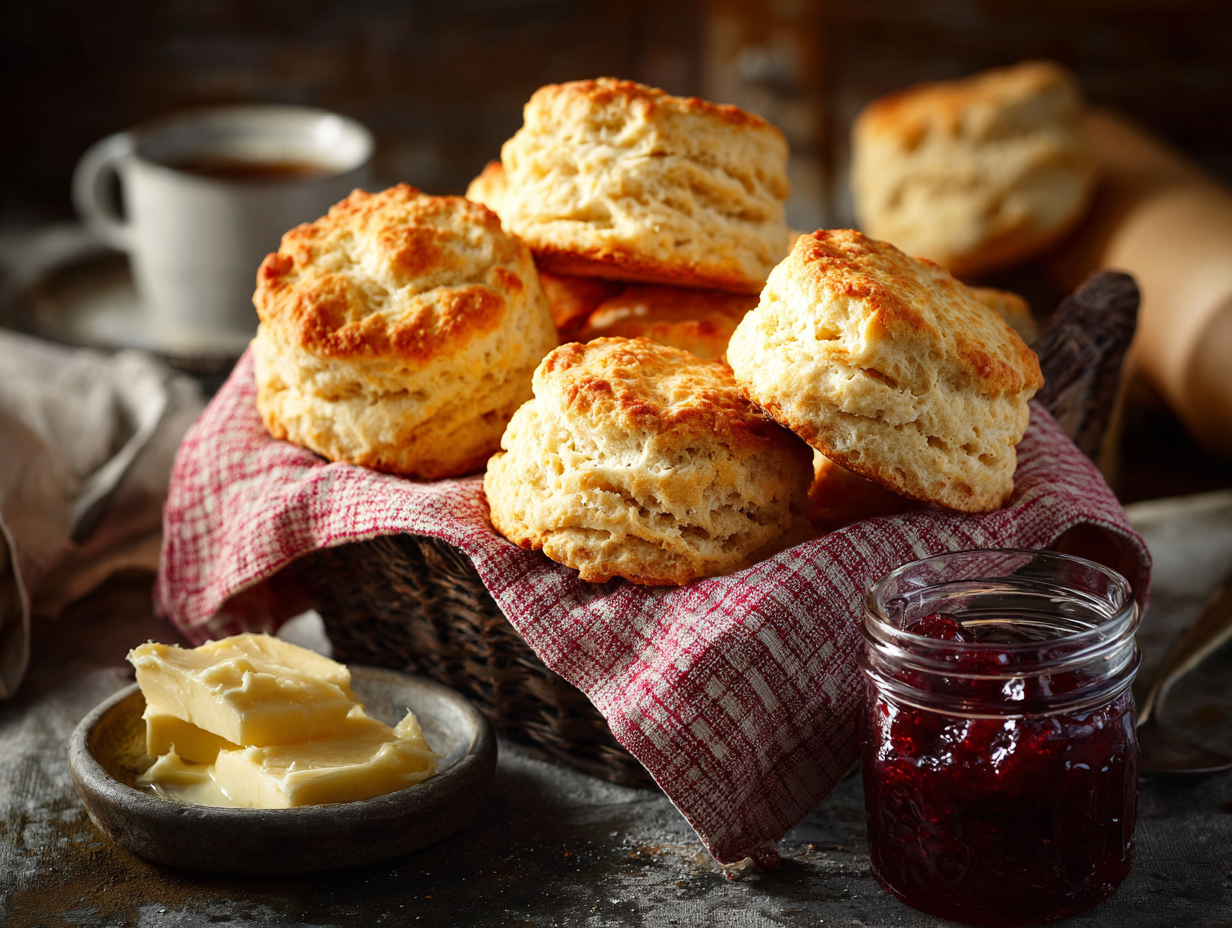
These are straightforward drop-and-cut biscuits — two cups of flour, cold butter, buttermilk, and about 30 minutes of your time. The recipe makes 8 biscuits at 230 calories each, and the whole thing comes together in one bowl with no special equipment. If you want a reliable, fast bread you can bake on a weeknight, this is it.
Before you start
Two things actually determine whether these biscuits are flaky or dense. First, your butter needs to be genuinely cold — not just cool, but straight from the fridge and cubed right before you use it. As the butter heats in the oven it releases steam, and those steam pockets are what create the layers. Second, stop mixing the moment the dough comes together. A shaggy, slightly rough dough is exactly right. The instinct to keep working it until it looks smooth will give you tough biscuits — resist it. Also check that your baking powder and baking soda are fresh; both are doing real lifting work here, and old leaveners are a common culprit when biscuits come out flat.
If something goes sideways
- Biscuits spread flat instead of rising: The butter warmed up before baking. Next time, pop the cut biscuits onto the baking sheet and refrigerate them for 10 minutes before they go in the oven.
- Bottoms are burnt but tops are pale: Your oven runs hot on the bottom. Move the rack to the center or upper-middle position, and make sure you are using a light-colored baking sheet — dark pans absorb more heat.
- Biscuits are gummy inside after the full bake time: They were cut too thick or the dough was too wet. Roll to a true 1-inch thickness and measure your buttermilk carefully — do not eyeball it.
- Edges are tough and dry: The cutter was dragged or twisted rather than pressed straight down. Press firmly and lift straight up; twisting seals the edges and prevents a clean rise.
- Dough is sticky and hard to handle: Lightly flour your hands and the surface, but do not dump extra flour into the dough itself — it will throw off the ratio and make the biscuits dry.
Smart swaps
Buttermilk is the one ingredient worth tracking down rather than substituting — the acidity reacts with both leaveners and the swap is never quite the same. That said, if you are genuinely stuck, stir 2 teaspoons of white vinegar or lemon juice into 3/4 cup of whole milk and let it sit for 5 minutes before using. Skip the salted butter swap — the salt level in this recipe is already calibrated for unsalted, and salted butter varies by brand. Unbleached all-purpose flour is called for and worth using; bleached flour produces a slightly softer crumb but the difference is minor. Skip brushing the tops with butter before baking — not worth the extra dish, since the biscuits brown well on their own at 450°F.
Keeping it fresh
Biscuits are best the day they are baked, ideally within a couple of hours of coming out of the oven. If you have leftovers, store them in an airtight container at room temperature for up to 2 days — the fridge actually dries them out faster than leaving them on the counter. To reheat, wrap in foil and warm at 350°F for about 8 minutes. For longer storage, freeze the baked biscuits in a zip-lock bag for up to 2 months; reheat straight from frozen at 350°F for 15 minutes. You can also freeze the unbaked cut rounds on a sheet pan, transfer to a bag once solid, and bake from frozen at 450°F adding 4 to 5 minutes to the bake time.
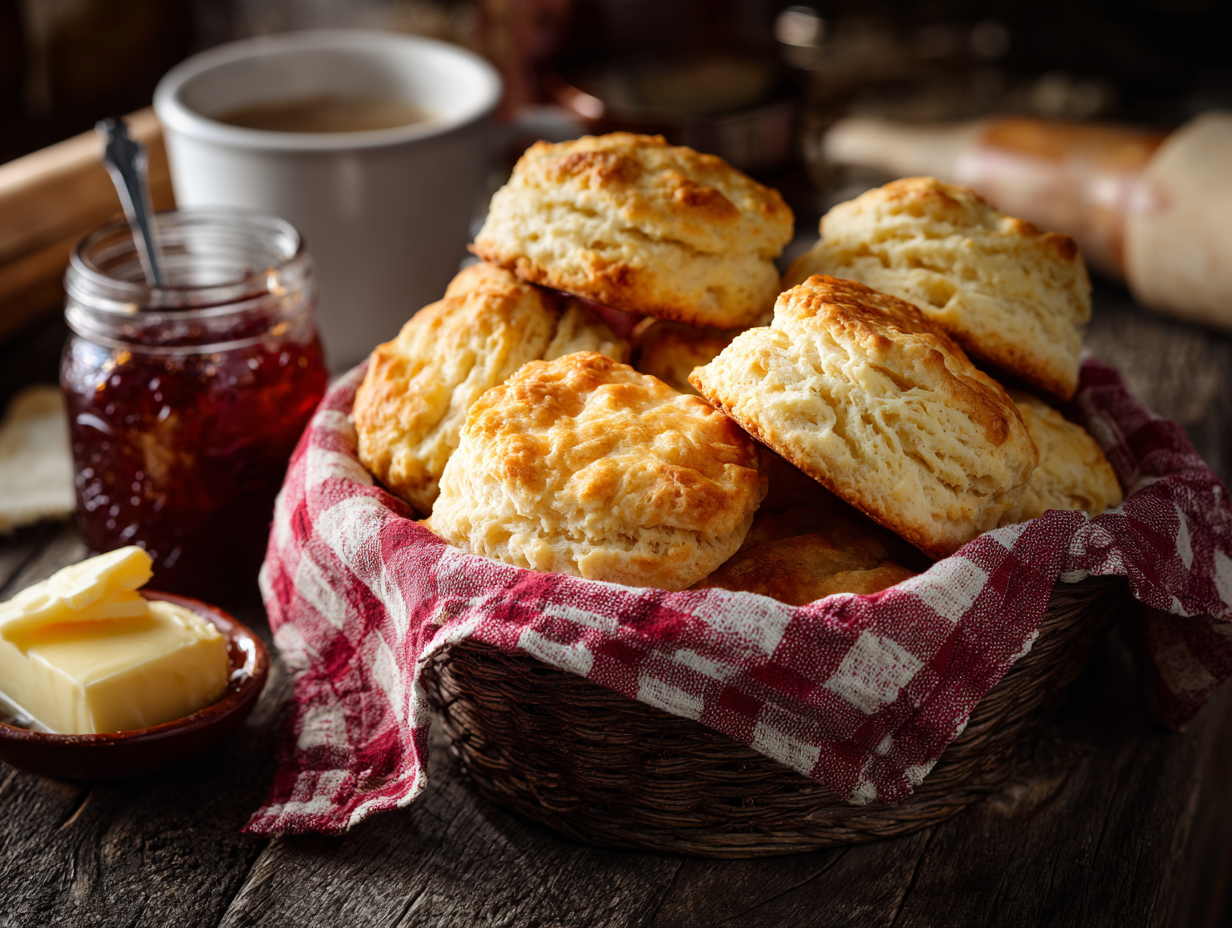
Classic Buttermilk Biscuits

Equipment
- Baking sheet
- Mixing Bowls
- Pastry Cutter
- Rolling pin
- Biscuit cutter
Ingredients
For the Dry Components:
- 2 cups all-purpose flour preferably unbleached
- 1 tbsp baking powder ensure freshness for best results
- 0.5 tsp baking soda ensure freshness for best results
- 1 tsp salt
For the Wet Components:
- 0.5 cup unsalted butter chilled and cubed
- 0.75 cup buttermilk cold, shaken well
Instructions
- Preheat your oven to 450°F (232°C). Line a baking sheet with parchment paper.
- In a large mixing bowl, whisk together the flour, baking powder, baking soda, and salt.
- Add the cubed butter to the dry ingredients. Using a pastry cutter, cut the butter into the flour until it resembles coarse crumbs.
- Make a well in the center and pour in the cold buttermilk. Stir gently with a wooden spoon until the mixture starts to come together. Be careful not to overmix.
- Transfer the dough to a floured surface. Gently knead it a couple of times and roll out to a 1-inch thickness. Cut out biscuits using a biscuit cutter and place them on the prepared baking sheet.
- Bake in the preheated oven for 10-15 minutes, or until golden brown on top. Serve warm.
Notes
- For a flakier texture, ensure the butter is extremely cold.
- Overmixing the dough can result in tough biscuits.
Nutrition
Frequently asked questions
Can I make the dough ahead of time?
Yes — cut the biscuits, place them on the lined baking sheet, cover tightly with plastic wrap, and refrigerate overnight. Bake them cold straight from the fridge the next morning; the extra chill actually helps the layers hold their shape.
What if I don’t have a biscuit cutter?
A sharp-rimmed drinking glass or a straight-sided mason jar lid works fine. The key is that the edge is thin and sharp enough to cut cleanly rather than compress the dough.
Do the biscuits need to touch each other on the pan?
Placing them close together — sides just touching — encourages them to rise taller rather than spread outward. If you want crispier sides on every biscuit, space them an inch apart instead.
Try these next
- Southern Classic Pecan Pie
- Southern-Style Lemon Pie with Creamy Condensed Milk Filling
- Sweet and Tart Raspberry White Chocolate Scones
- Gourmet Homemade Pop-Tarts