

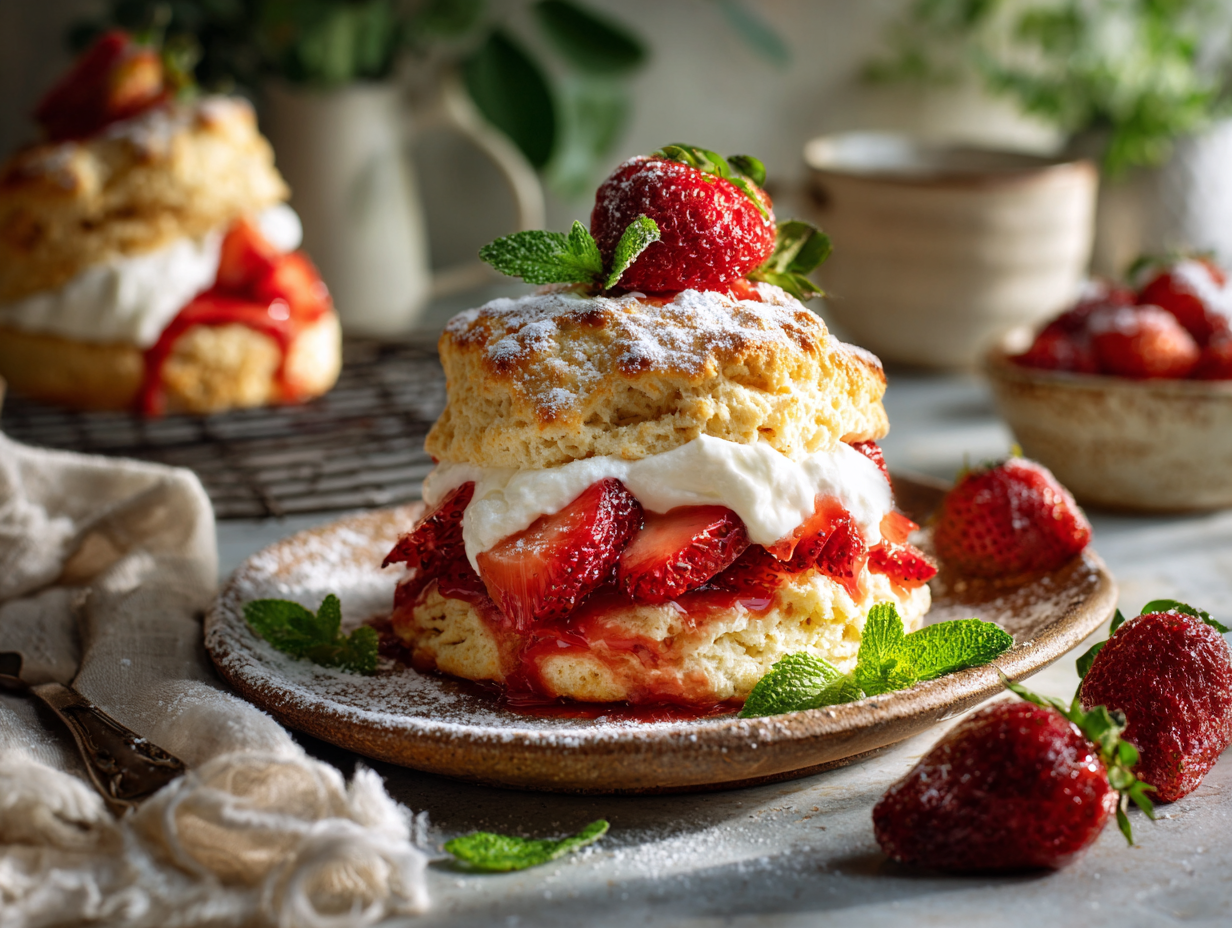
Strawberry shortcake is buttery drop biscuits split open and loaded with sugared fresh strawberries and whipped cream. The honest reason to make it: the whole thing comes together in under an hour with a bowl, a pastry cutter, and a whisk — no special equipment, no fuss.
The technique that matters
Two things decide whether this works. First, keep your butter genuinely cold — cut it into cubes and put it back in the freezer for ten minutes before you start if your kitchen is warm. Cold butter creates small pockets of steam in the oven, which is what gives the biscuits their layered, tender crumb rather than a dense, cakey texture. Second, stop mixing the moment the dough comes together. Overworked dough develops gluten and turns tough. A few dry streaks in the bowl are fine; they’ll hydrate as the dough rests. Both of these steps take almost no extra time and make a real difference in the result.
Ingredient notes
- Heavy cream in the biscuit dough: Don’t substitute milk or half-and-half here. The fat content in heavy cream is doing real work — it keeps the biscuits tender and helps them brown properly. Buttermilk is a workable swap if you have it; it adds a mild tang and reacts with the baking powder for a slightly higher rise.
- Powdered sugar in the whipped cream: Powdered sugar is worth using over granulated. It dissolves instantly into cold cream and contains a small amount of cornstarch that helps the whipped cream hold its shape for longer — useful if you’re assembling ahead of serving.
- Strawberries: Fresh is the right call here. Frozen strawberries release too much liquid during maceration and turn the topping watery. If your fresh berries aren’t very sweet, bump the macerating sugar up slightly rather than adding it to the biscuit dough.
What can go wrong
- Biscuits spread flat on the pan: The dough was too warm before baking. If it looks greasy or soft when you scoop it, refrigerate the shaped portions for 10 minutes before they go in the oven.
- Whipped cream turns grainy or buttery: You’ve gone past soft peaks. This happens fast with a hand whisk — stop as soon as the cream holds a gentle peak and looks smooth. You can’t fix over-whipped cream, so watch it closely in the last 30 seconds.
- Strawberry topping is watery rather than syrupy: The berries need at least 30 minutes to macerate, but closer to 45 minutes gives a noticeably thicker syrup. Skip the garnish of whole berries on top — not worth the extra dish — and just spoon the syrup generously over each assembled shortcake.
- Biscuits are gummy in the center: They needed more time. Ovens vary. If the bottoms are golden but the tops look pale, tent loosely with foil and give them another 3–4 minutes. A toothpick inserted in the center should come out clean.
- Assembled shortcakes go soggy quickly: Don’t assemble until you’re ready to serve. The biscuits absorb the strawberry syrup fast once stacked, which is fine for eating immediately but unpleasant after 20 minutes of sitting.
Make-ahead notes
The three components can be prepared separately and held until you’re ready to serve. Baked biscuits keep well at room temperature in an airtight container for up to two days, or freeze for up to one month — thaw at room temperature for about 30 minutes and warm briefly in a 300°F oven for five minutes to refresh them. Macerated strawberries can be made up to four hours ahead and stored covered in the refrigerator; beyond that, the texture softens too much. Whipped cream holds in the fridge for up to two hours if you’ve used powdered sugar; give it a quick stir before serving if it has separated slightly. Assemble everything only when you’re ready to eat.
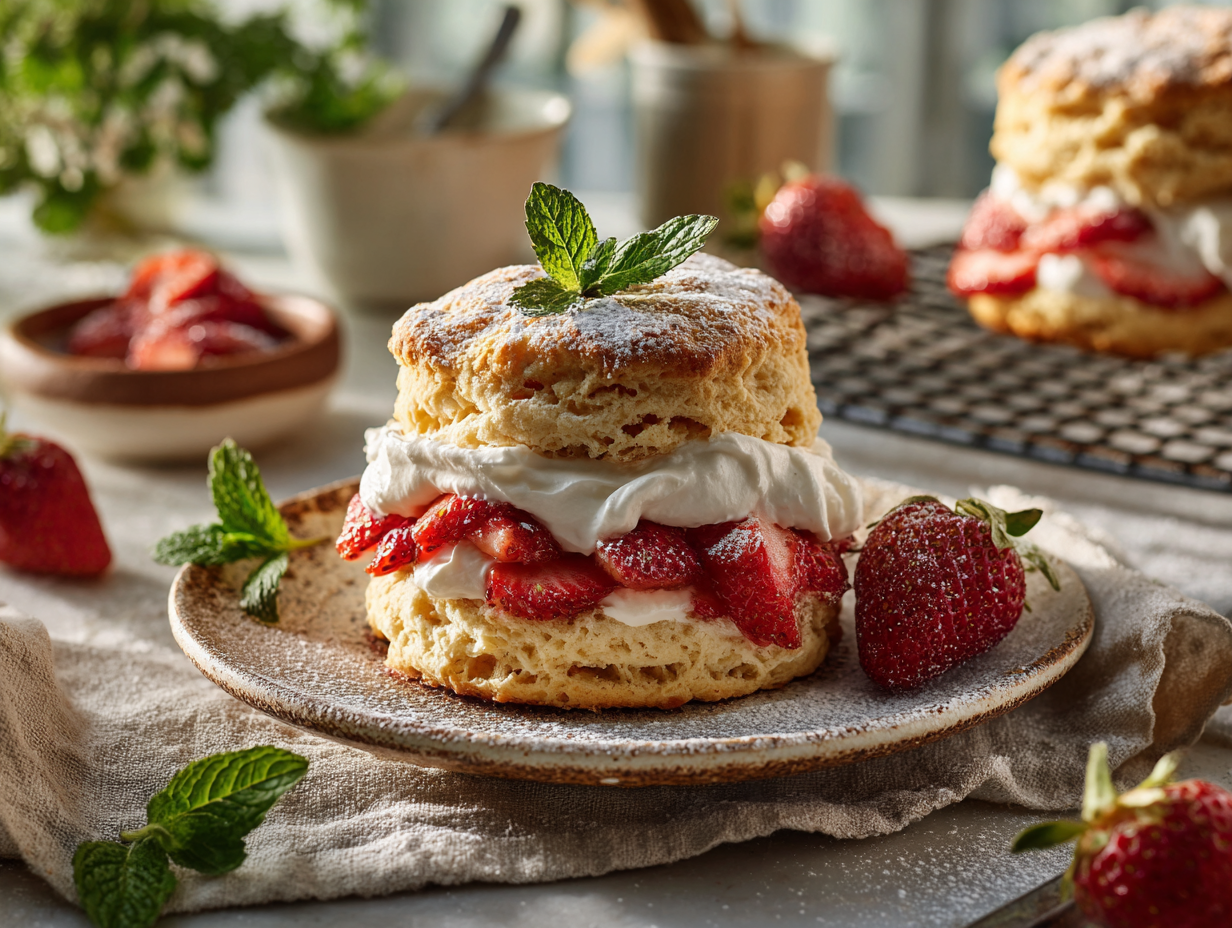
Classic Strawberry Shortcake

Equipment
- Oven
- Mixing Bowls
- Baking sheet
- Parchment Paper
- Pastry Cutter
- Whisk
- Cooling Rack
Ingredients
For the Biscuit:
- 2 cups all-purpose flour preferably unbleached, organic
- ¼ cup granulated sugar optional for sweeter biscuits
- 1 tablespoon baking powder
- ½ teaspoon salt
- ½ cup unsalted butter chilled, cut into small cubes
- ¾ cup heavy cream
For the Strawberry Topping:
- 1 pound fresh strawberries hulled and sliced
- ¼ cup granulated sugar adjust sweetness as preferred
For the Cream:
- 1 cup heavy whipping cream chilled
- 2 tablespoons powdered sugar sifted
- 1 teaspoon vanilla extract
Instructions
- Preheat and Prepare: Preheat the oven to 400°F (205°C). Line a baking sheet with parchment paper.
- Mix the Dry Ingredients: In a mixing bowl, combine the flour, sugar, baking powder, and salt. Whisk to blend evenly.
- Incorporate the Butter: Add cubed butter into the flour mixture. Use a pastry cutter to work the butter into the dry ingredients until it resembles coarse crumbs.
- Add the Wet Ingredients: Pour in heavy cream and stir until just combined. Avoid over-mixing to ensure the biscuits are tender.
- Shape and Bake the Biscuits: Scoop 1/4 cup portions onto the prepared baking sheet. Bake for 15-20 minutes until golden brown. Cool on a rack.
- Prepare the Strawberries: Mix sliced strawberries with sugar in a bowl. Let them sit for at least 30 minutes to macerate, enhancing their sweetness and juiciness.
- Create the Cream: Whip the heavy cream with powdered sugar and vanilla extract until soft peaks form. This texture should be light and airy.
- Assemble the Shortcakes: Slice the cooled biscuits in half horizontally. Layer with strawberries and whipped cream, then top with the other half of the biscuit.
Notes
Tammy’s Tips:
- Experiment with the biscuit sweetness by adjusting the sugar.
- Add lemon zest to the cream for an extra zing.
- Dietary Adaptations: Substitute dairy-free cream as needed. Gluten-free flour can replace traditional flour with similar results.
Nutrition
Your questions, answered
Can I make the biscuit dough by hand without a pastry cutter?
Yes — use your fingertips to rub the cold butter into the flour until the mixture looks like coarse, uneven crumbs. Work quickly so the heat from your hands doesn’t soften the butter; the whole process takes about two minutes.
How do I know when the strawberries have macerated enough?
The berries are ready when they’ve softened slightly and there’s visible pink syrup pooled at the bottom of the bowl — at least 30 minutes at room temperature. If you’re short on time, a gentle stir every ten minutes speeds up the juice release.
Can I use self-rising flour instead of all-purpose flour and baking powder?
Yes, substitute self-rising flour 1:1 for the all-purpose flour and leave out the baking powder and salt entirely. Self-rising flour already contains both, so adding more would make the biscuits taste bitter and rise unevenly.
If you liked this one
- Strawberry Elderflower Fool
- Sweet Roasted Strawberry Ice Cream
- Raspberry White Chocolate Scones
- Brown Sugar Pavlova with Roasted Fruit