


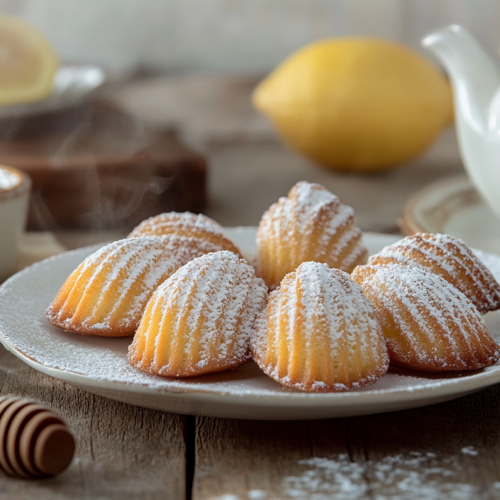
Madeleines are small, shell-shaped butter cakes with a crisp edge, a soft crumb, and a faint nuttiness from browned butter. This recipe makes 24 and comes together with pantry staples — eggs, flour, sugar, butter, honey, and lemon zest. The main reason to bake them: they look far more impressive than the effort required, and the batter can be made days ahead.
What makes this version work
Two things matter most here. First, browning the butter before it goes into the batter adds a depth of flavor you simply cannot get from melted butter — watch for the milk solids to turn amber and smell nutty, then pull it off the heat immediately so it doesn’t burn. Second, the batter rest in the fridge is not optional. Chilling firms the batter so it holds its shape in the mold and creates the steam differential that pushes up the characteristic hump. One hour is the minimum; overnight is better. A cold batter going into a properly preheated 375°F oven is what separates a domed madeleine from a flat one.
If something goes sideways
- No hump formed: The batter was too warm when it hit the oven, or the oven wasn’t fully preheated. Chill the filled molds for 10 minutes before baking next time, and use an oven thermometer — most home ovens run 15–25°F off.
- Madeleines stuck to the pan: The molds need both butter and a flour dusting. Butter alone isn’t enough. Silicone molds skip this step but tend to produce a paler, softer shell — a metal pan gives better color and texture.
- Dense, rubbery crumb: The eggs and sugar weren’t beaten long enough, or the flour was folded in too aggressively. You need that pale, slightly thickened egg mixture before anything else goes in, and folding should stop the moment you no longer see dry flour.
- Edges too dark before center sets: Your oven runs hot, or the pan is too dark. Reduce the temperature by 10–15°F and check at the 10-minute mark. A light-colored metal madeleine pan bakes more evenly than a dark one.
- Batter too stiff after overnight chill: Cold browned butter can firm the batter considerably. Let it sit at room temperature for 5–10 minutes before scooping — it should drop off a spoon in a thick ribbon, not need to be scraped out.
Storage and make-ahead
The batter keeps in the fridge for up to 48 hours, tightly covered — this is the most useful make-ahead step if you’re baking for a party or holiday gathering. Baked madeleines are best within a few hours of coming out of the oven, when the edges are still slightly crisp. By the next day the exterior softens, though the flavor is still good. If you need to bake further ahead, freeze the fully cooled madeleines in a single layer, then transfer to a zip-top bag for up to 6 weeks. Thaw at room temperature for 20–30 minutes and warm them in a 300°F oven for 4–5 minutes to revive the edges. Skip the powdered sugar garnish until right before serving — not worth dusting them twice.
Classic French Madeleines

Ingredients
- ½ cup unsalted butter plus extra for greasing
- ⅔ cup granulated sugar
- 3 large eggs room temperature
- 1 tsp pure vanilla extract
- 1 cup all-purpose flour sifted
- ½ tsp baking powder
- ¼ tsp salt
- 1 tsp lemon zest finely grated
- 2 tbsp honey
Instructions
- In a small saucepan, melt the butter over low heat until it turns a light golden brown and releases a nutty aroma. Remove from heat and let it cool slightly.
- In a mixing bowl, whisk together the eggs, sugar, and vanilla extract until the mixture is pale and slightly thickened, about 5 minutes.
- Gently fold in the sifted flour, baking powder, and salt using a spatula until incorporated, taking care not to overmix.
- Stir in the lemon zest and honey, and then slowly drizzle the cooled butter into the batter, folding carefully until combined.
- Cover the bowl with plastic wrap and refrigerate the batter for at least 1 hour, or overnight, to allow flavors to meld and batter to firm.
- Preheat the oven to 190°C (375°F). Grease your madeleine molds with softened butter and dust with flour, tapping out the excess.
- Fill each mold about three-quarters full with the batter and bake in the oven for 10-12 minutes until the edges are golden and a gentle dome forms in the center.
- Immediately turn the madeleines onto a wire rack to cool, scalloped side up.
Notes
Nutrition
Your questions, answered
Do I really need a madeleine pan, or can I use something else?
You need a madeleine pan to get the shell shape, but the recipe will still bake correctly in a mini muffin tin if that’s what you have. The result will be a small round cake rather than the classic scalloped shape — same flavor, different look.
Can I make the batter the night before?
Yes, and it’s actually the recommended approach. The batter rests well for up to 48 hours in the fridge, and a longer chill tends to produce a more pronounced hump and slightly better flavor from the browned butter and honey.
My madeleines came out flat. What went wrong?
The most common cause is batter that wasn’t cold enough when it went into the oven. Make sure the batter has chilled for at least one hour, the oven is fully preheated to 375°F, and you’re not opening the oven door in the first 8 minutes.
How do I know when they’re done without overbaking them?
Look for golden edges and a dome in the center that springs back lightly when pressed — this usually happens between 10 and 12 minutes. Pull them at the first sign of golden color on the edges; they continue to set slightly as they cool on the rack.
Try these next
- French Brown Butter Chocolate Tart
- Brown Butter Vanilla Bean Cupcakes
- Zesty Lemon Thyme Shortbread Bars
- Luxurious French Chocolate Truffles