

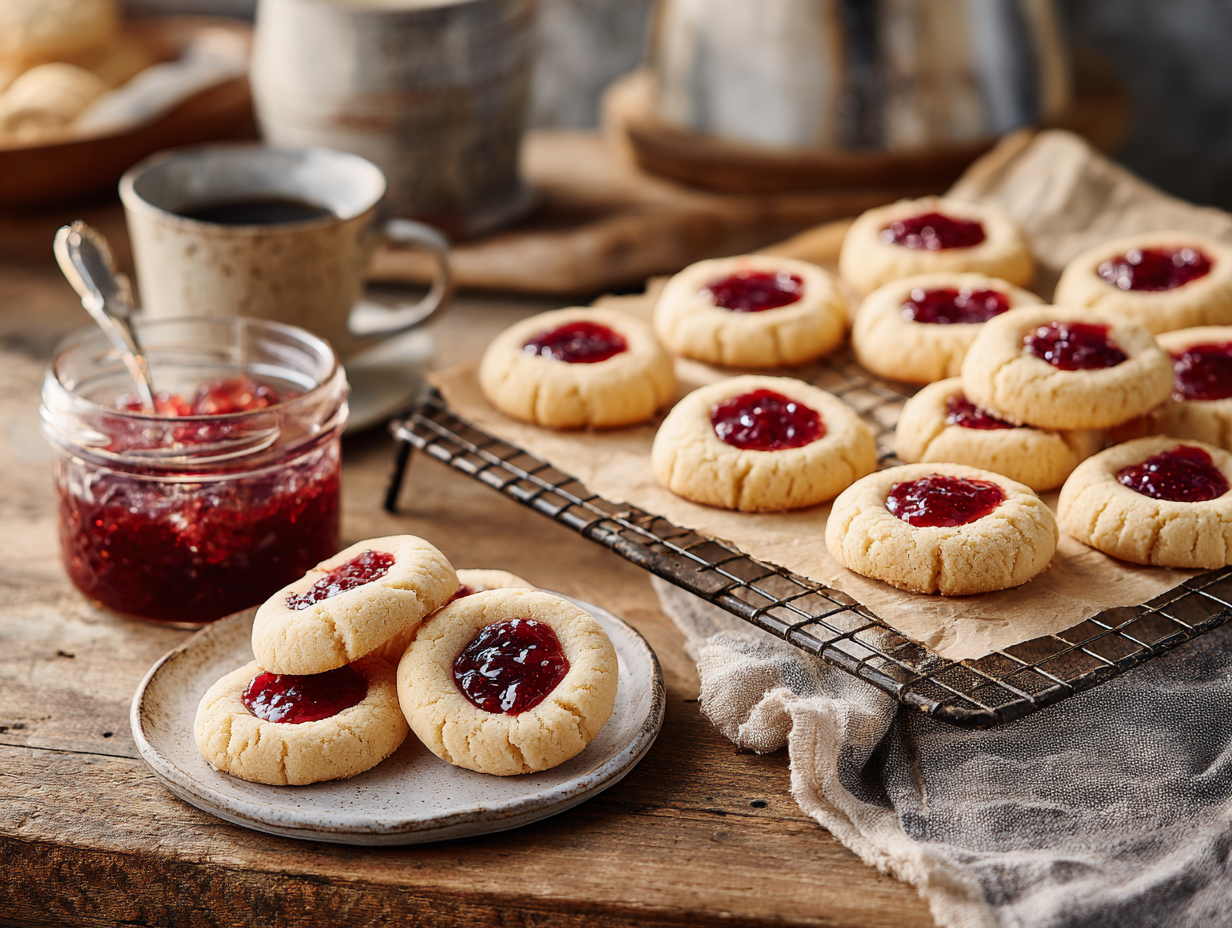
Thumbprint cookies are shortbread-style rounds with a jam-filled center, made from butter, sugar, egg yolk, flour, and vanilla — nothing unusual, nothing hard to find. They take about 35 minutes start to finish with no chilling required, and they make 24 cookies that hold their shape and look tidy enough to give away. That last part is the real reason to keep this recipe in rotation.
What makes this version work
Two things matter here. First, creaming the butter and sugar for the full 2–3 minutes on medium speed — not just until combined — builds enough air into the dough to keep the cookies tender rather than dense. Second, filling the indentations before baking (rather than after) lets the jam set into the cookie as it bakes, so it doesn’t slide off when you stack or wrap them. The jam firms up as it cools, which is exactly what you want if these are going into a box or a bag.
Troubleshooting
- Indentations puff back up during baking: The dough was too warm when it went into the oven. If your kitchen is warm, rest the filled sheet in the fridge for 10 minutes before baking. You can also re-press the centers gently halfway through the bake.
- Jam bubbles over and burns: You used too much. Half a teaspoon per cookie is the right amount — it looks skimpy going in but fills out as it melts. High-sugar preserves also burn faster than lower-sugar jams, so watch the oven at the 12-minute mark.
- Cookies spread flat: Butter was too soft or even slightly melted. It should hold a thumbprint when pressed but not feel greasy. If the dough feels slack after mixing, refrigerate it for 15 minutes before rolling.
- Cookies crack badly when you press the indentation: The dough is too dry. This can happen if flour was scooped rather than spooned into the measuring cup. Roll the ball between your palms a few extra times to warm it slightly before pressing, which helps the dough flex without splitting.
- Jam stays sticky and doesn’t set: The cookies need to cool completely on the rack — at least 20 minutes. Jam that looks loose at 5 minutes will firm up. Don’t stack them warm.
Shopping notes
Every ingredient here is standard. The one real choice is the jam: use a jam with a firm set rather than a loose fruit spread, because runny jam stays tacky after baking and makes the cookies hard to package without smearing. Seedless raspberry, apricot, and strawberry preserves all work well and hold up cleanly. If you want to roll the dough balls in chopped nuts before pressing — skip the powdered sugar garnish, not worth the extra dish — finely chopped almonds or hazelnuts stay crisp after baking and add enough texture to notice.
Storage and make-ahead
Fully baked and cooled cookies keep at room temperature in an airtight container for up to 5 days. Separate layers with parchment so the jam doesn’t stick. They freeze well for up to 2 months — freeze in a single layer first, then transfer to a container with parchment between layers. Thaw at room temperature for about 30 minutes. If you want to get ahead, the unbaked dough balls (without jam) can be frozen on a sheet, then stored in a bag for up to 6 weeks; add the jam and bake from frozen, adding 2–3 minutes to the bake time. For gifting, a tin or rigid box keeps them from shifting and protects the jam centers better than a soft bag.
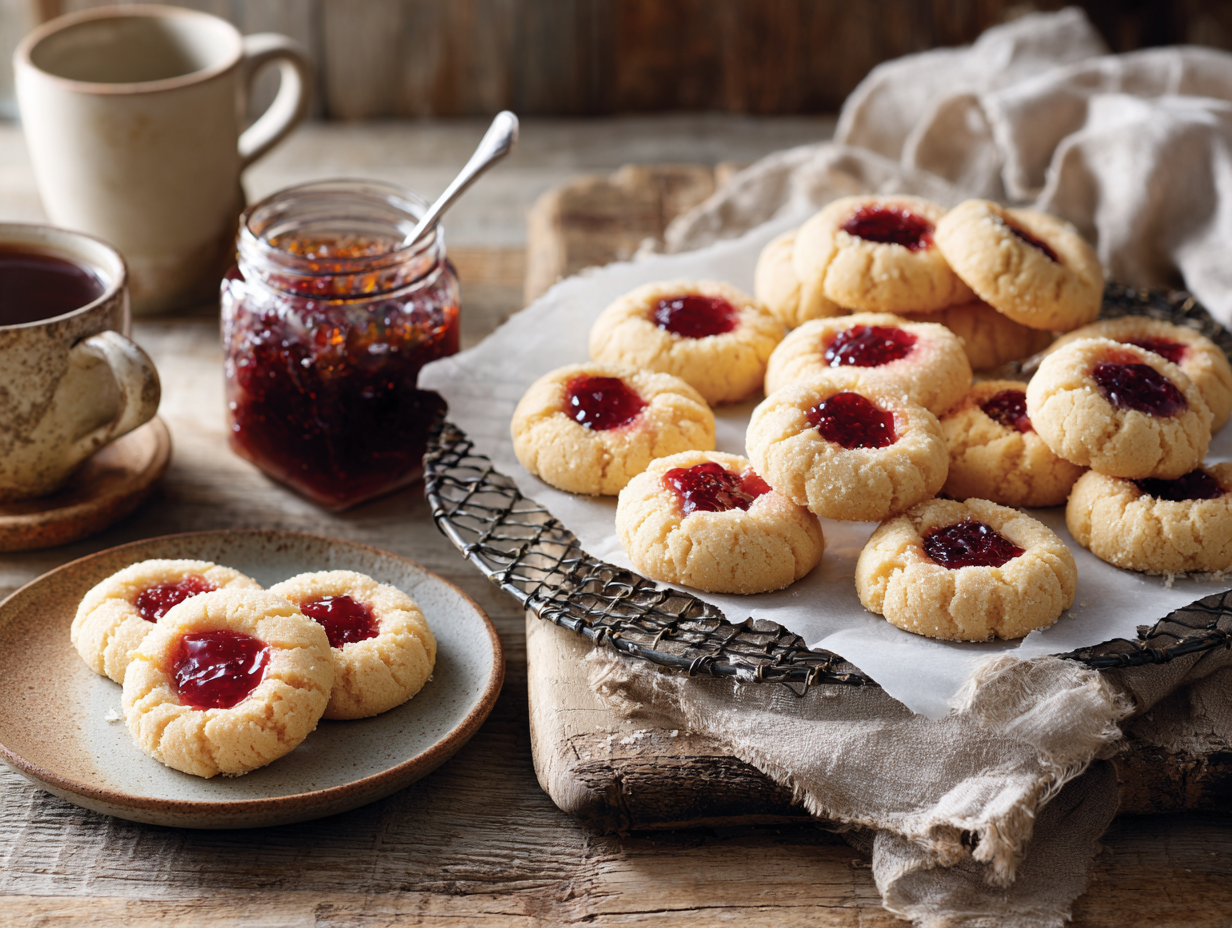
Classic Thumbprint Cookies

Equipment
- Mixing Bowl
- Electric Mixer
- Baking sheet
- Parchment Paper
- Cooling Rack
- Spoon
Ingredients
For the Cookie Dough:
- 1 cup unsalted butter softened
- ¾ cup granulated sugar
- 1 teaspoon vanilla extract
- 1 large egg yolk
- 2 cups all-purpose flour sifted
- ½ teaspoon salt
For the Filling:
- ½ cup fruit jam your choice of flavor
Instructions
- Preheat your oven to 350°F (175°C). Line a baking sheet with parchment paper for easy cleanup.
- In a large mixing bowl, cream together the softened butter and granulated sugar using an electric mixer on medium speed until the mixture becomes light and fluffy. This should take about 2-3 minutes.
- Add the vanilla extract and egg yolk to the creamed mixture, blending until fully incorporated.
- Gradually fold in the sifted all-purpose flour and salt into the butter mixture, mixing just until a soft dough forms.
- Roll dough into 1-inch balls and place them onto the prepared baking sheet, spacing them about 2 inches apart.
- Use your thumb or the back of a spoon to make an indentation in the center of each cookie dough ball.
- Fill each indentation with about 1/2 teaspoon of your chosen fruit jam.
- Bake the cookies in the preheated oven for 12-15 minutes or until the edges are lightly golden. Let them cool on a wire rack before serving.
Notes
- For a nutty twist, roll the dough balls in finely chopped nuts before making the thumbprint.
- To ensure the best texture, make sure the butter is softened to room temperature before mixing.
Nutrition
Common questions
Can I use jam with seeds, like raspberry with seeds?
Yes, seeded jam works fine for flavor. The texture difference is minor, but seedless looks cleaner in the indentation, especially if you’re packaging these as a gift.
Do I have to use an electric mixer, or can I mix by hand?
You can mix by hand with a wooden spoon, but you need to work the butter and sugar together vigorously for at least 3–4 minutes to get the right texture. Under-creamed dough produces a denser, more compact cookie.
My dough is crumbly and won’t roll into smooth balls. What’s wrong?
The dough is probably too cold or the flour was over-measured. Let it sit at room temperature for 5 minutes, then try again. If it still crumbles, add half a teaspoon of cold water and mix briefly.
Can I make these without egg yolk — for an egg-free version?
The egg yolk adds richness and helps bind the dough. Leaving it out produces a more crumbly, drier cookie. One teaspoon of heavy cream is a reasonable substitute, though the texture will be slightly less tender.
How do I keep the cookies from sticking together when I pack them up?
Let them cool completely before packing — the jam needs to fully set. Layer them between sheets of parchment paper in a rigid container so the jam centers don’t press against other cookies.
Can I double the recipe, and does anything change if I do?
Doubling works without any adjustments to technique or timing. Bake one sheet at a time on the center rack for the most even browning — crowding two sheets in the oven at once tends to produce uneven results.
Try these next
- Dark Chocolate Orange Shortbread
- Pistachio Rose Shortbread
- Lemon Thyme Shortbread Bars
- Maple Cream Sandwich Cookies